
Kaga Yuzen Artist / Traditional Craftsman
YOSHINORI KOIZUMI
Born in 1972 in Omura City, Nagasaki Prefecture.
Since my childhood, I have loved drawing pictures and making crafts. In my third year of junior high school, my art teacher recommended that I apply to the design department of Nagasaki Nihon University High School.
In the months leading up to the entrance examination, I repeatedly drew hand sketches at home, had the teacher look at them, and then drew them again and had the teacher look at them, and was accepted into the competitive design course.
In high school, I learned all the basics of design, and at university, I majored in the Visual Communication Course of the Fine Arts Department, where I mainly studied commercial design.
While in school, I felt a sense of discomfort with things that were created and consumed in accordance with the trends of the times, and I felt a desire to go deep and create things that would be loved for a long time, one by one.
I decided to pursue a career in Yuzen because of my love of Japanese patterns and my fascination with kimonos that bring out the three-dimensional beauty of things drawn on their surfaces.

- Biography -
| 1972 | Born in Omura City, Nagasaki Prefecture | |
| 1995 | Graduated from Nihon University College of Art, majoring in visual communication | |
| Studied under Kozo Shirasaka, Kaga Yuzen artist | ||
| 2007 | Went solo as a Kaga Yuzen artist | |
| 2008 | Certified as a traditional Kaga Yuzen craftsman | |
| 2009 | Ishikawa Prefecture Governor's Prize, Kaga Yuzen New Work Competition | |
| 2010 | Chairman Prize of Ishikawa Traditional Industry Promotion, Kaga Yuzen New Work Competition | |
| Bronze Prize, Traditional Kaga Yuzen Craft Exhibition | ||
| 2011 | Kanazawa Mayor Prize, Kaga Yuzen New Work Competition | |
| 2013 | Chubu Bureau of Economy, Trade and Industry Award, Kaga Yuzen New Work Competition | |
| 2015 | Bronze Prize, Traditional Kaga Yuzen Craft Exhibition | |
| 2016 | Ishikawa Traditional Industry Promotion Competition Chairman's Prize, Kaga Yuzen New Work Competition | |
Participated in Kimono Project "Imagine One World, producing a furisode (long-sleeved kimono) for the Republic of Uzbekistan. |
||
| 2017 | Chubu Bureau of Economy, Trade and Industry Director-General's Prize, Kaga Yuzen New Work Competition | |
| 2018 | Kanazawa Mayor Prize, Kaga Yuzen New Work Competition | |
| Produced an original Kaga Yuzen dress for a Kanazawa City project. | ||
| 2019 | Demonstration at the "World Craft & Folk Art Capital Summit Forum" exhibition held in Suzhou, China, with the participation of UNESCO-recognized cities. | |
| Produced a backstage curtain for Ichikawa Suien IV | ||
| 2020 | Governor of Ishikawa Prefecture Prize, Kaga Yuzen New Work Competition | Produced furisode for the Kimono Project "Imagine One World" for the U.S. Virgin Islands. |
| Produced a curtain for the dressing room of Ichikawa Danjuro Hakuen XIII. | ||
| Produced a backstage curtain for Shinnosuke Ichikawa VIII | ||
| Produced a Kaga Yuzen dress for a harpist | ||
| 2021 | Produced a jinbaori (a traditional sleeveless short coat) for cellist Ludovit Kanta to commemorate his appointment as a Kaga Yuzen ambassador. | |
| Ishikawa Traditional Industry Promotion Council Chairman's Prize, Kaga Yuzen New Work Competition | ||
| 2022 | Produced a backstage curtain for Akinori Nakagawa, a musical actor and singer starring in "JERSEY BOYS". |
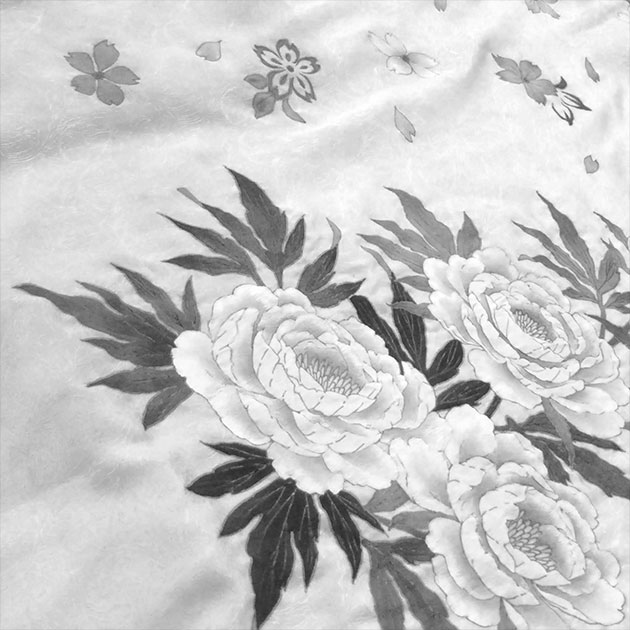

The basic concept is to create a design based on sketches, but with an original and innovative narrative design in mind, and by skillfully using soft, fresh, yet deep colors, I create something modern, yet never boring.
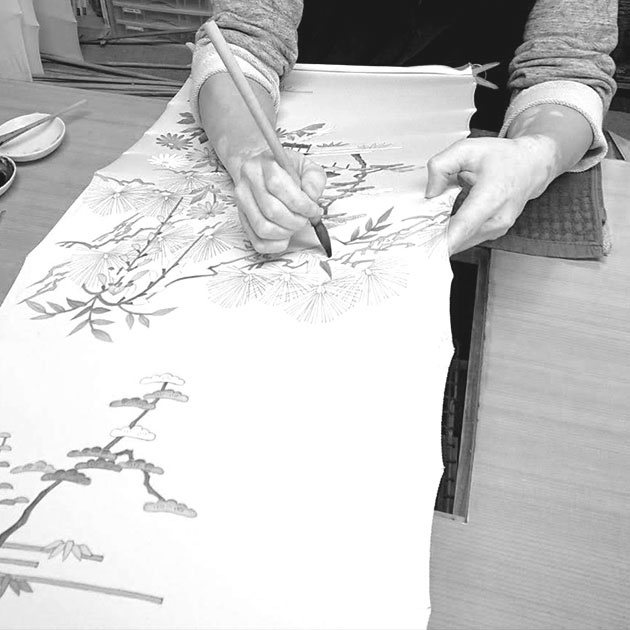

In 2008, I was certified as a traditional craftsman. Traditional craftsmanship is a national certification given to craftsmen who have mastered the skills and techniques of traditional crafts handed down in the region.
[Kaga Yuzen] Certification Category: Hand-Drawn Division
Japanese Traditional Craftsman

Ishikawa Traditional Industry Promotion Council Chairman's Prize, Independent Artist Division, the 47th Kaga Yuzen New Work Competition
|
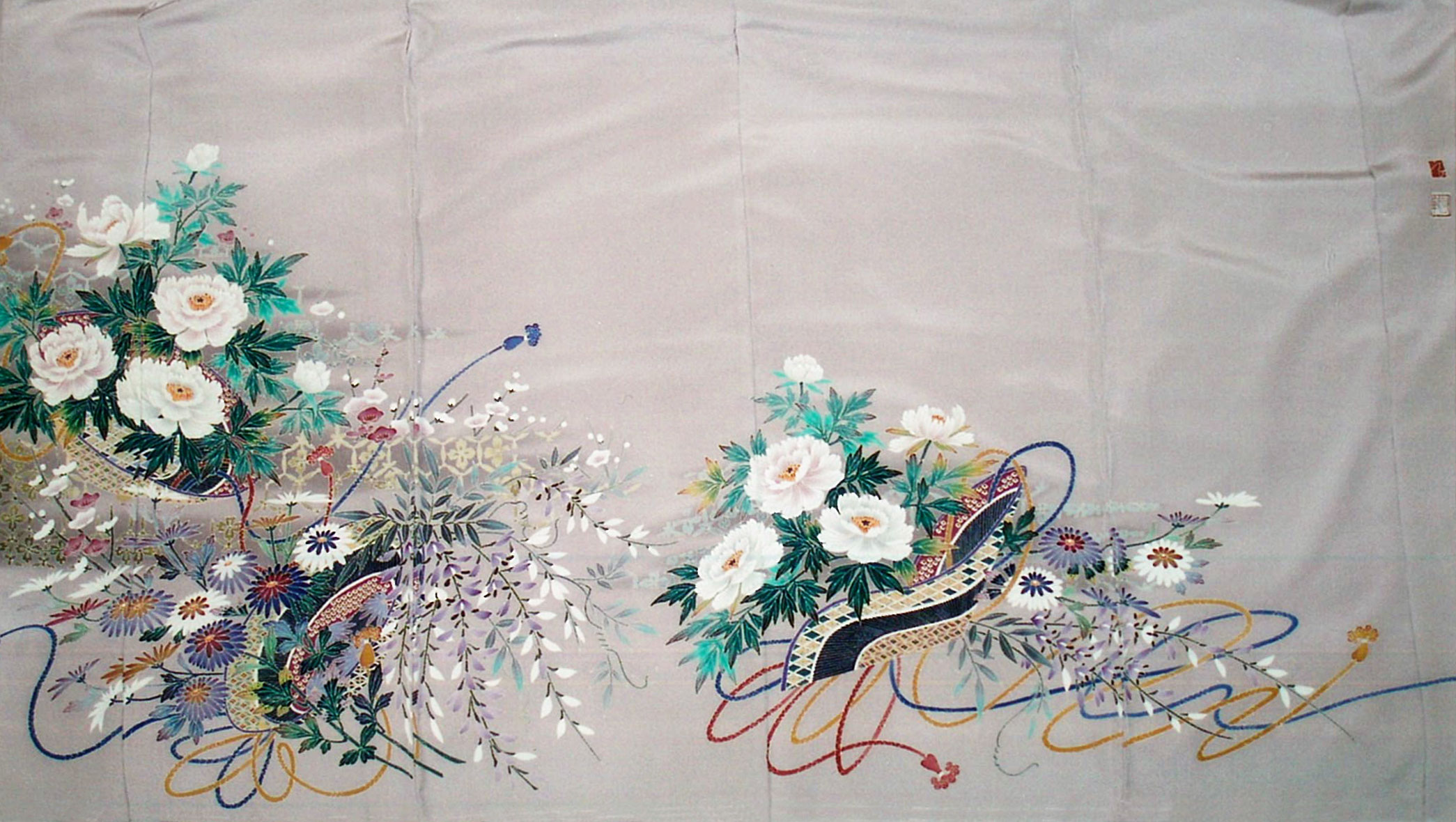
[ Ryusui ni Shikisoka ] Flowers and Plants of the Four Seasons in Running Water - Furisode 2021 - |
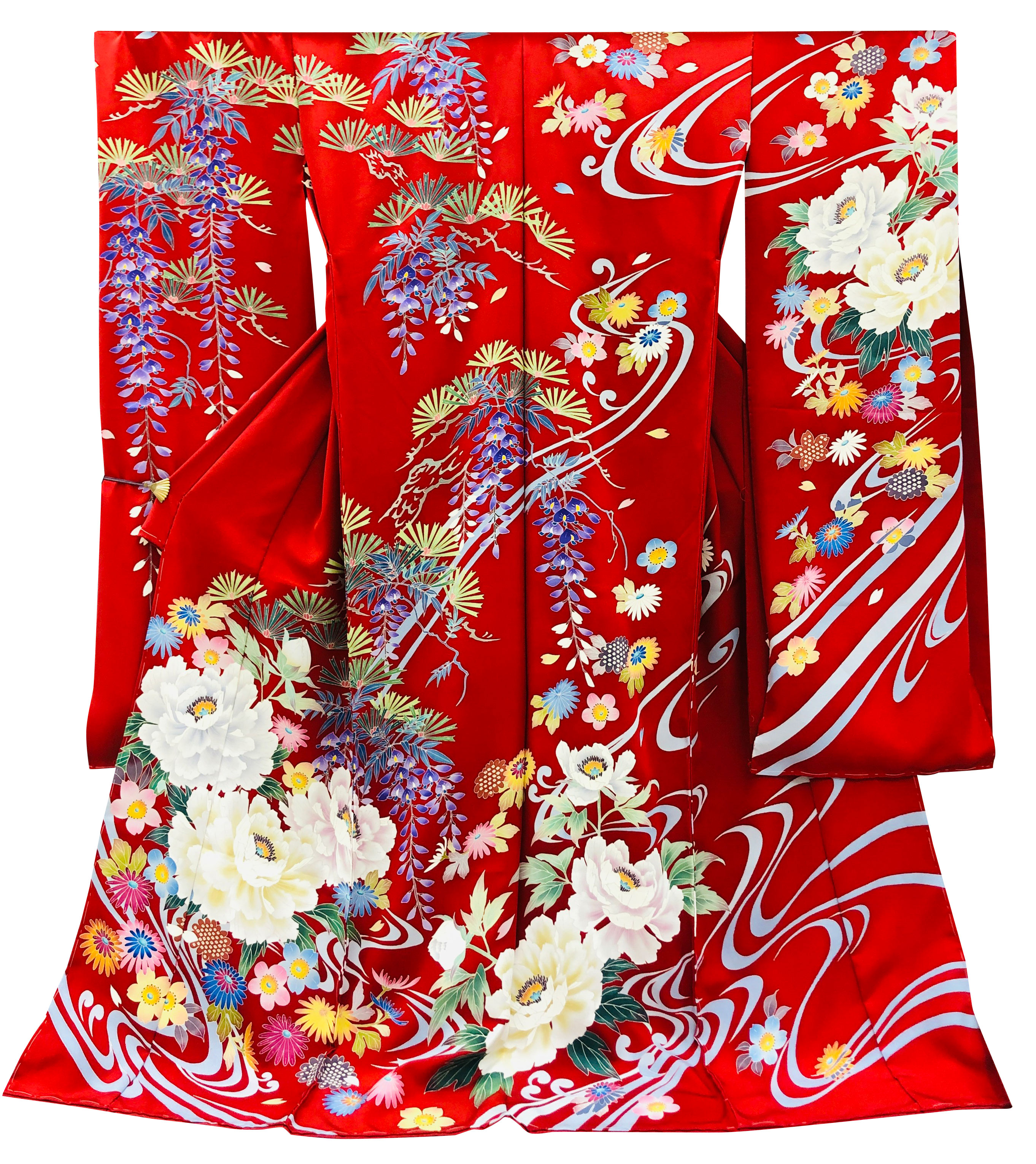
Ishikawa Traditional Industry Promotion Council Chairman’s Prize of the 47th Kaga Yuzen New Work Competition was awarded to this furisode with the design of traditional floral patterns on running water.

- Imagine One World -
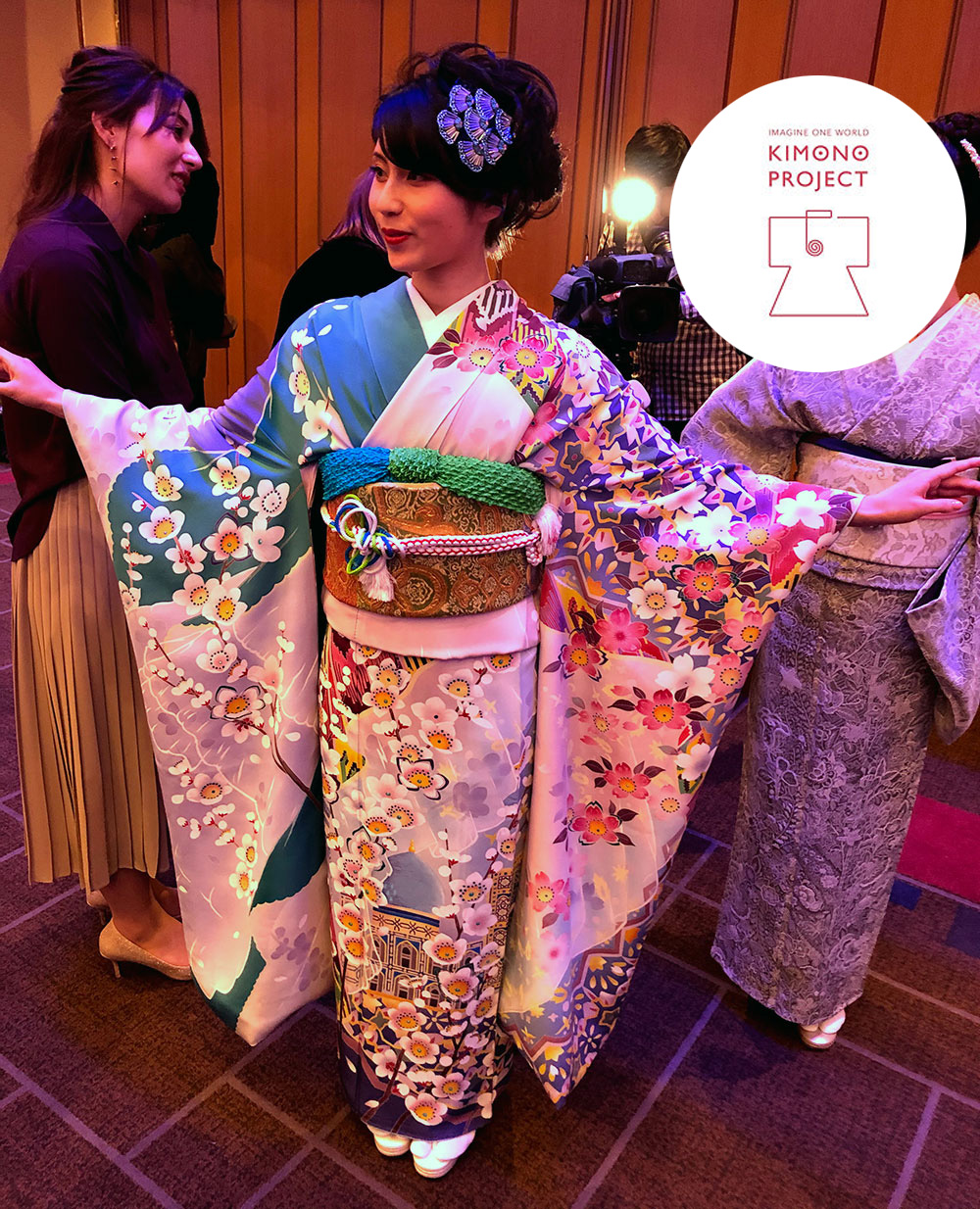
With the creation of original "KIMONO" that symbolize countries and regions around the world, and to convey to the world the splendor of traditional craft culture that Japan is proud of, the project conveys the message of peace and friendship. The "KIMONO Project" was developed by Imagine One World, a general incorporated association, based on the concept of "The world is one.
Of the total 213 kimonos produced, I produced two, for the Virgin Islands and the Republic of Uzbekistan.
KIMONO PROJECT

- April 2020 -
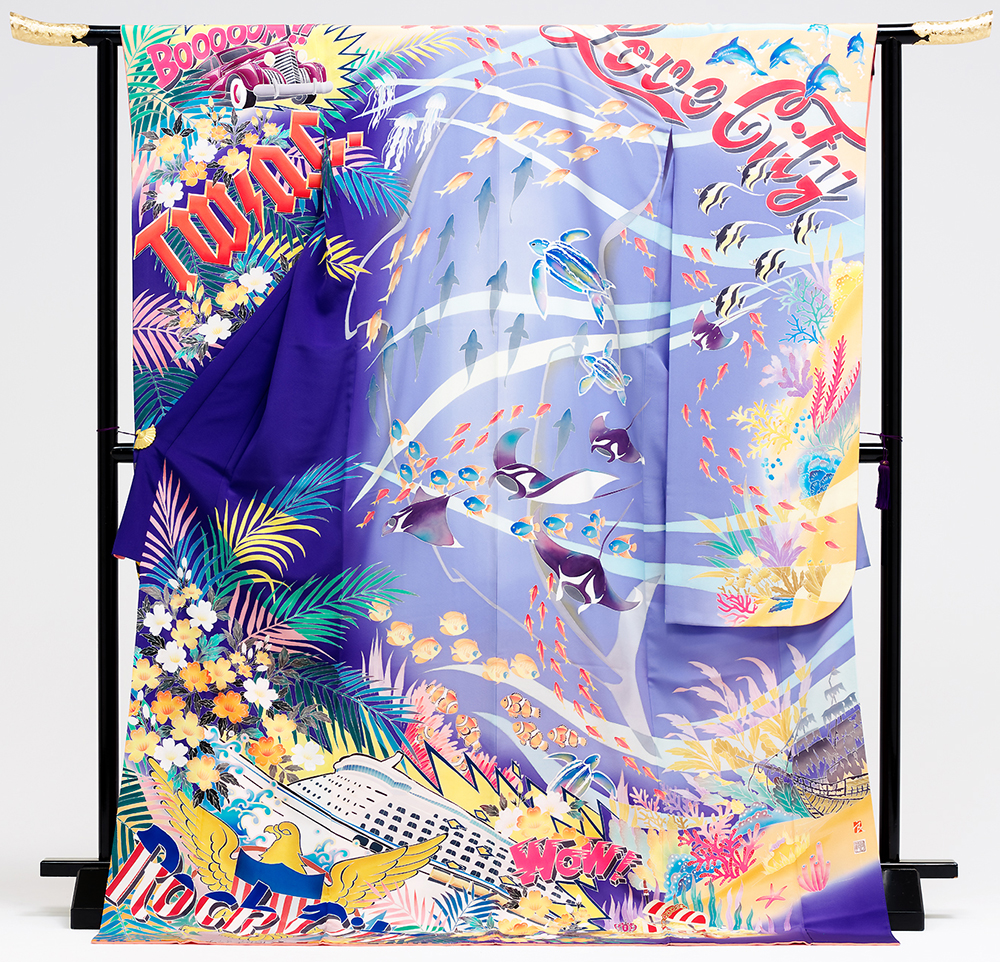
Inspired by how the main three islands are affectionately called "Rock City," "Twin City" and "Love City," the design features very American fonts. You can also see pirate ship treasures, luxury cruise ship, Cadillac, Pontiac, Gibson, and Les Paul. The world's largest and very rare shell-less leatherback turtle, manta rays, whale sharks, and clownfish are swimming in the ocean while, on the ground, there are palm leaves and yellow bells in full bloom. This work is full of playfulness.

- October 2016 -
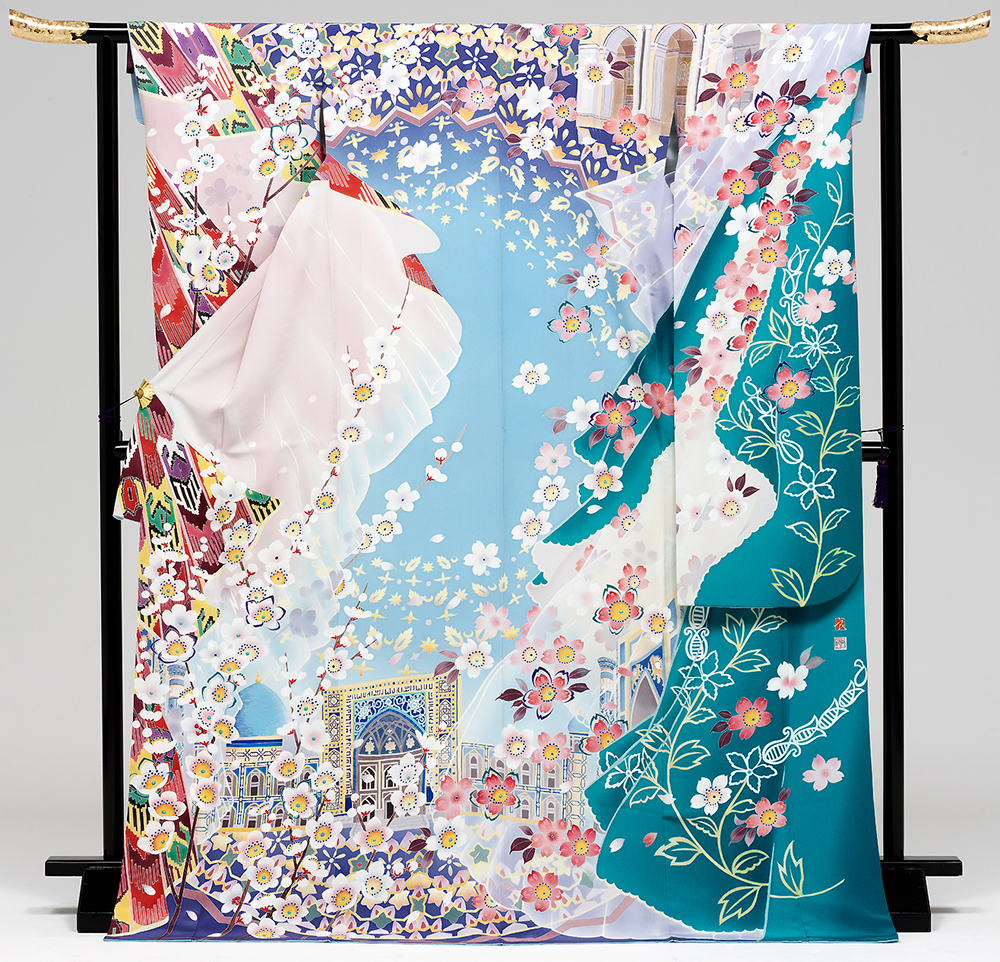
Uzbekistan was where many interned Japanese soldiers were transferred from Siberia, and many of them could not return to their home country. Inspired by this story, I decorated the Navoi Theater with cherry blossoms. The cherry trees planted by the bereaved families still blossom every year. Drawing the patterns of traditional Uzbekistani textile "Abrbandi" in vivid colors, the Tilla Qori Madrasasi Seminary in Registan Square is skillfully placed together with apricot flowers to express the beautiful scenery.

- 2021 SPRING / SUMMER -
With the creation of original "KIMONO" that symbolize countries and regions around the world, and to convey to the world the splendor of traditional craft culture that Japan is proud of, the project conveys the message of peace and friendship. The "KIMONO Project" was developed by Imagine One World, a general incorporated association, based on the concept of "The world is one.
Of the total 213 kimonos produced, I produced two, for the Virgin Islands and the Republic of Uzbekistan.
You can watch my works on Tokyo Girls Collection's Youtube channel. (4:55-5:15)
TOKYO GIRLS COLLECTION 2021 SPRING / SUMMER

- Stage Costumess -
Dresses / Haori Dresses
| SEIKA - "Botan" Peony (dress) - |
| This dress was produced as part of the New Kaga Yuzen project in Kanazawa City. The dress was made from scratch with the idea of challenging something that is not a kimono. The silhouette of the dress was designed by me, and the sewing was done in 5mm increments through trial and error with a pattern maker. The sleeves are detachable, and can be taken off for ease of use during the performance. The peonies on the design are designed to express the expansiveness and dynamism of music.
|
|
|
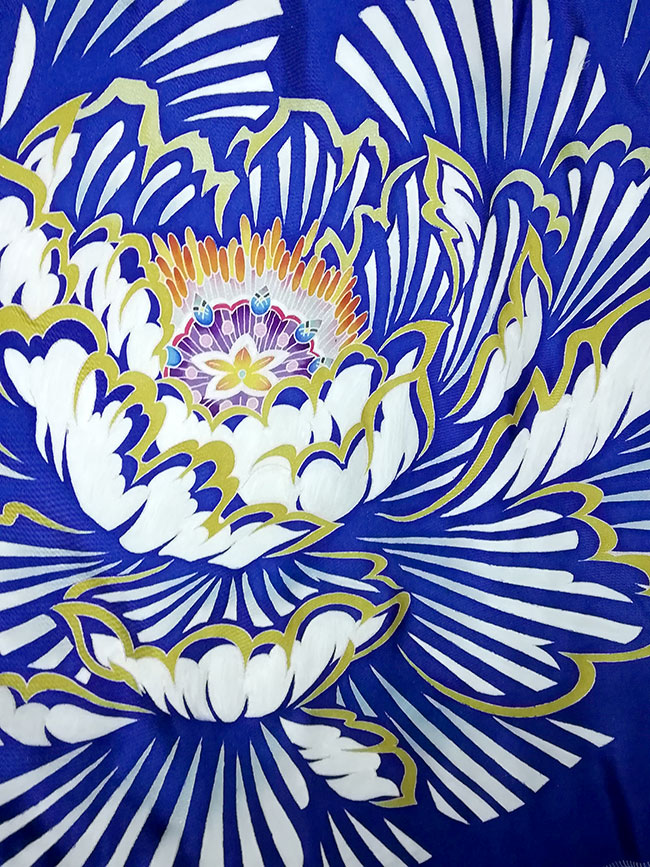
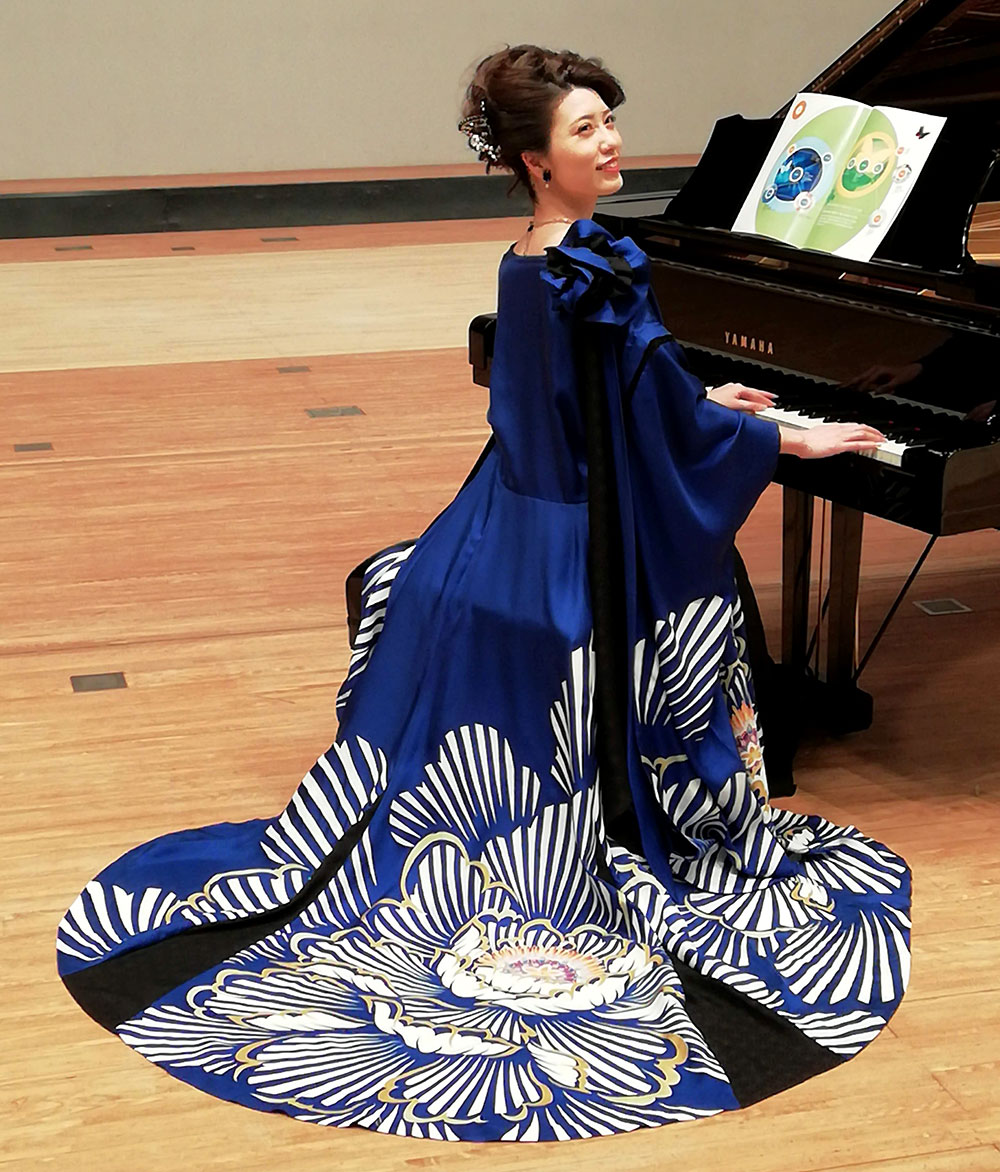
Model: Rina Matsuda (14th Miss Kaga Yuzen)
|
MELODY IN BLOOM Hana Saku Melody- Ranunculus (Haori dress) - |
| Created for Tomoko Ueda, a harpist. At her request to use her favorite ranunculus flowers, the dress is boldly composed of ranunculus and flows throughout with lines reminiscent of staves. The arabesque pattern on Mr. Ueda's harp was also incorporated into the design to give it extra originality. This was only possible because the dress was made to order. The vivid pink color of the base color also looks great on stage. She has received many requests to for her to perform in this dress, and it has received very positive feedback from the audience.
|
|
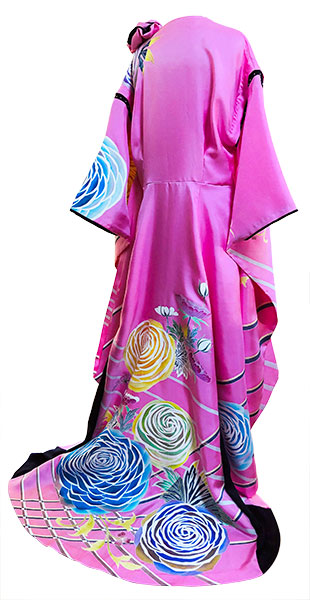
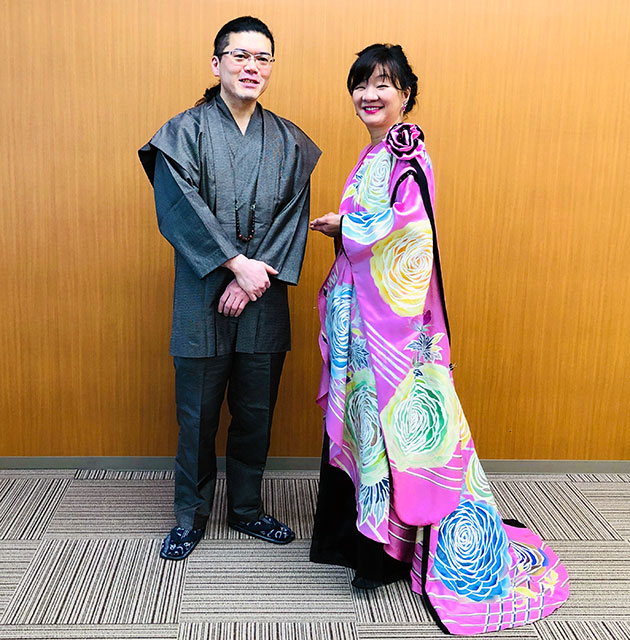

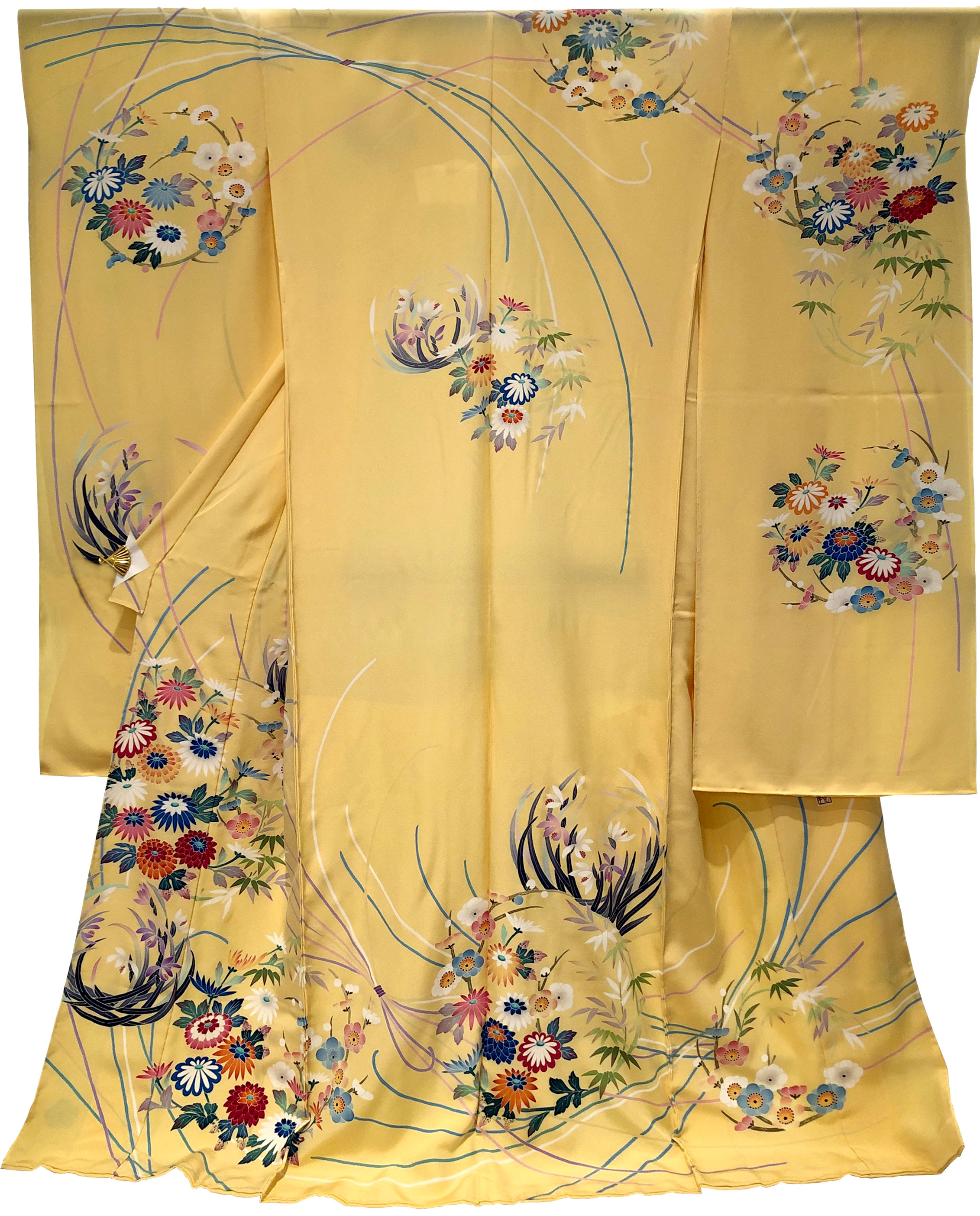
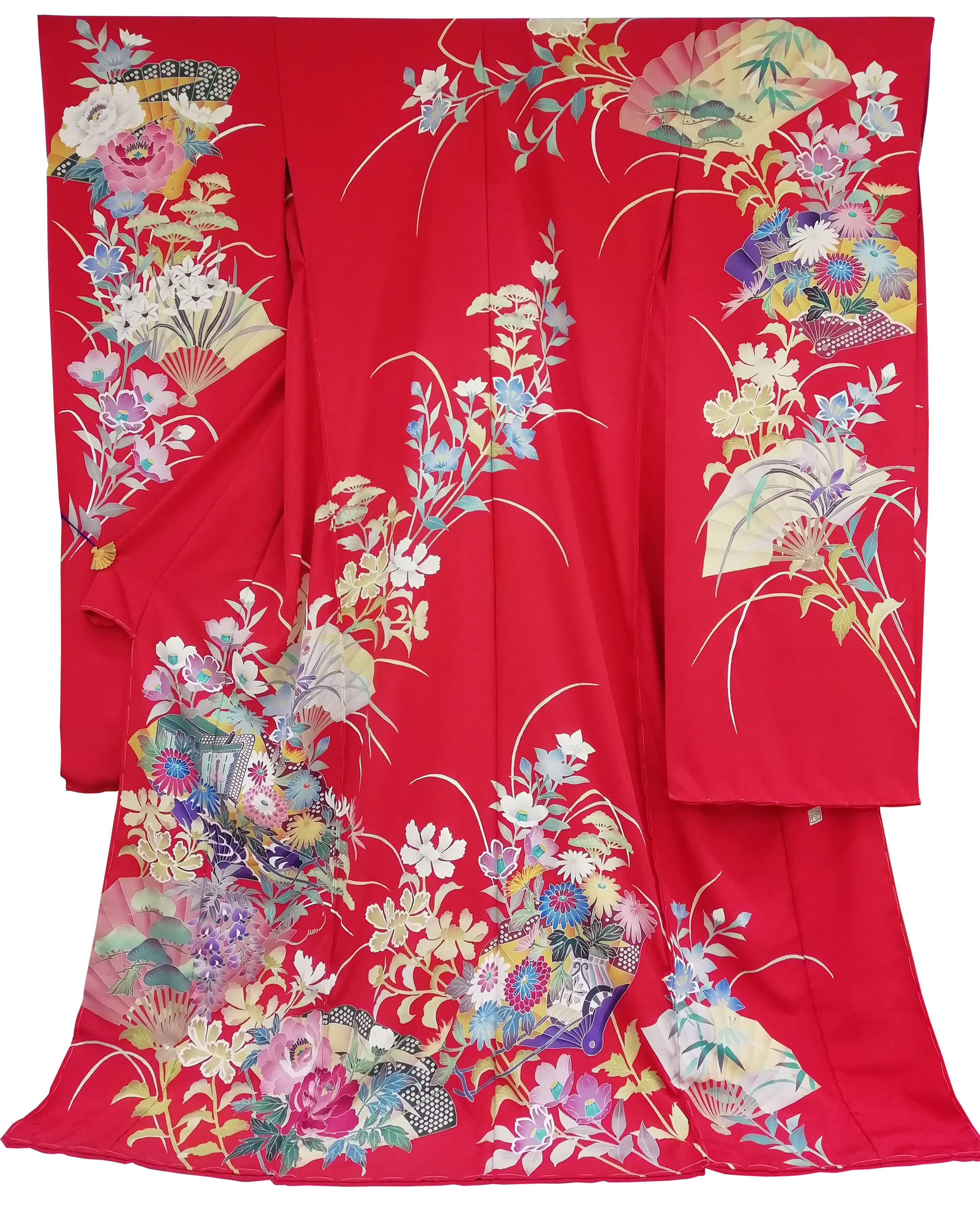
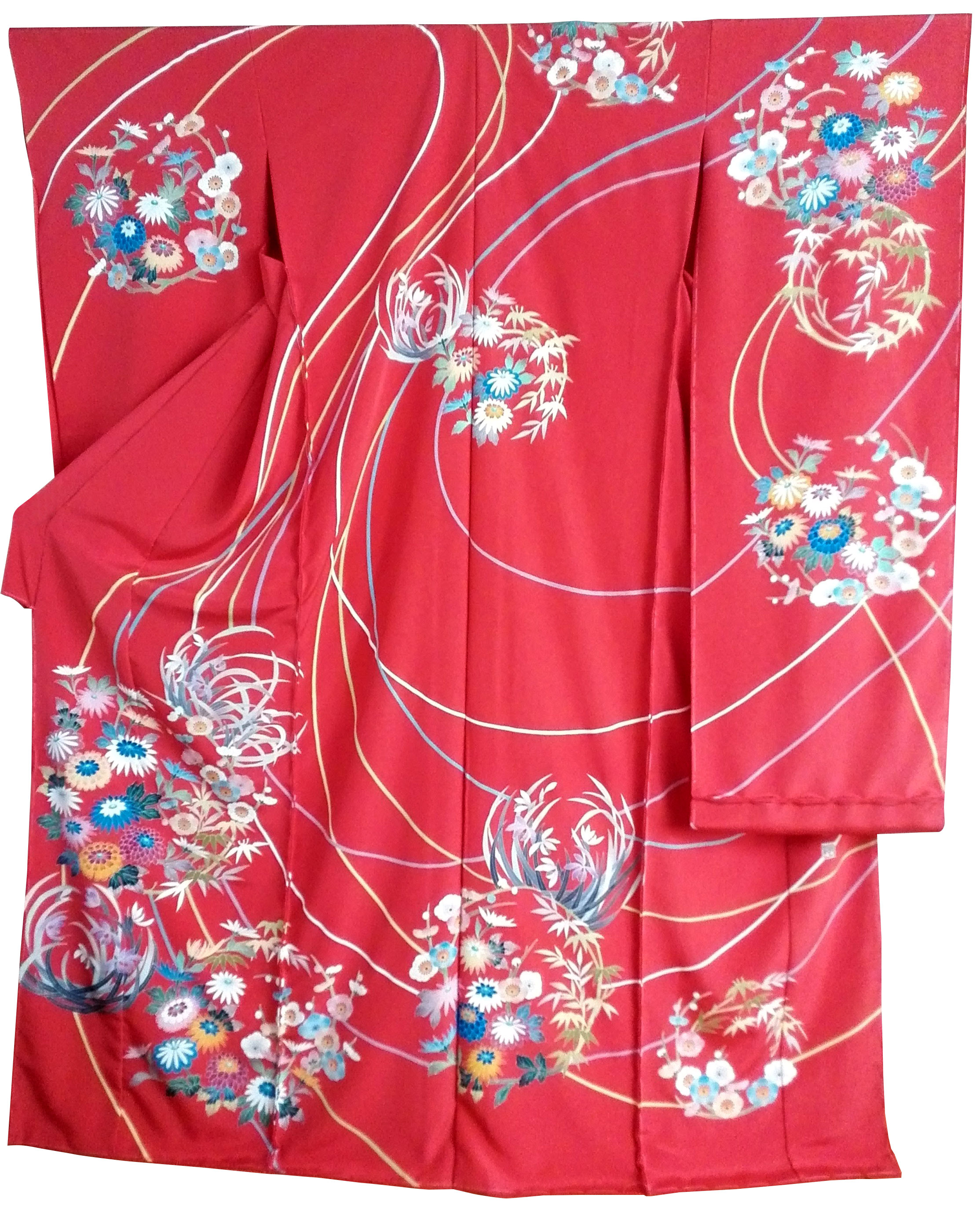
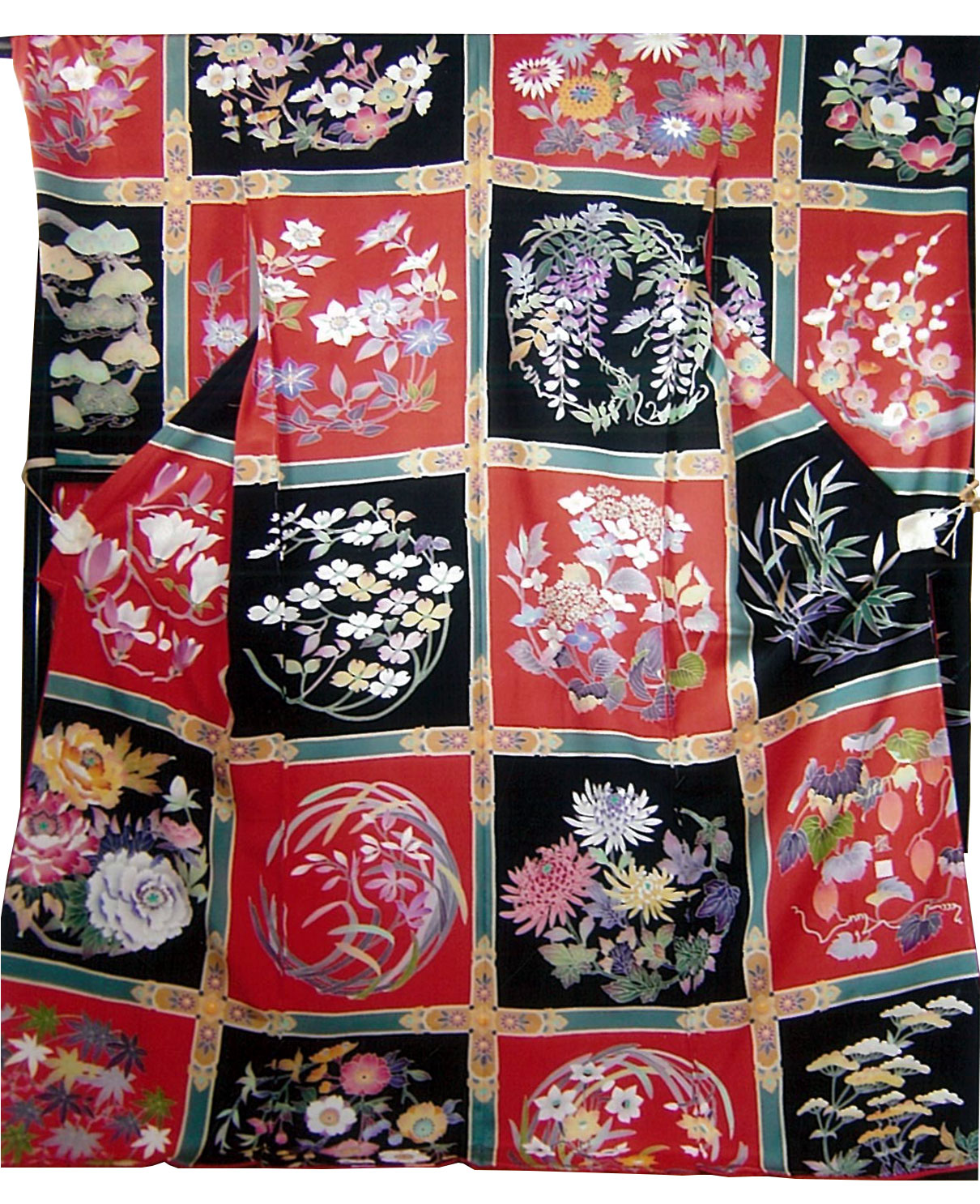
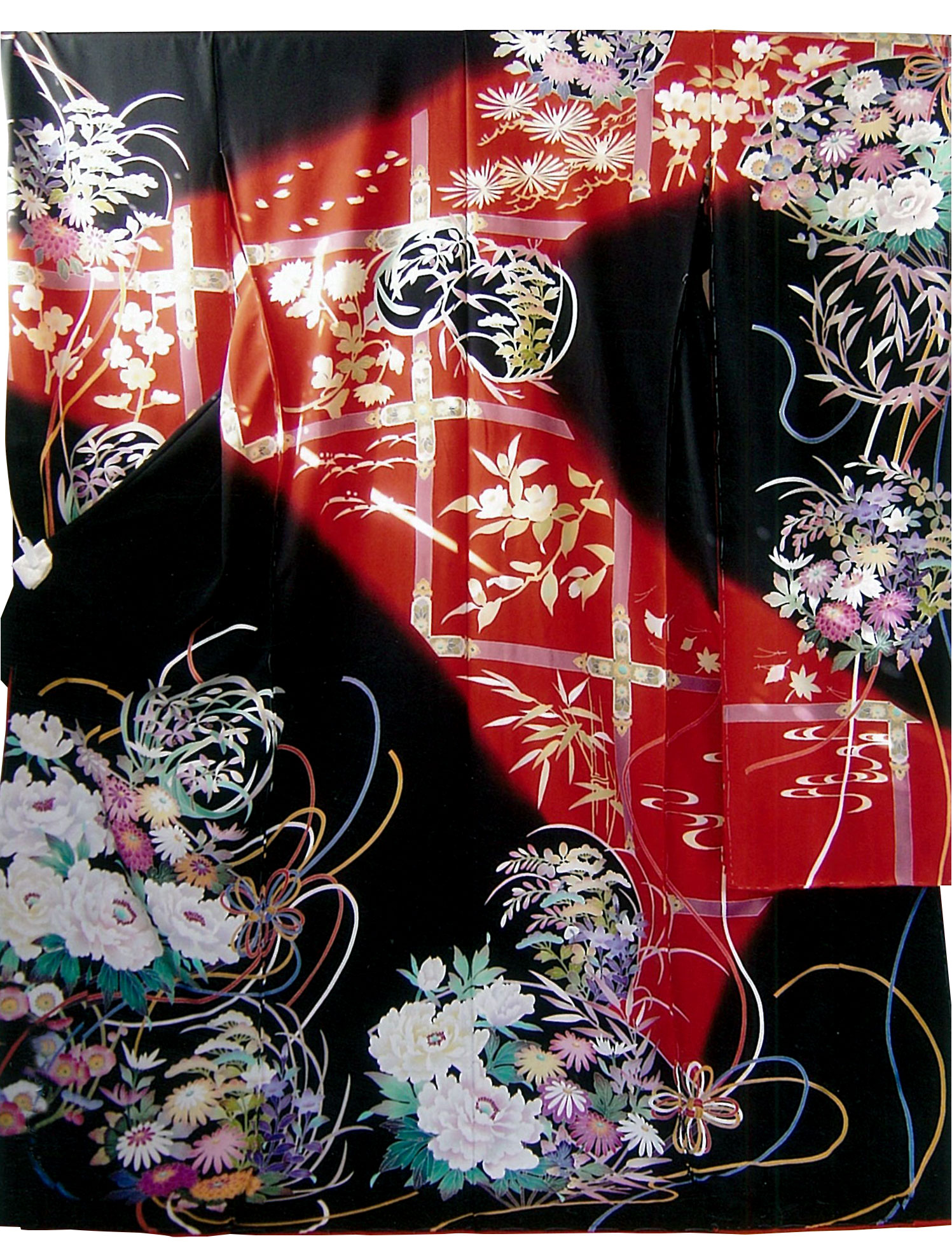
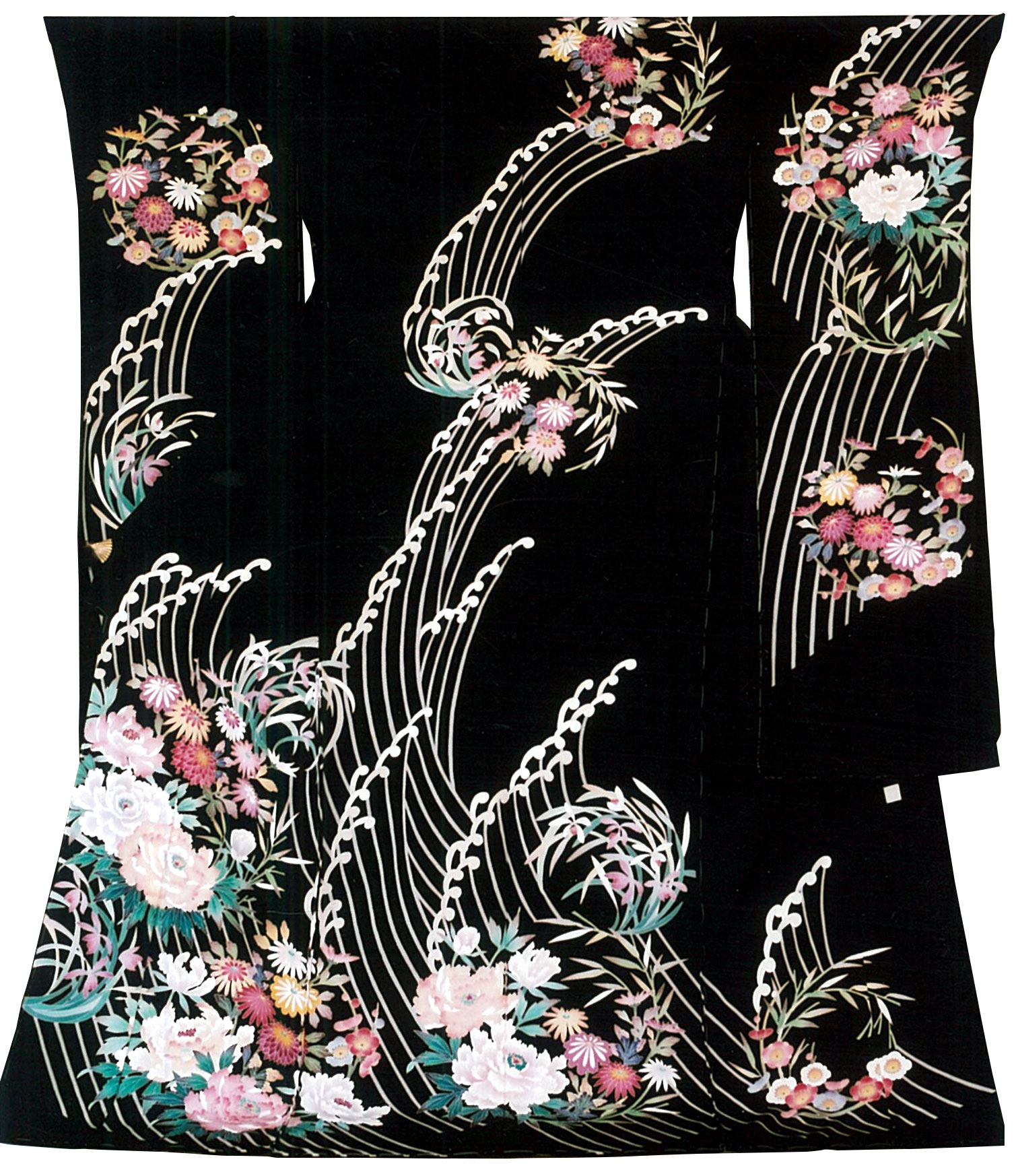
Furisode is a kimono with long sleeves that are made by reducing the number of seams between the body and the sleeves. It is the formal wear of today's young women, equivalent to kuro-tomesode, shiro-tomesode, and homon-gi, and is often worn at coming-of-age ceremonies and weddings both as bridal gowns and by attendants.
|
MIZUHIKI NI HANAMARU SHIKUNSHI Mizuhiki art with round flower motifs - Furisode 2020 - |
|
HIOGI NI SOKA Japanese cypress fan with flowers - Furisode 2018 - |
|
RYUSEN NI HANAMARU SHIKUNSHI Streamlines with round flower motifs - Furisode 2017 - |
|
TENJO E Ceiling painting - Furisode 2014 - |
|
HANAMARU TENJO E Round flower motif ceiling painting - Furisode 2010 - |
|
NAMI NI HANAMARU Waves with round flower motifs - Furisode 2009 - |

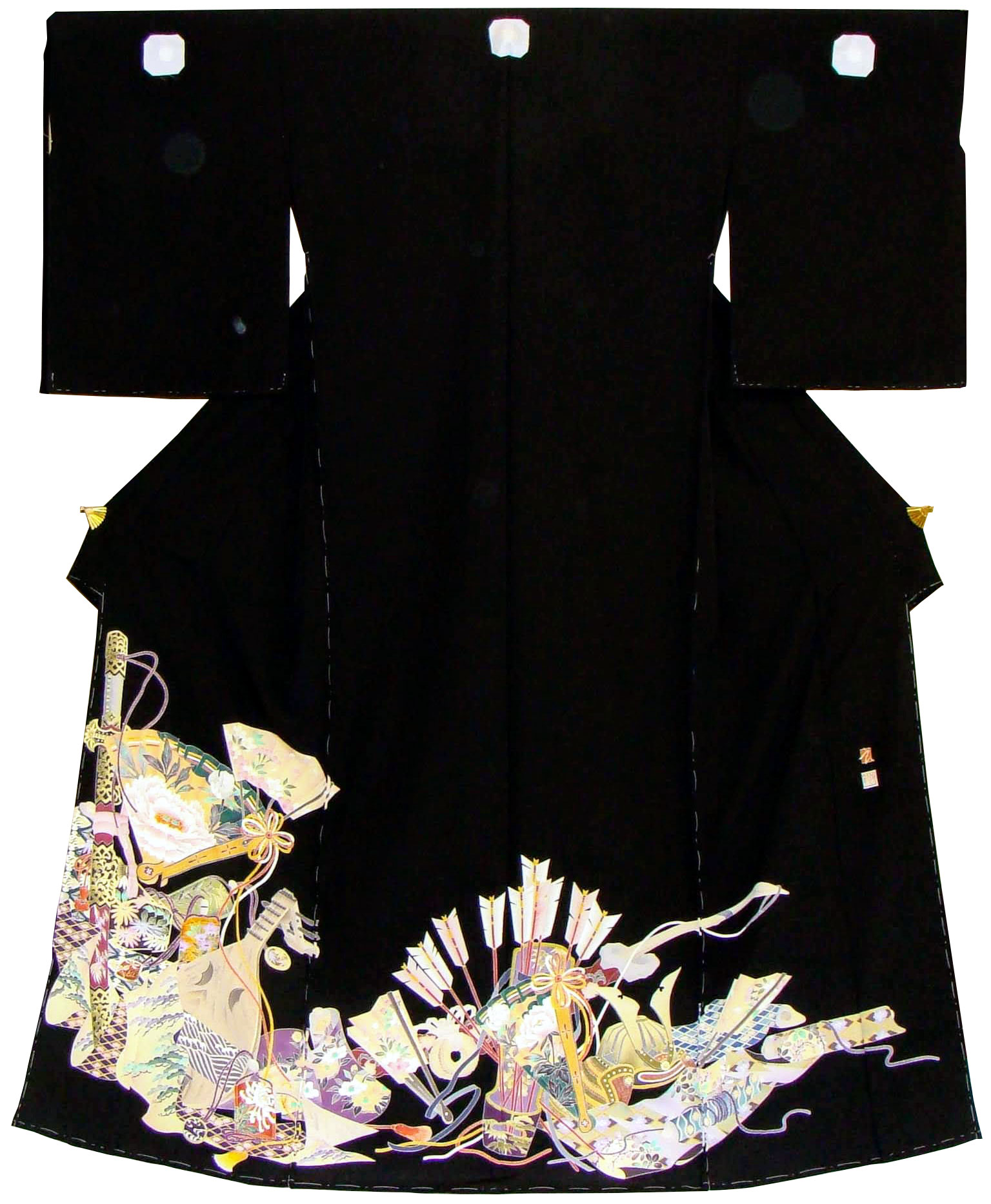
Tomesode is the most prestigious formal wear of kimono for married women. It is the first formal dress in terms of kimono rank and is equivalent to evening dress in the West, but unlike evening dress, it has no time zone restrictions and can be worn day or night.
|
BUGU ZU Armor chart - Tomesode 2009 - |
|
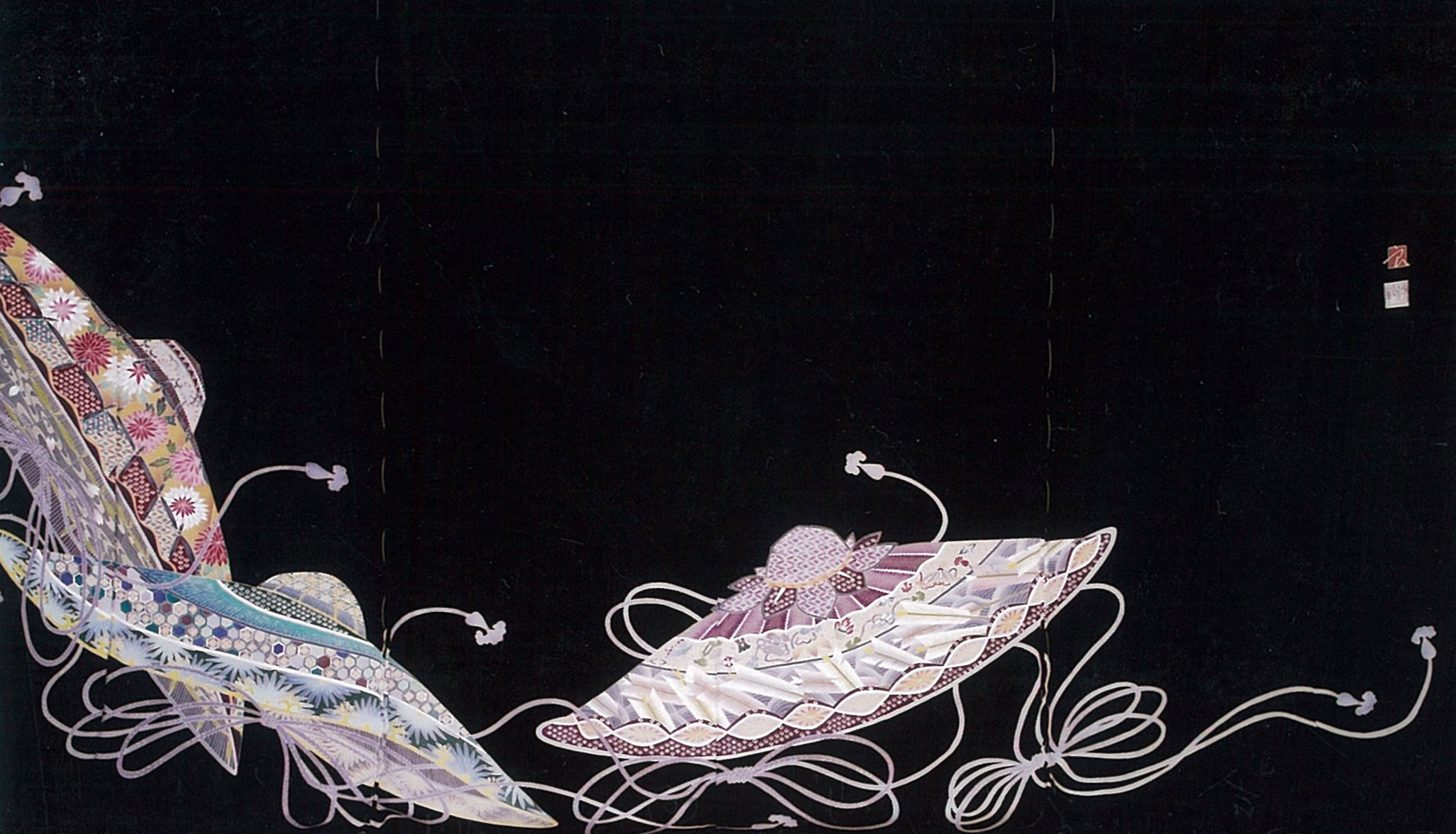
HANAGASA Flower-adorned hat motifs - Tomesode 2008 - |
|
HANAGASA NI SOKA Flower-adorned hats with flowers - Tomesode 2008 - |

- Visiting Kimono -
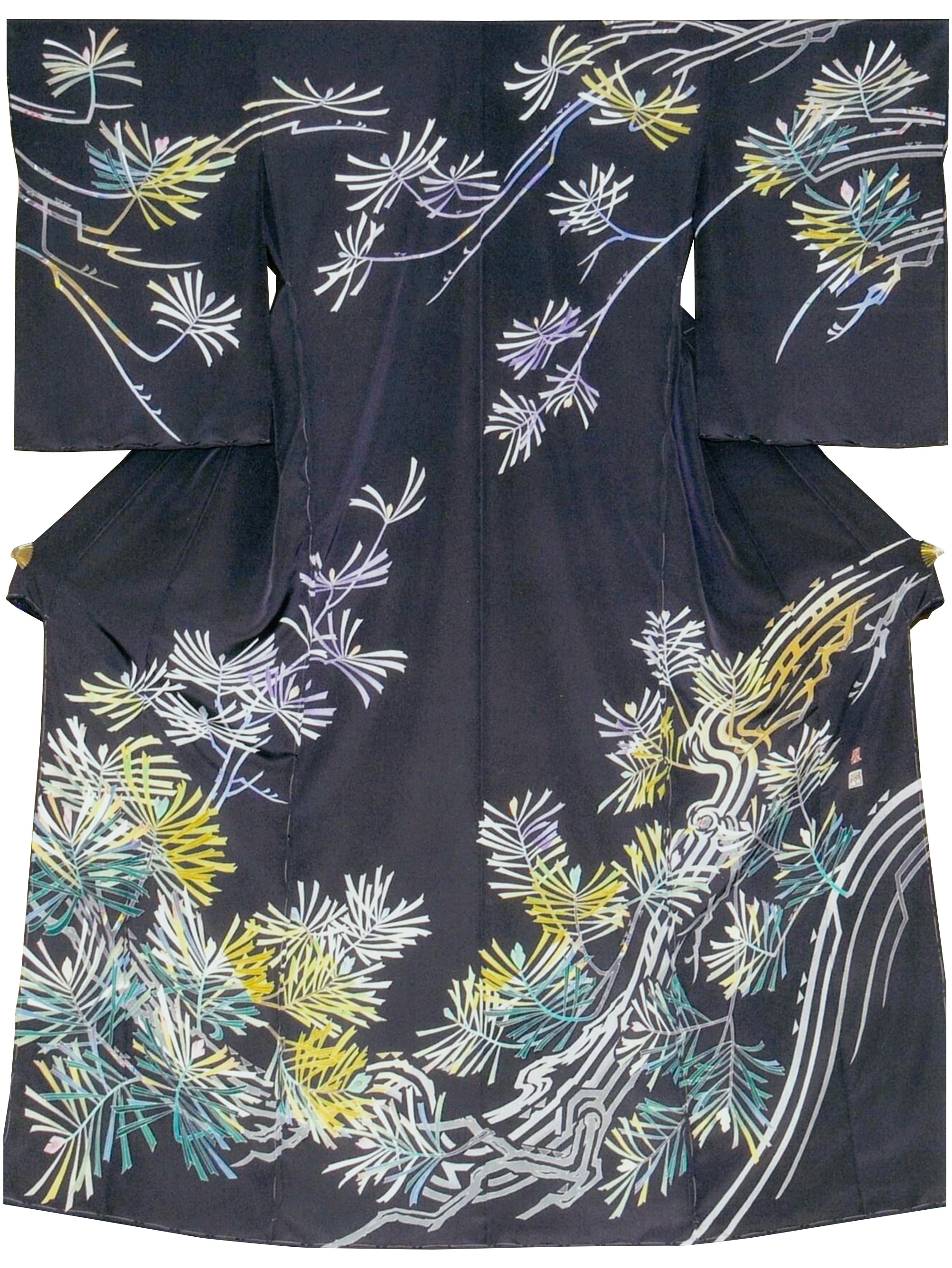
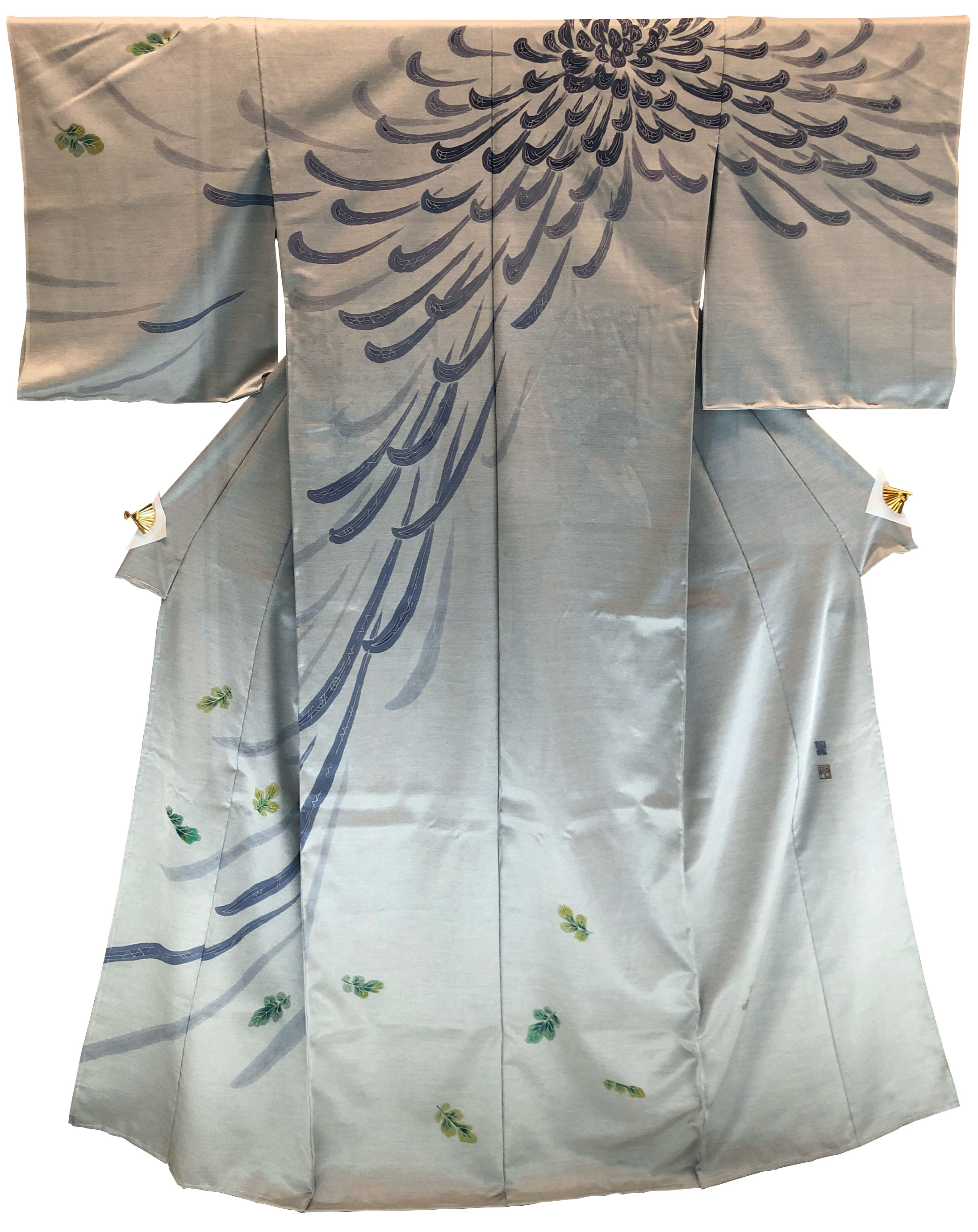
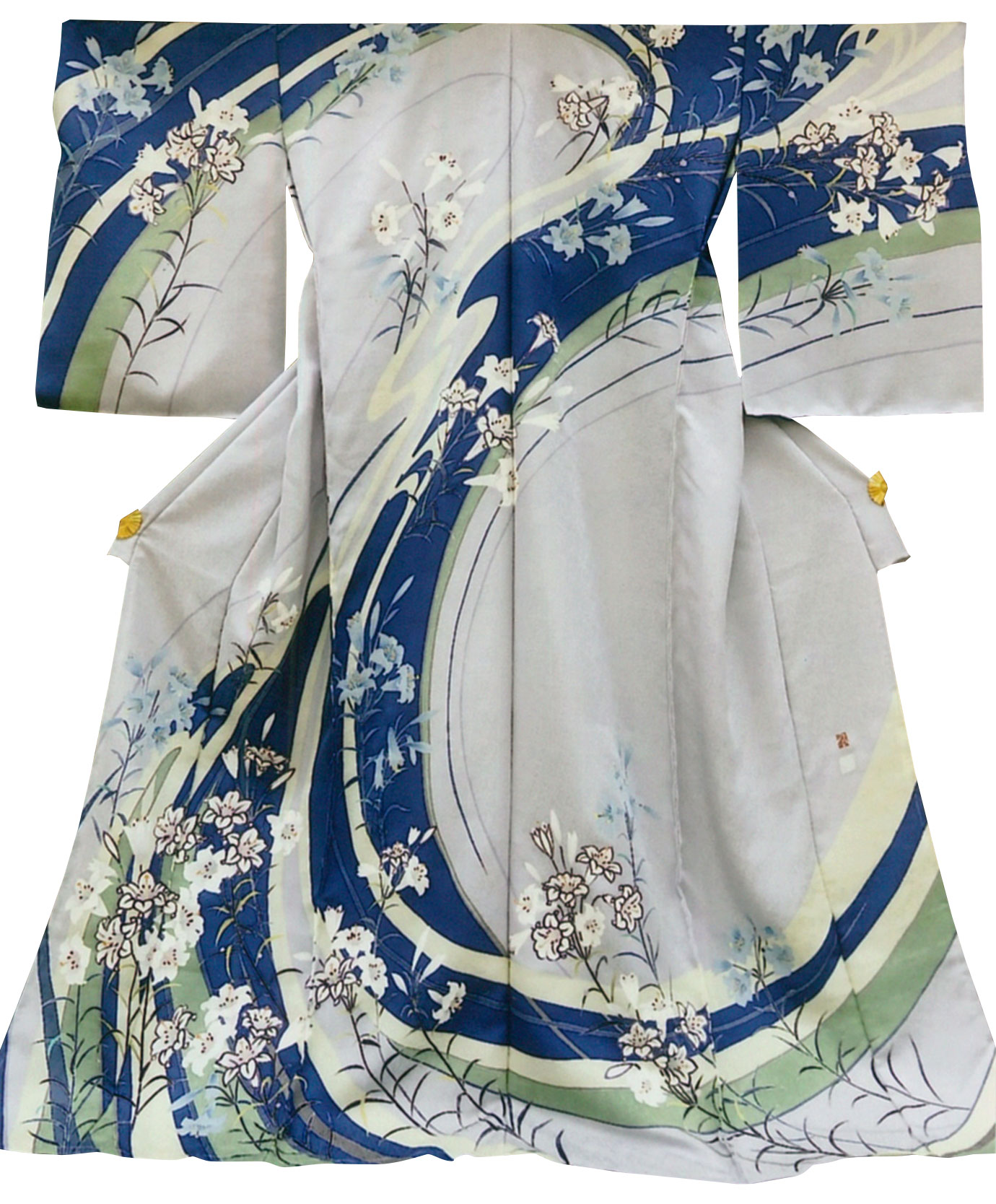
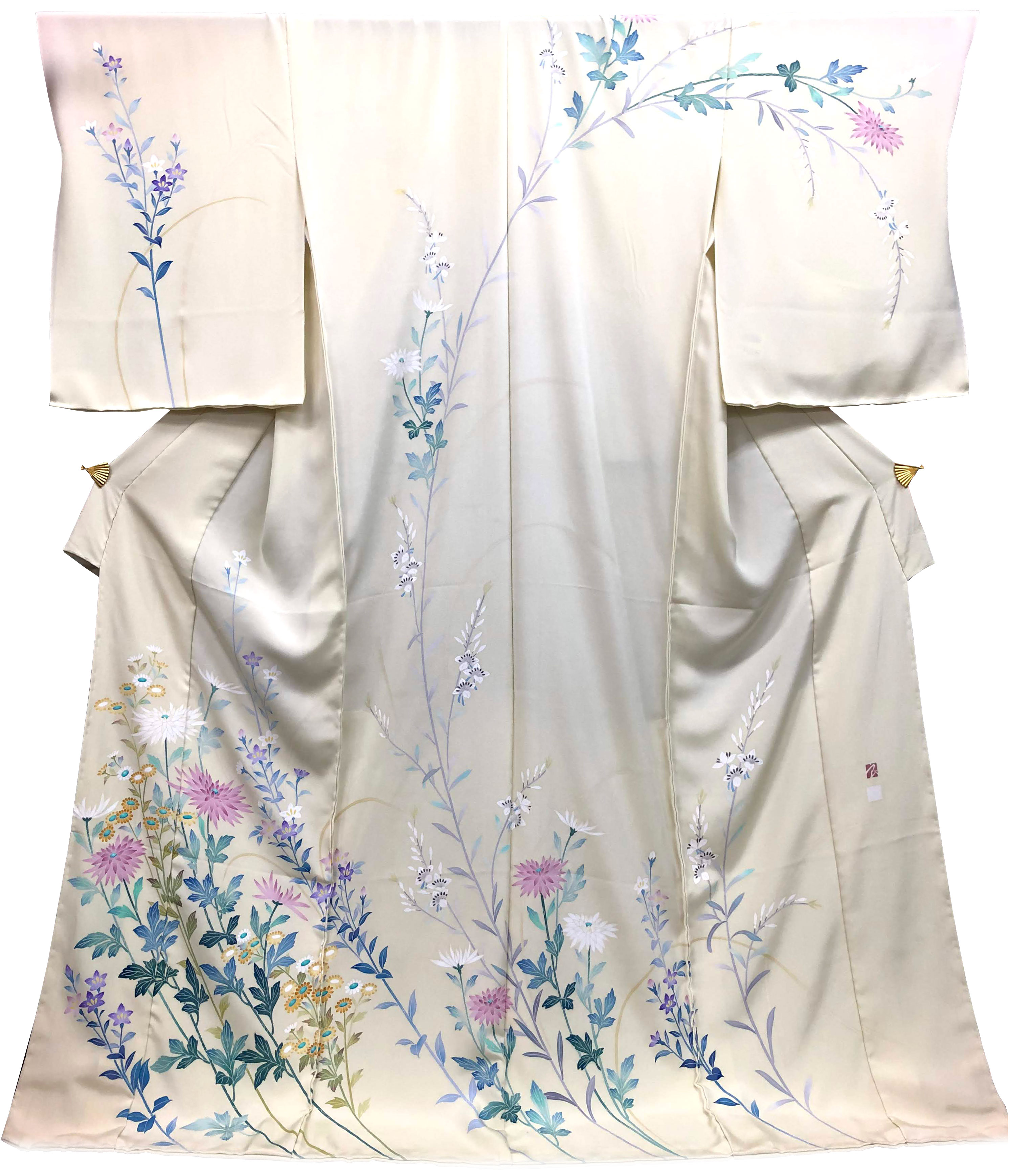
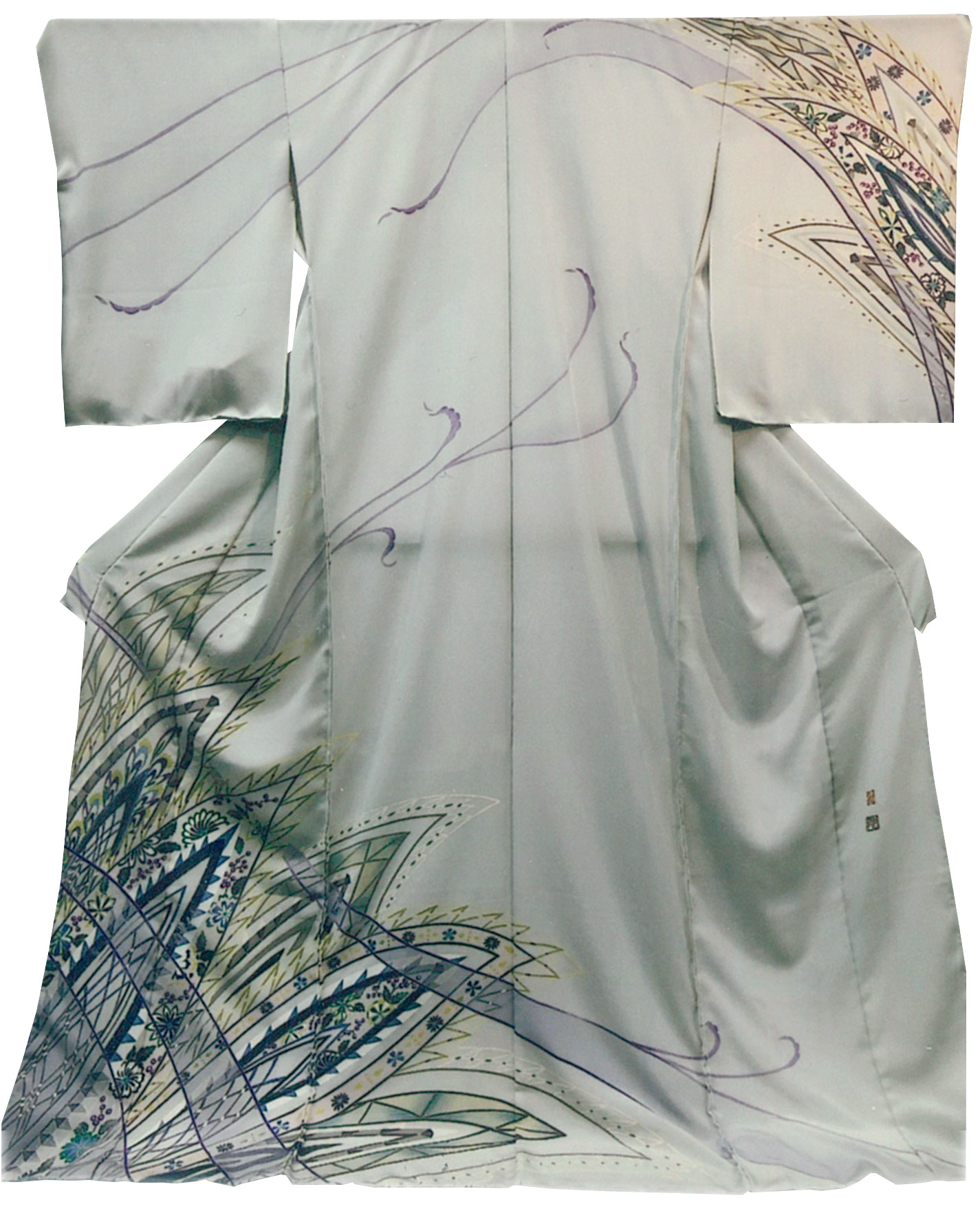
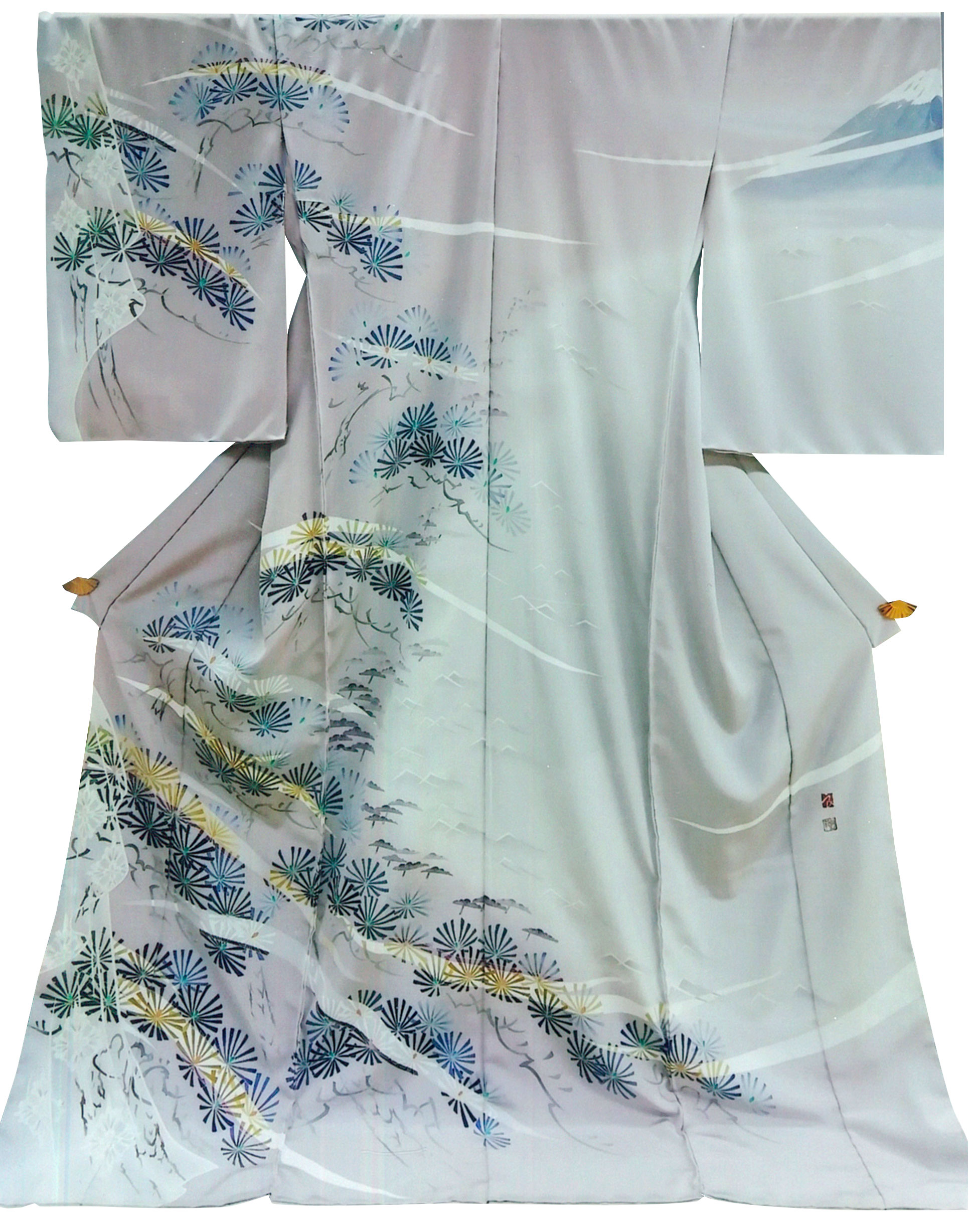
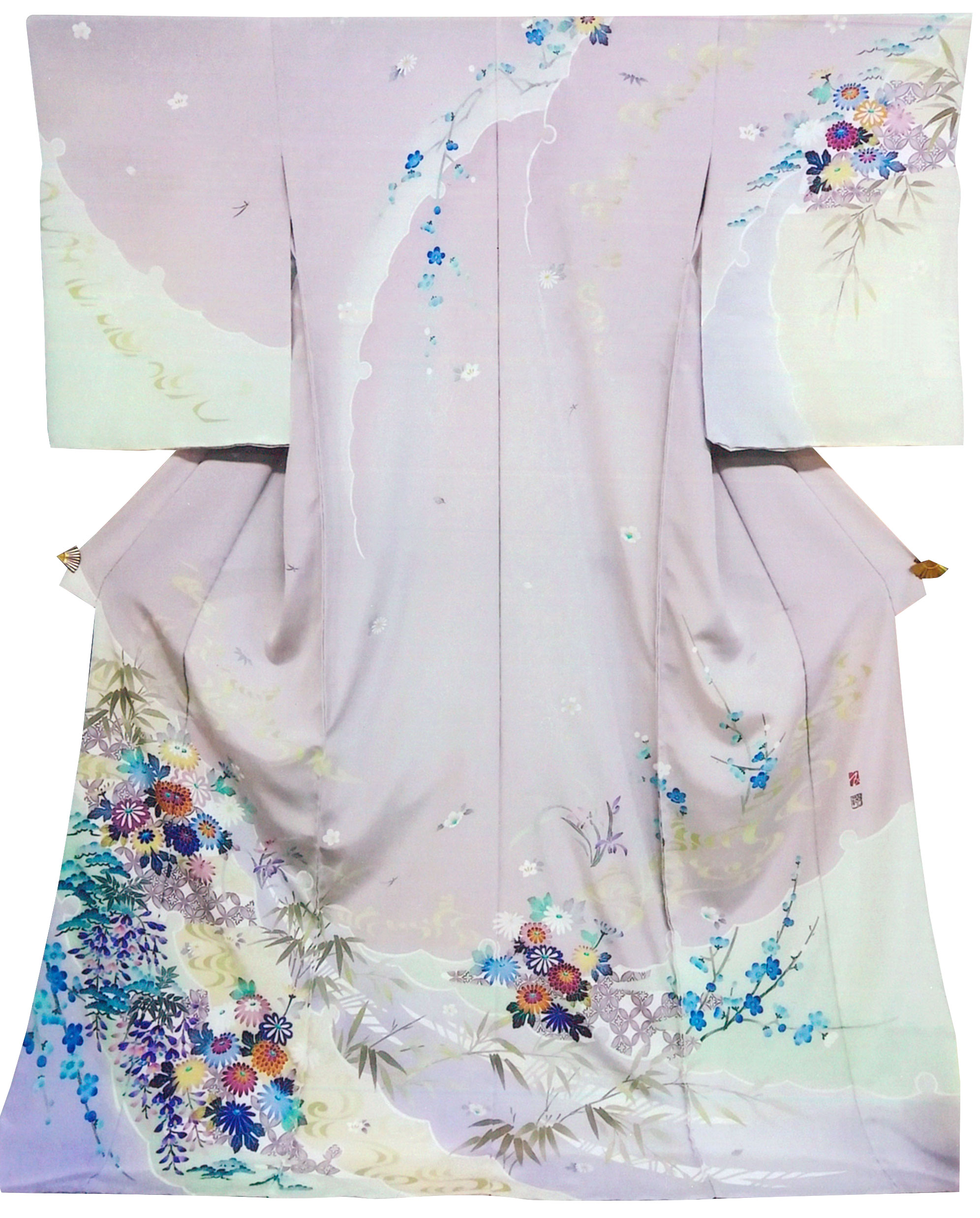
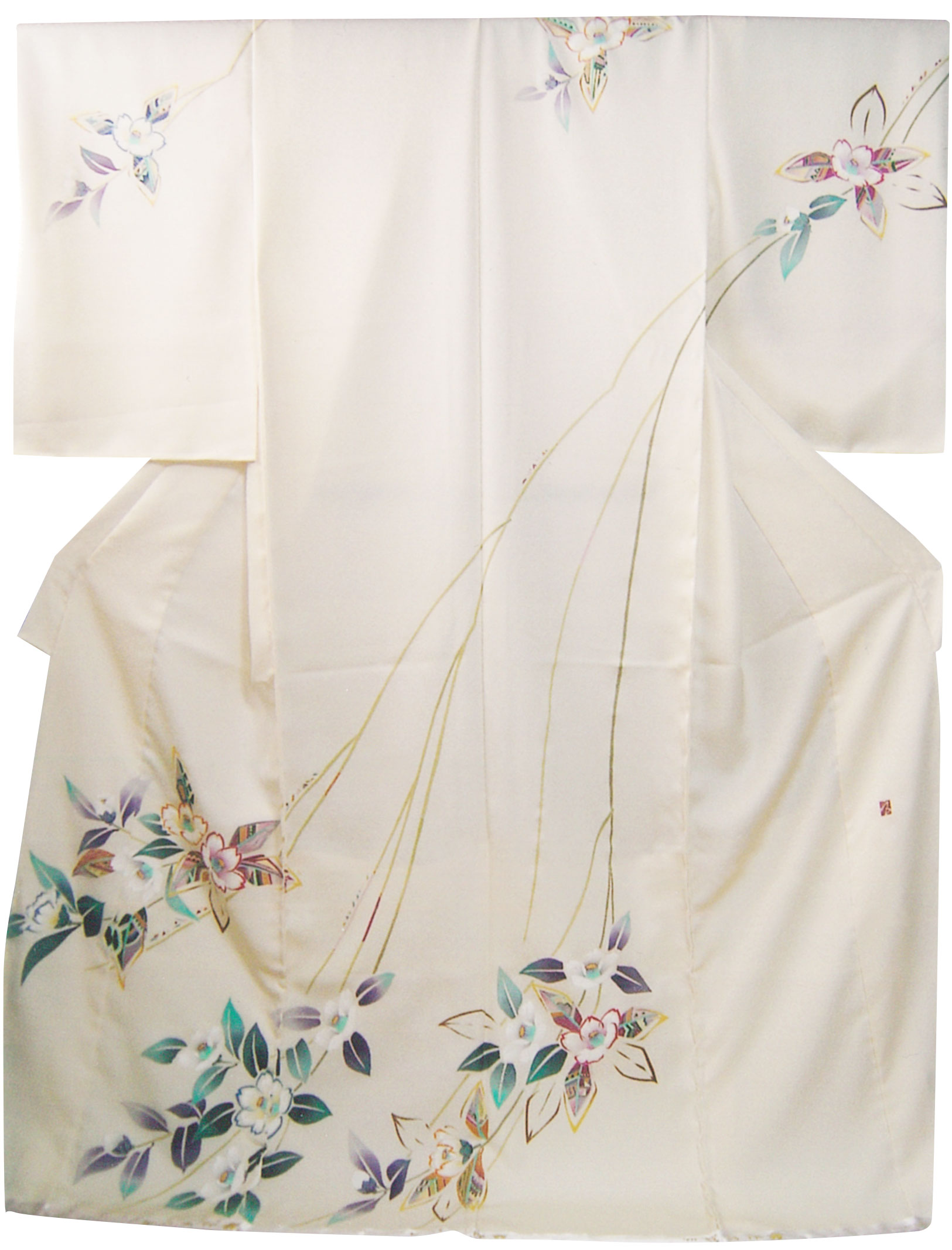
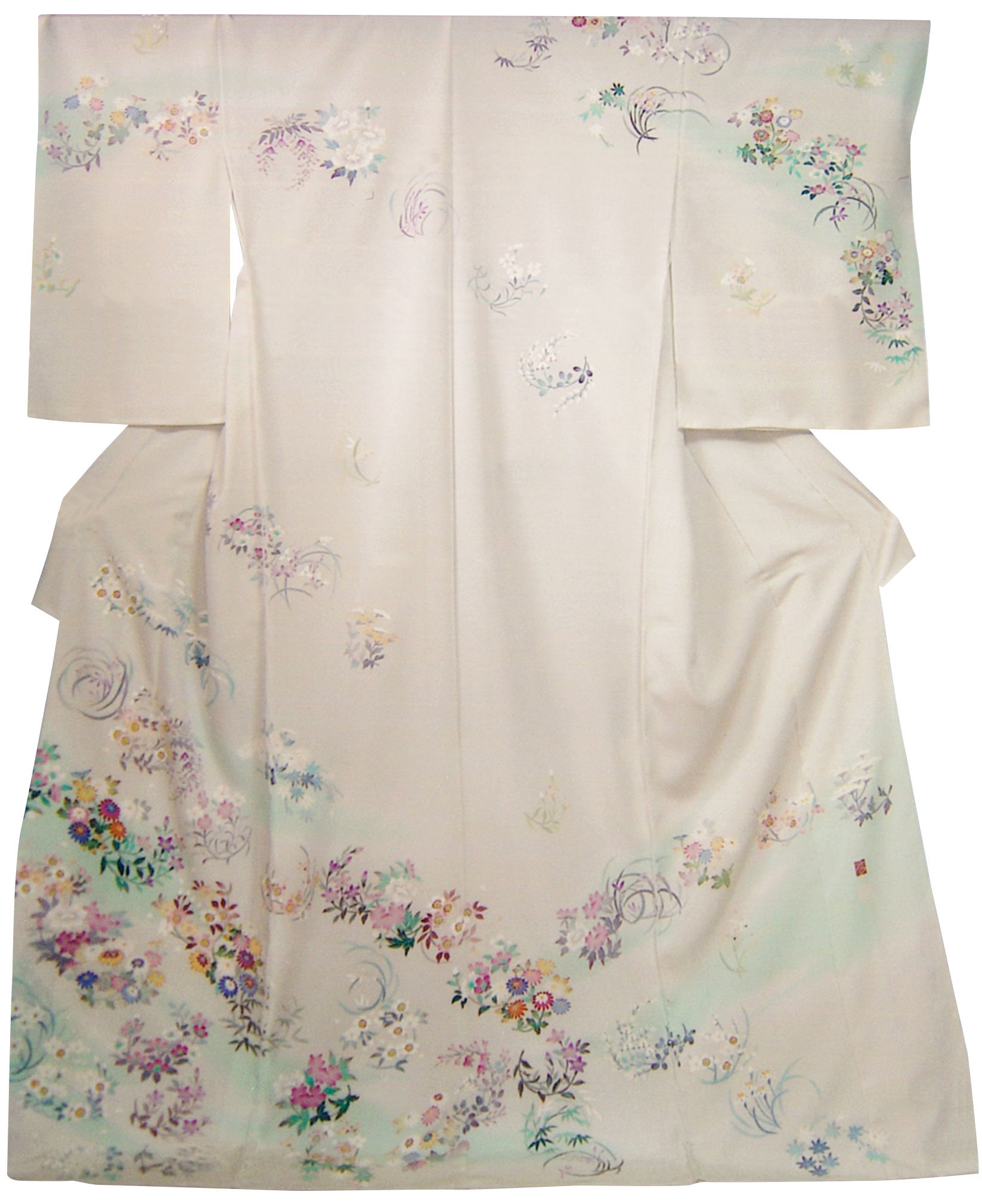
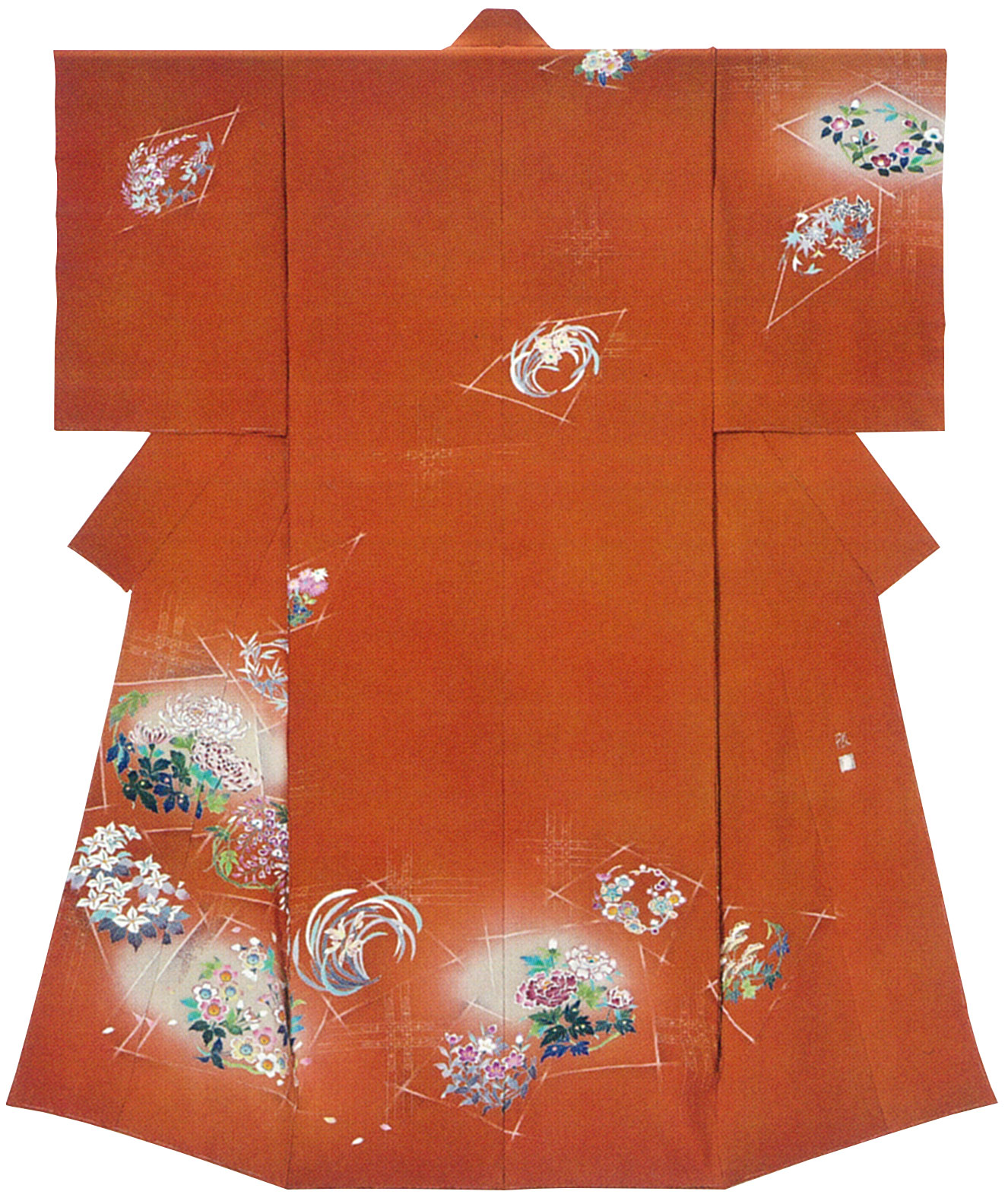
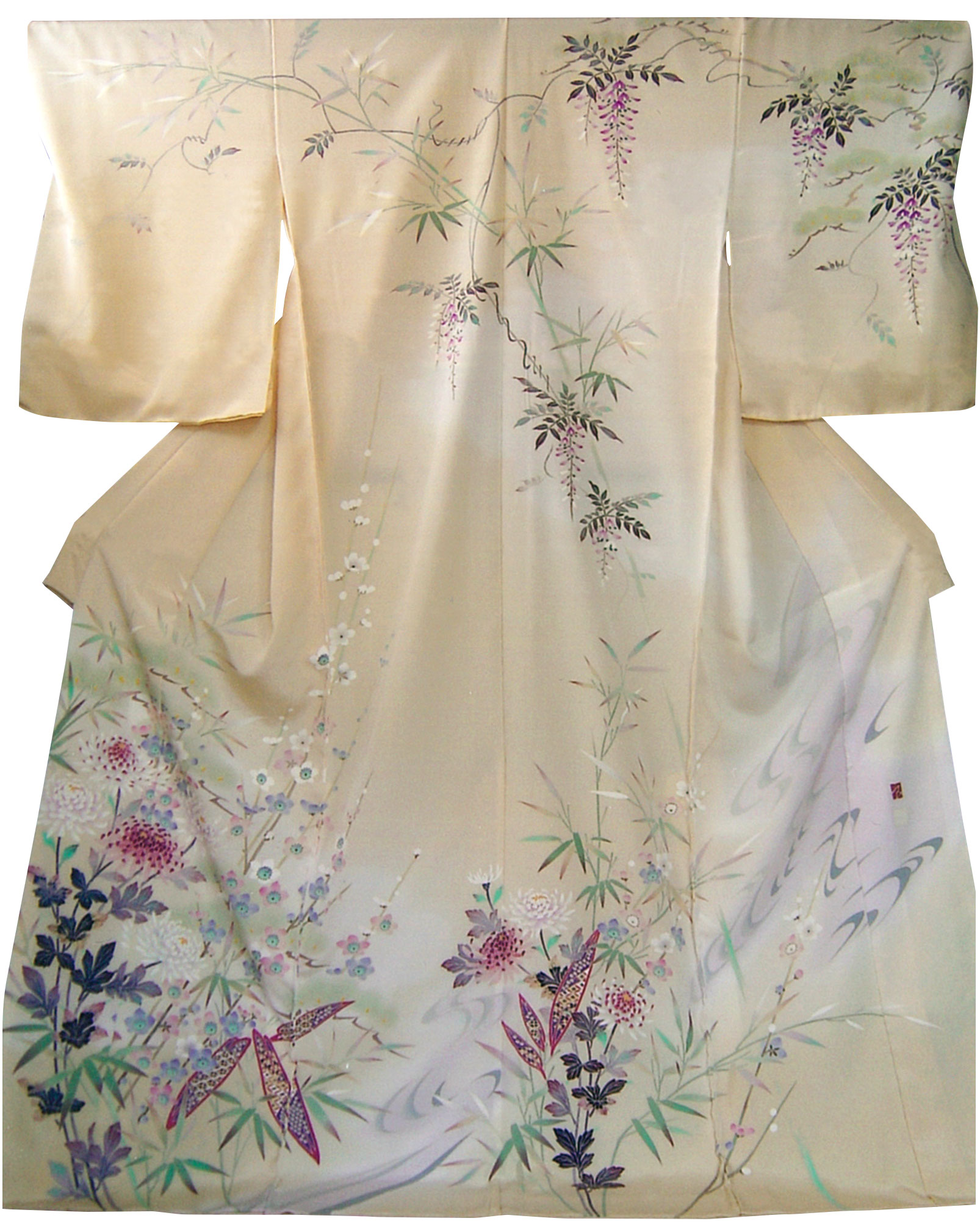
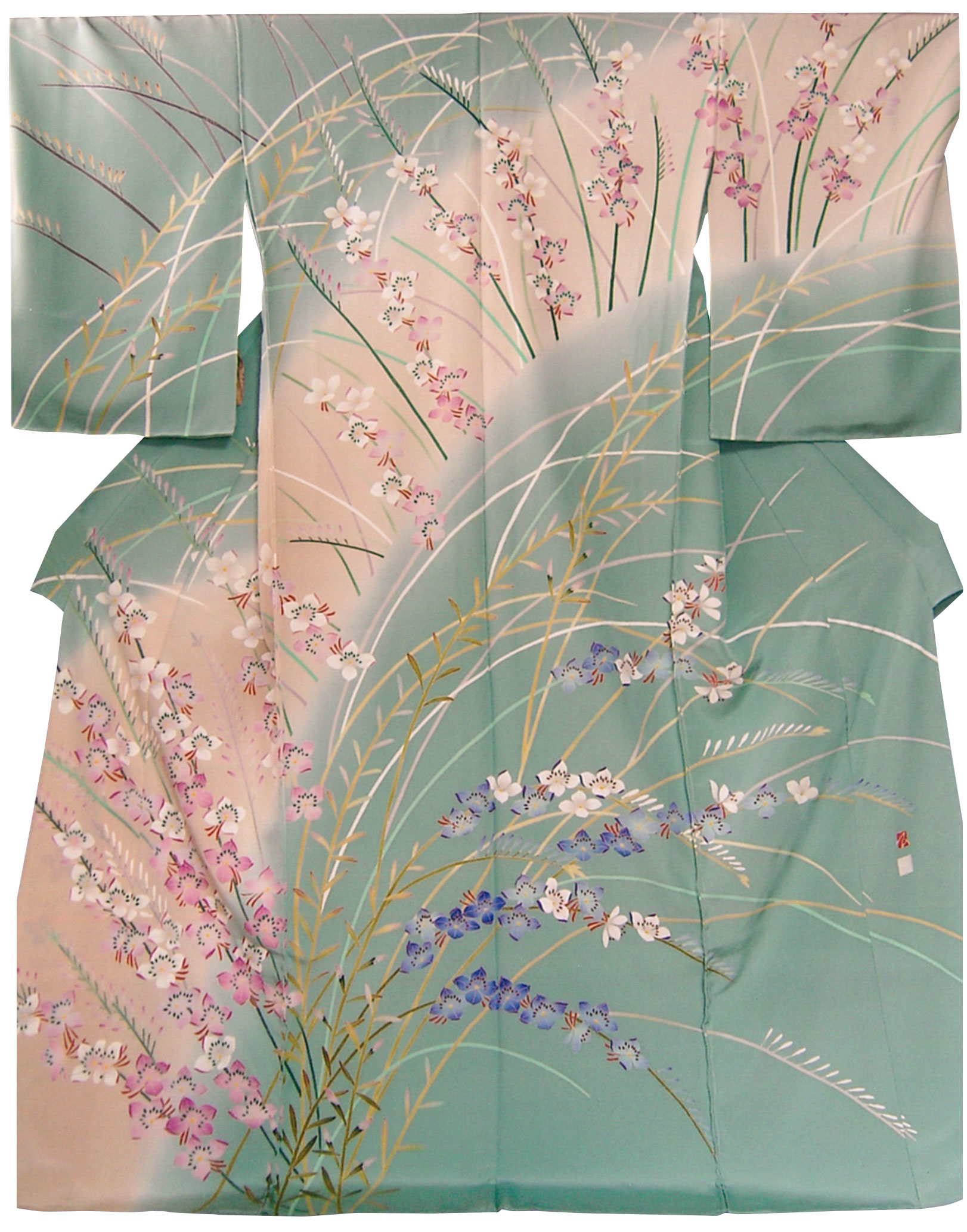
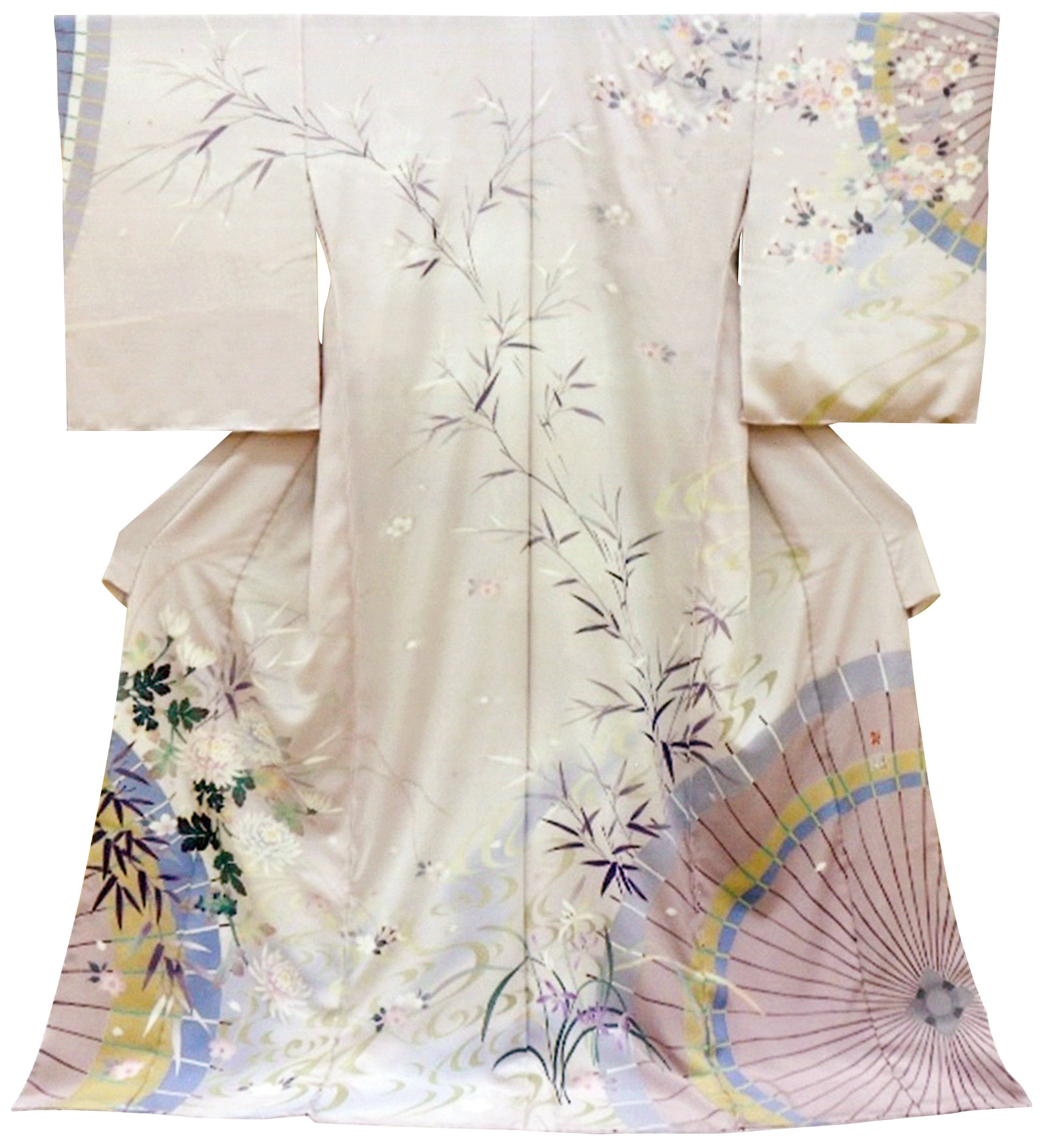
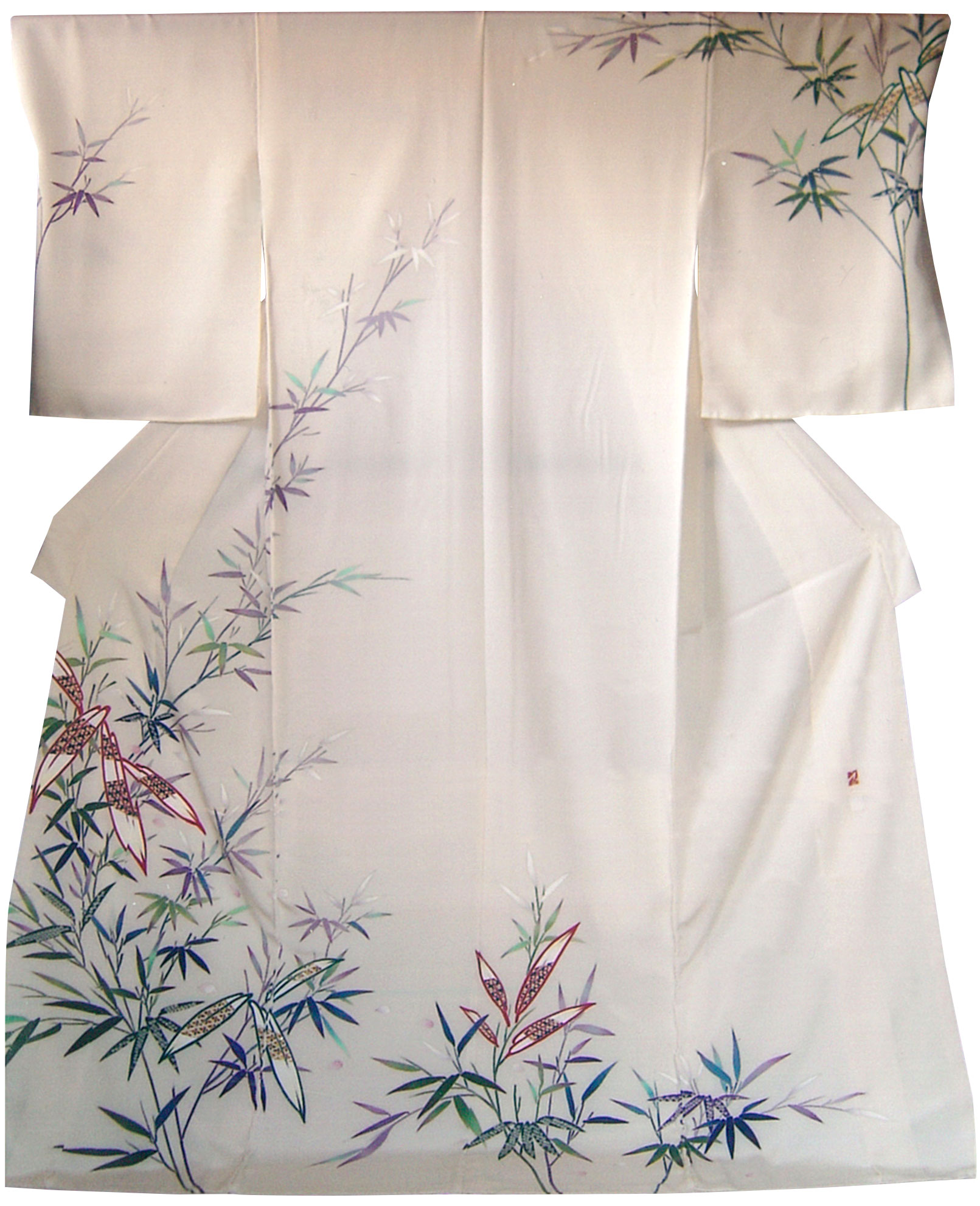
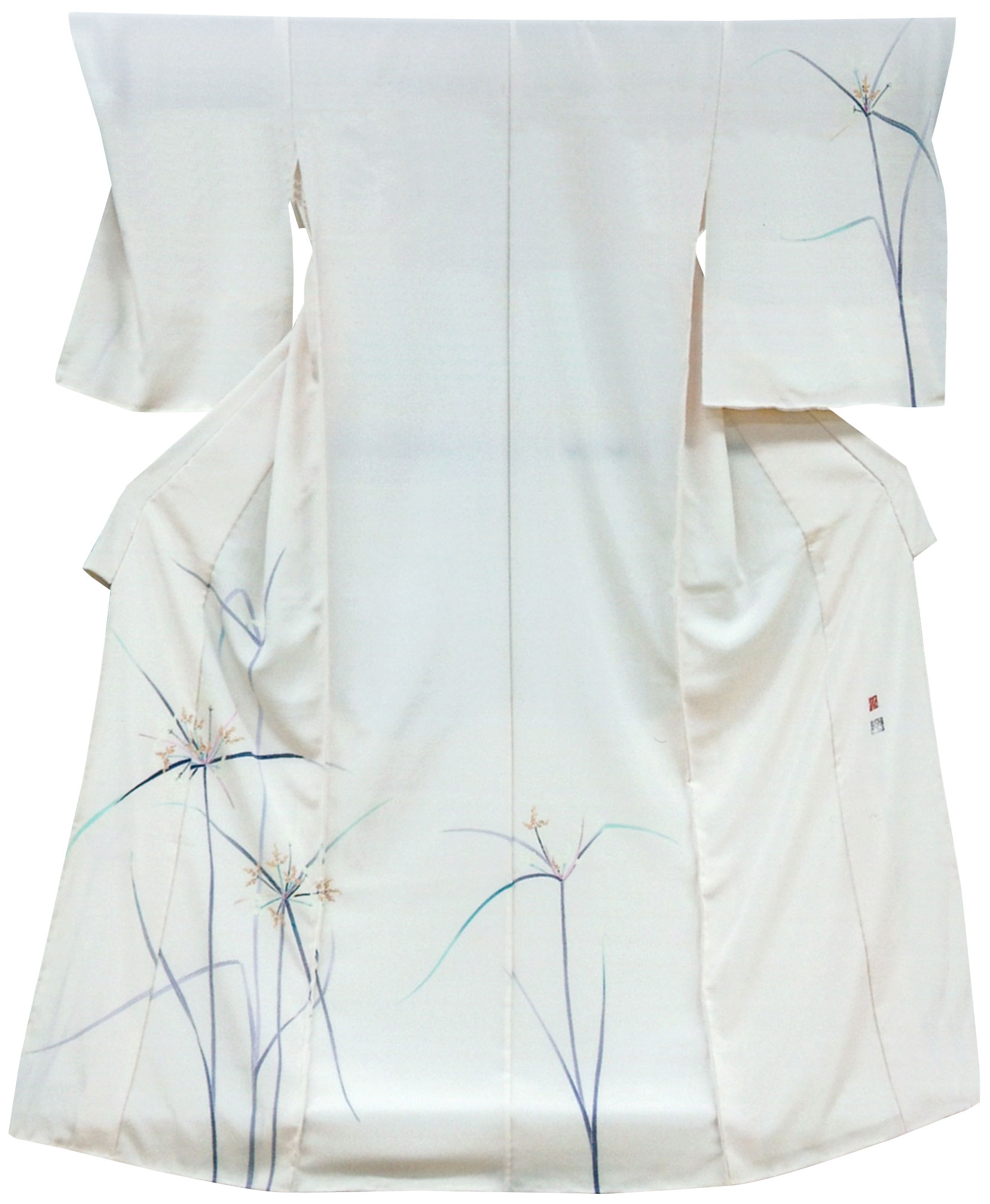
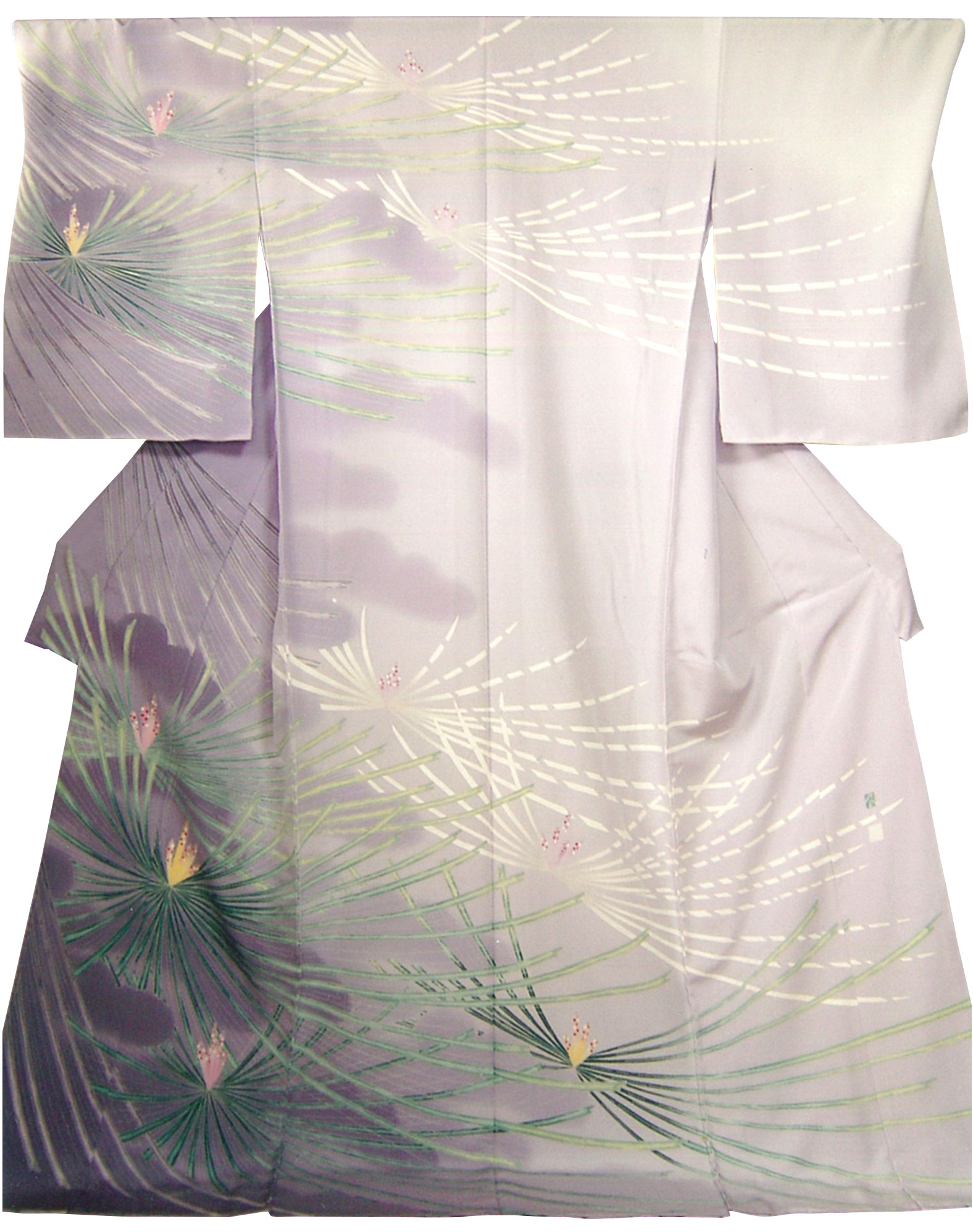
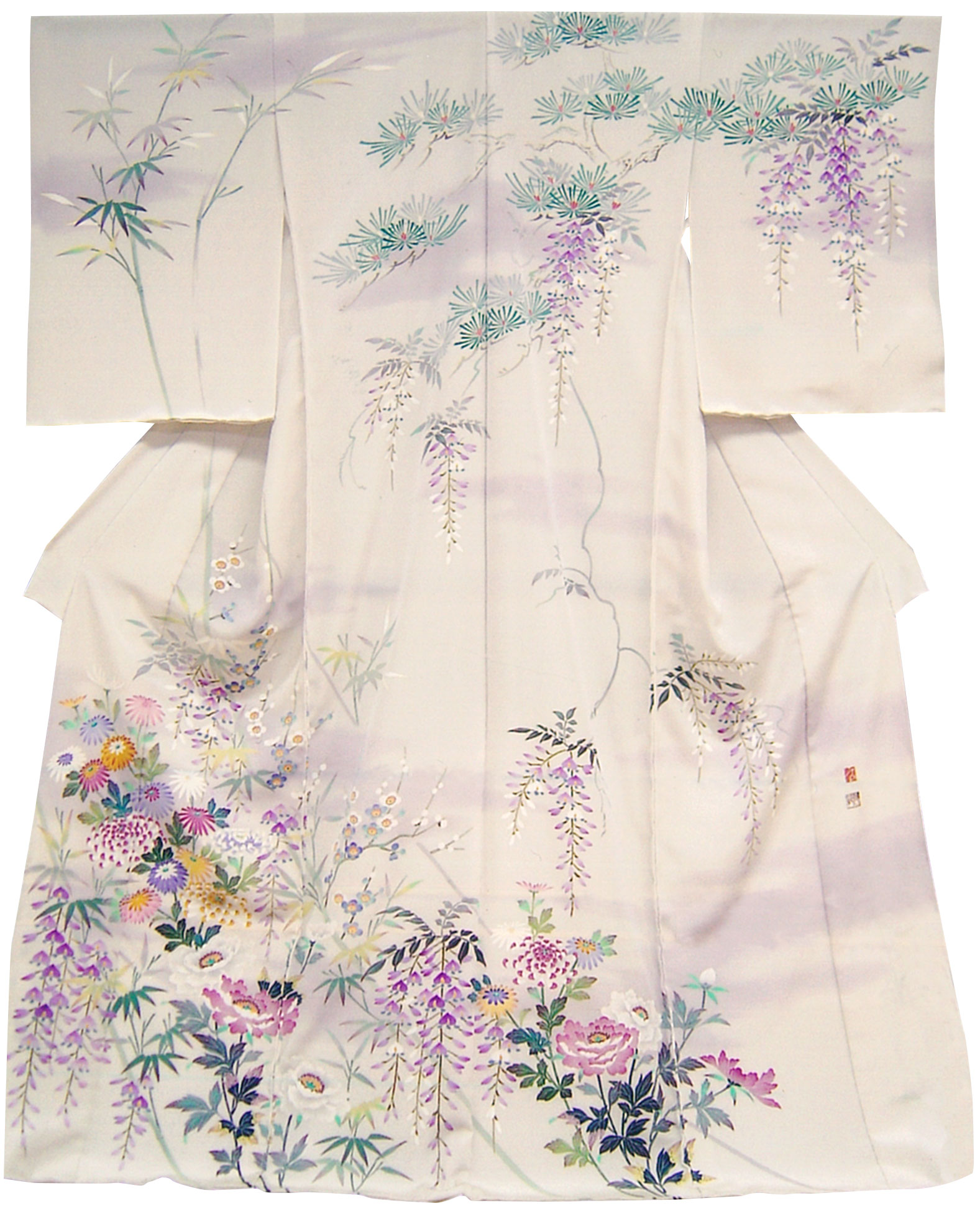
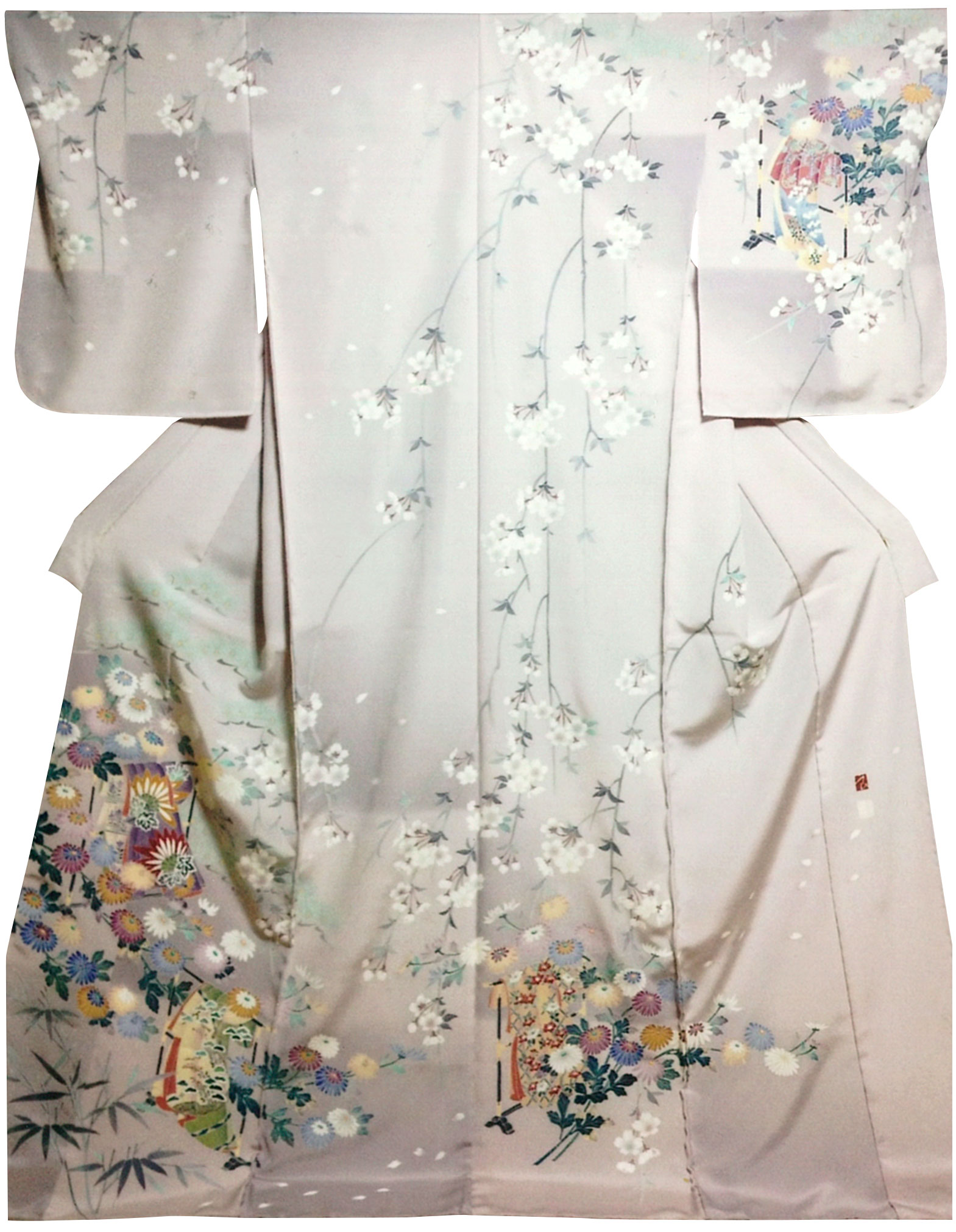
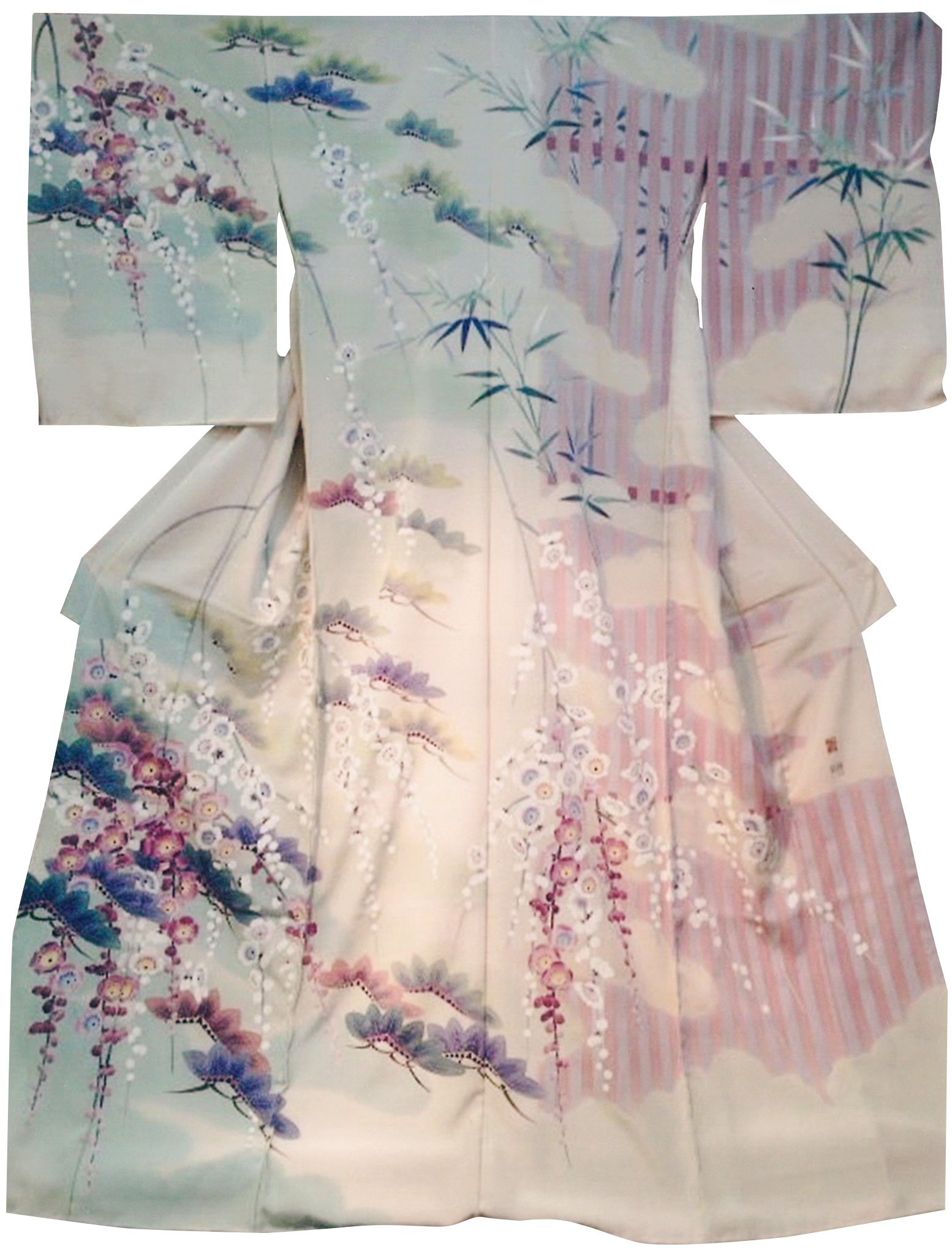
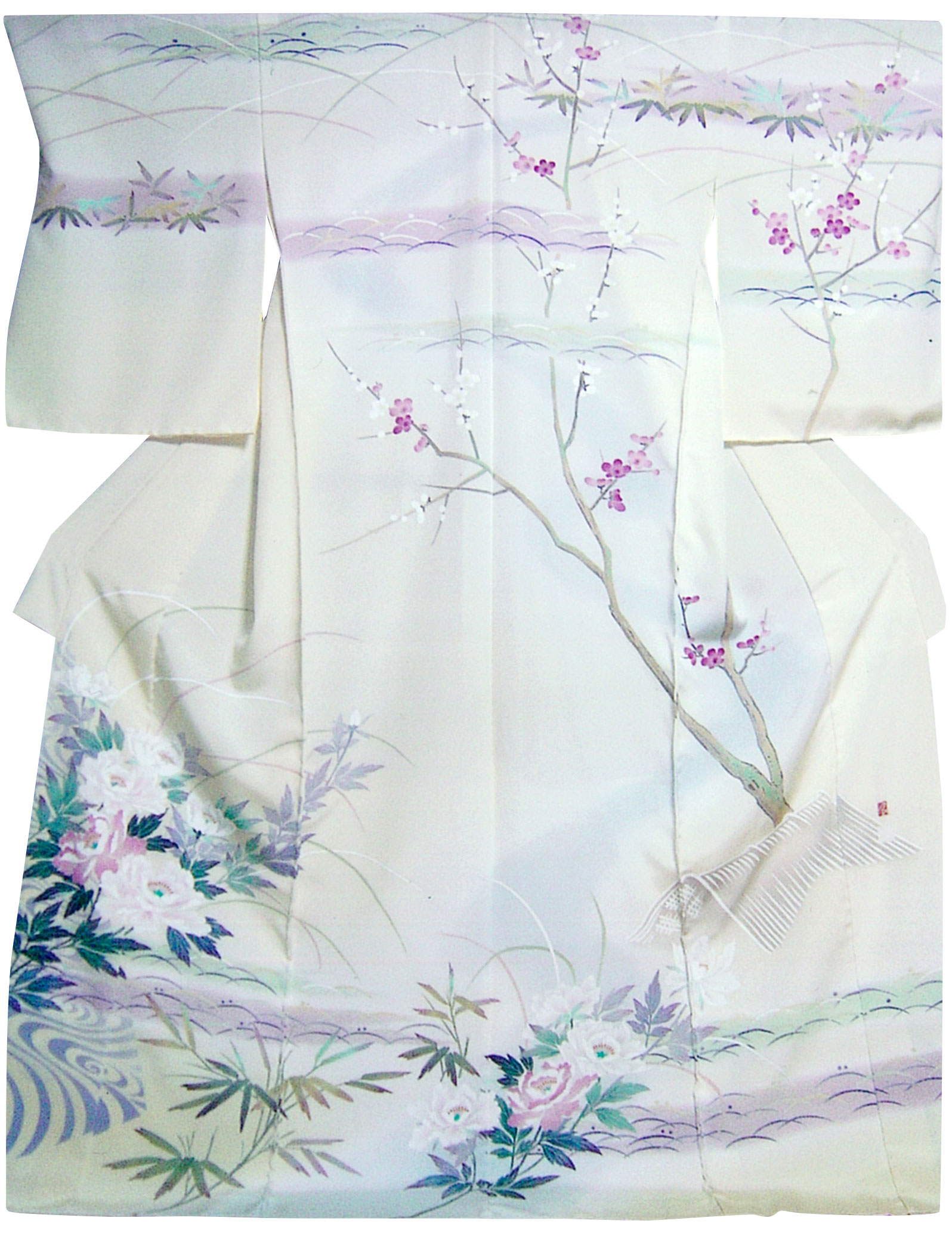
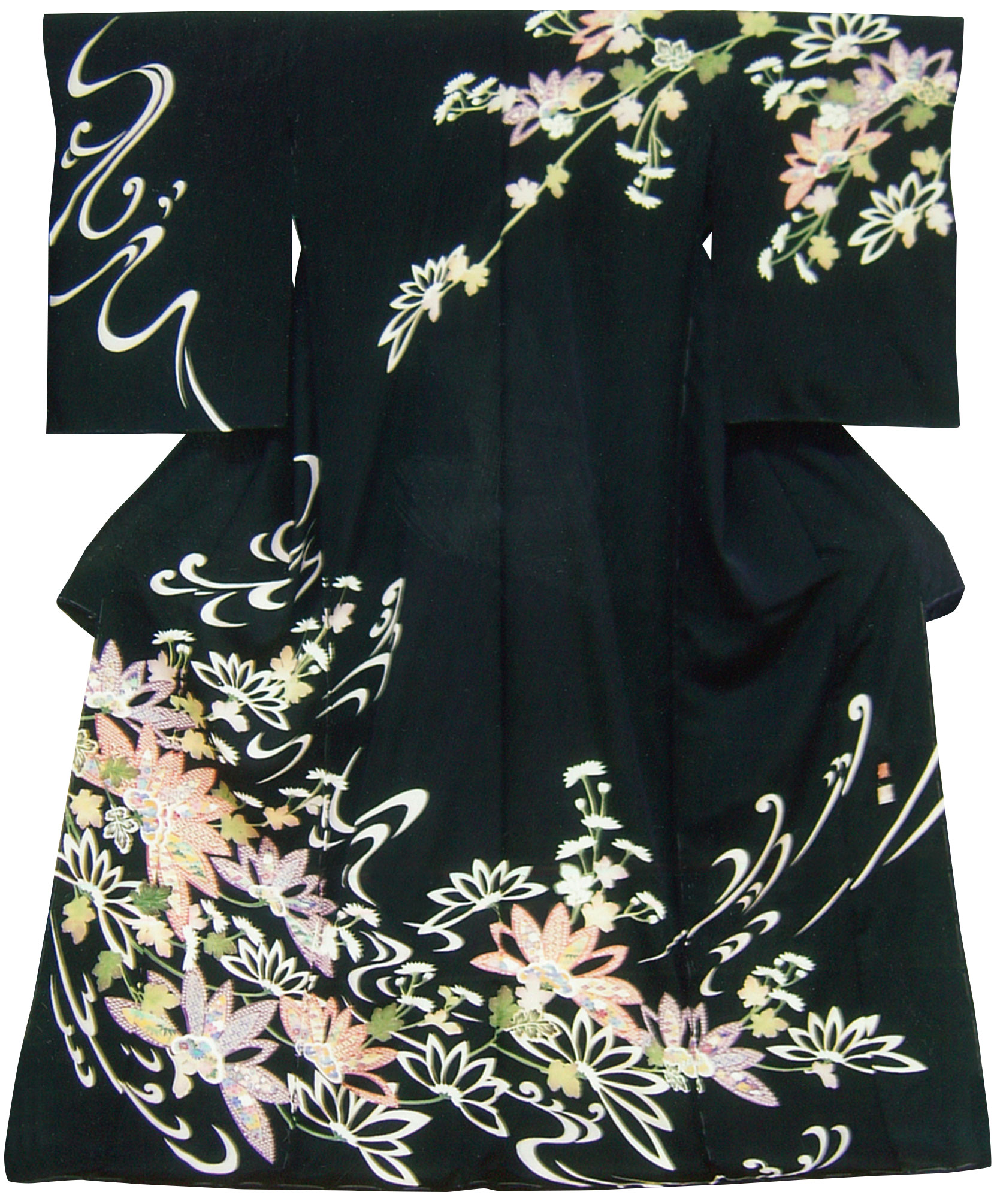
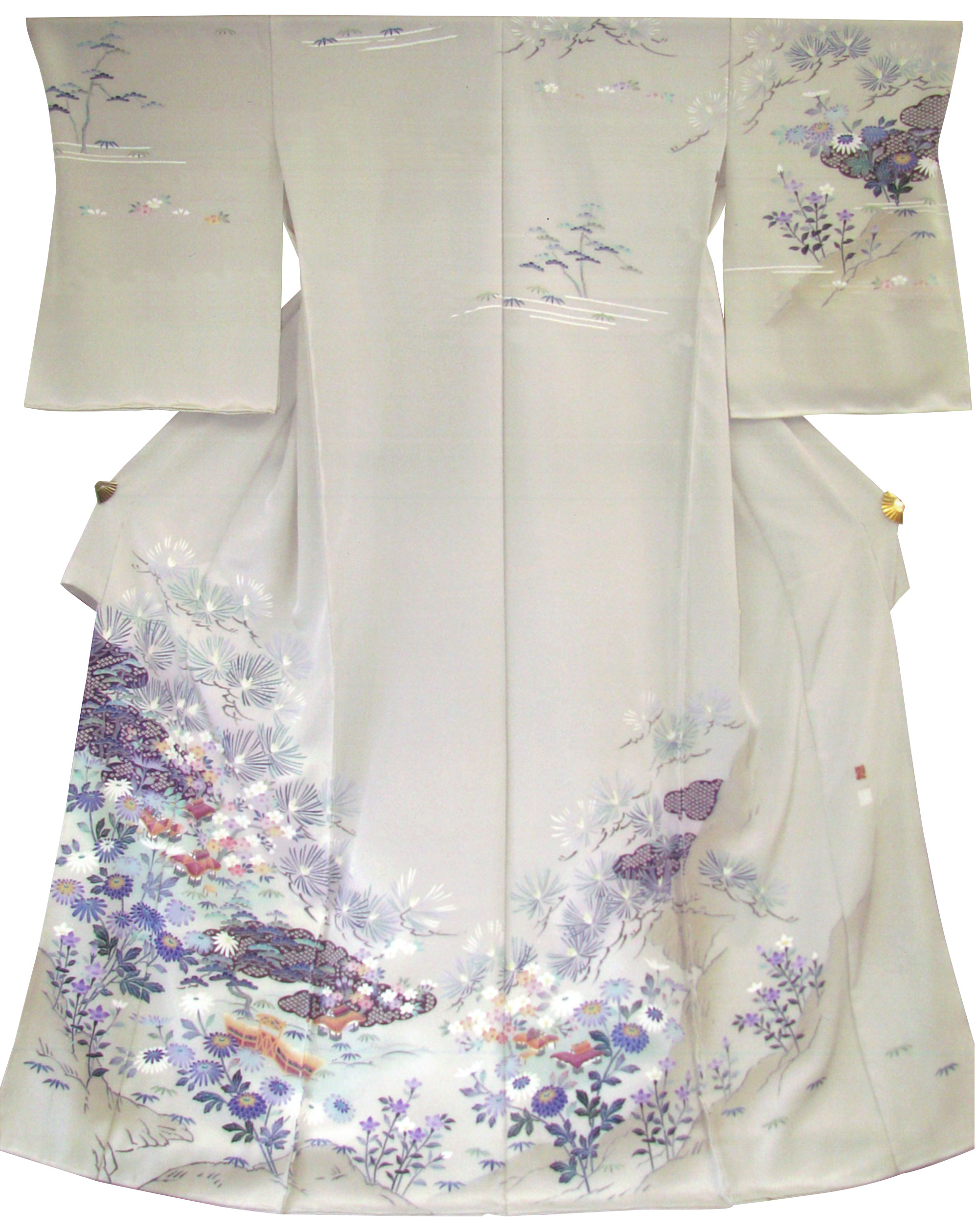
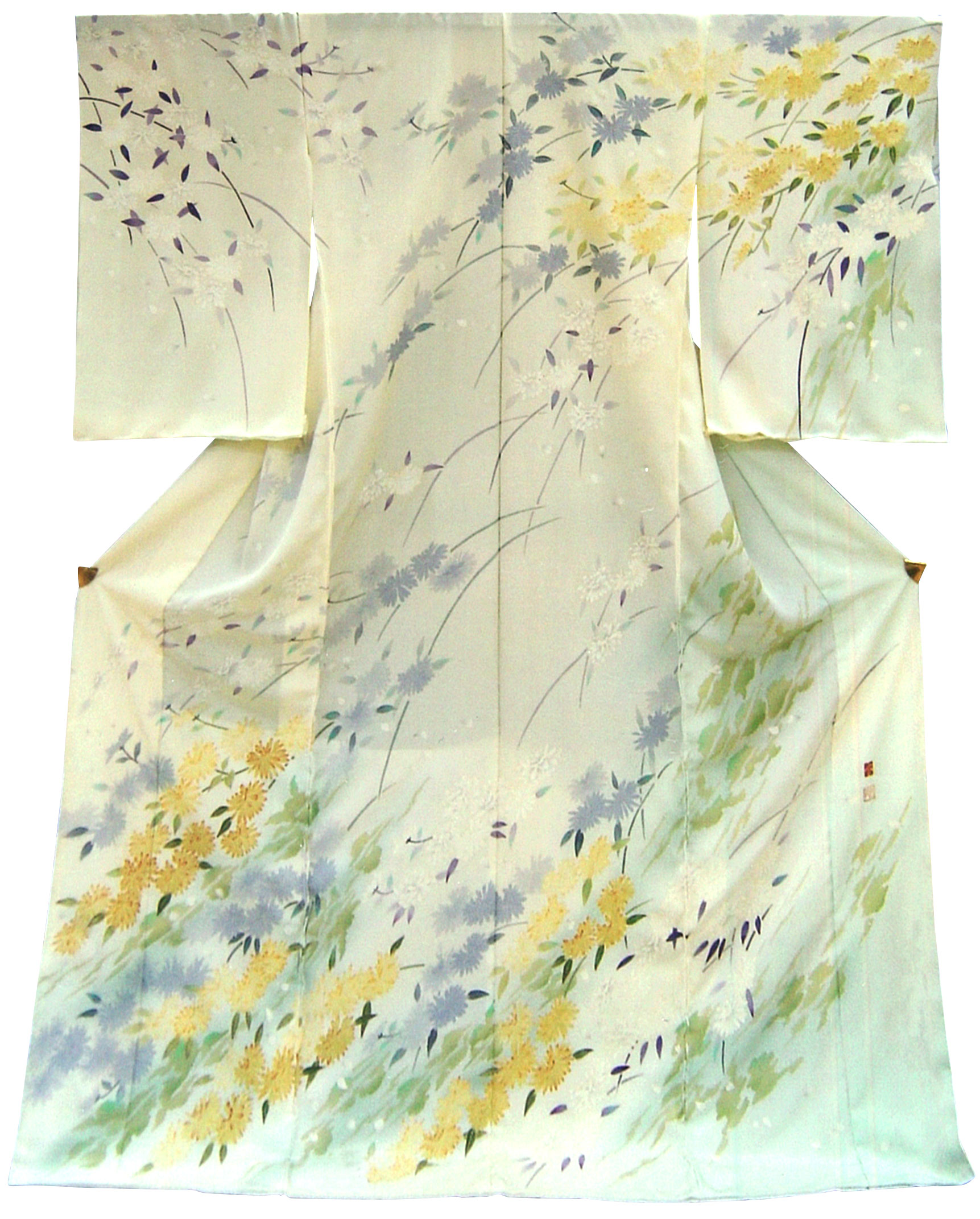
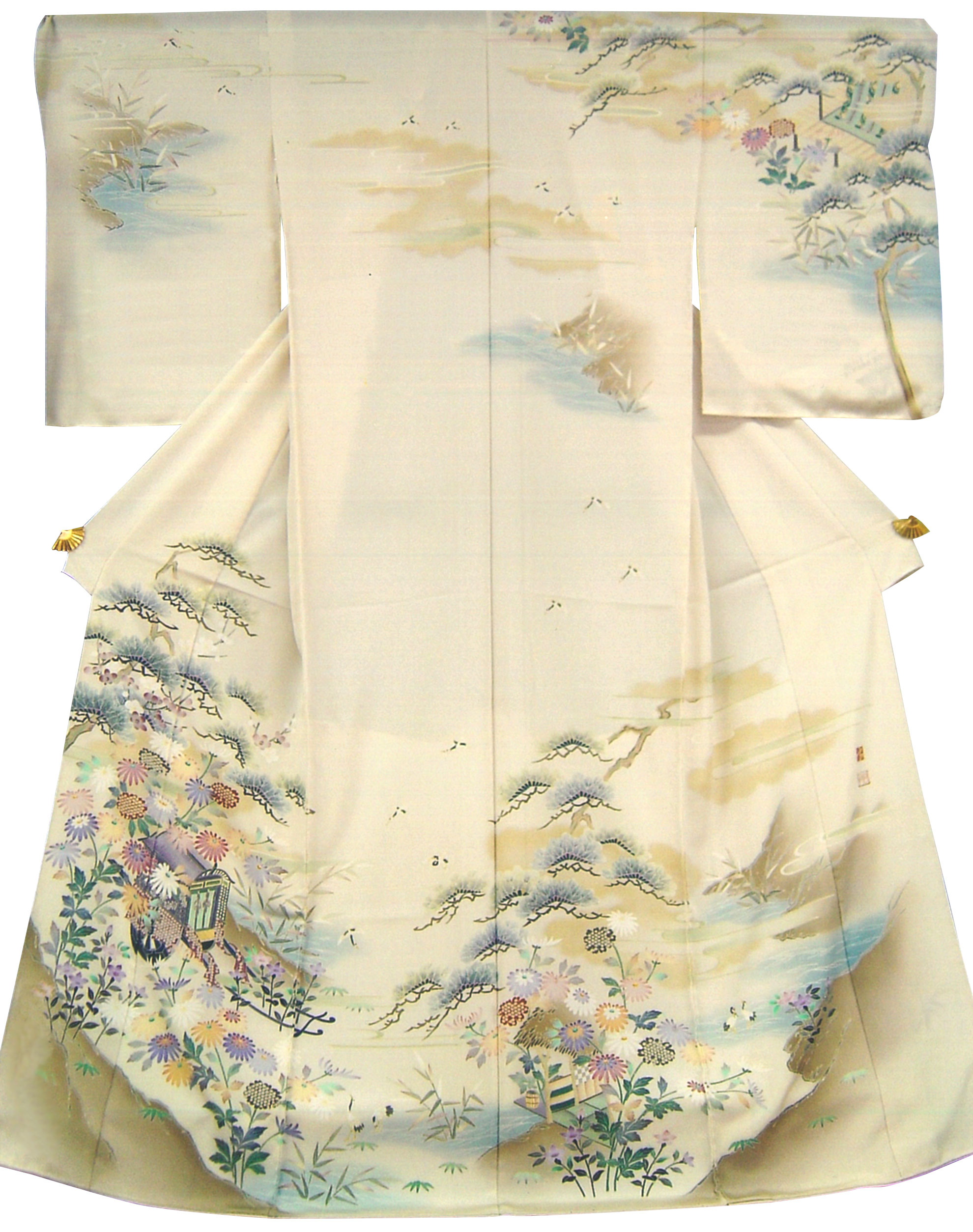
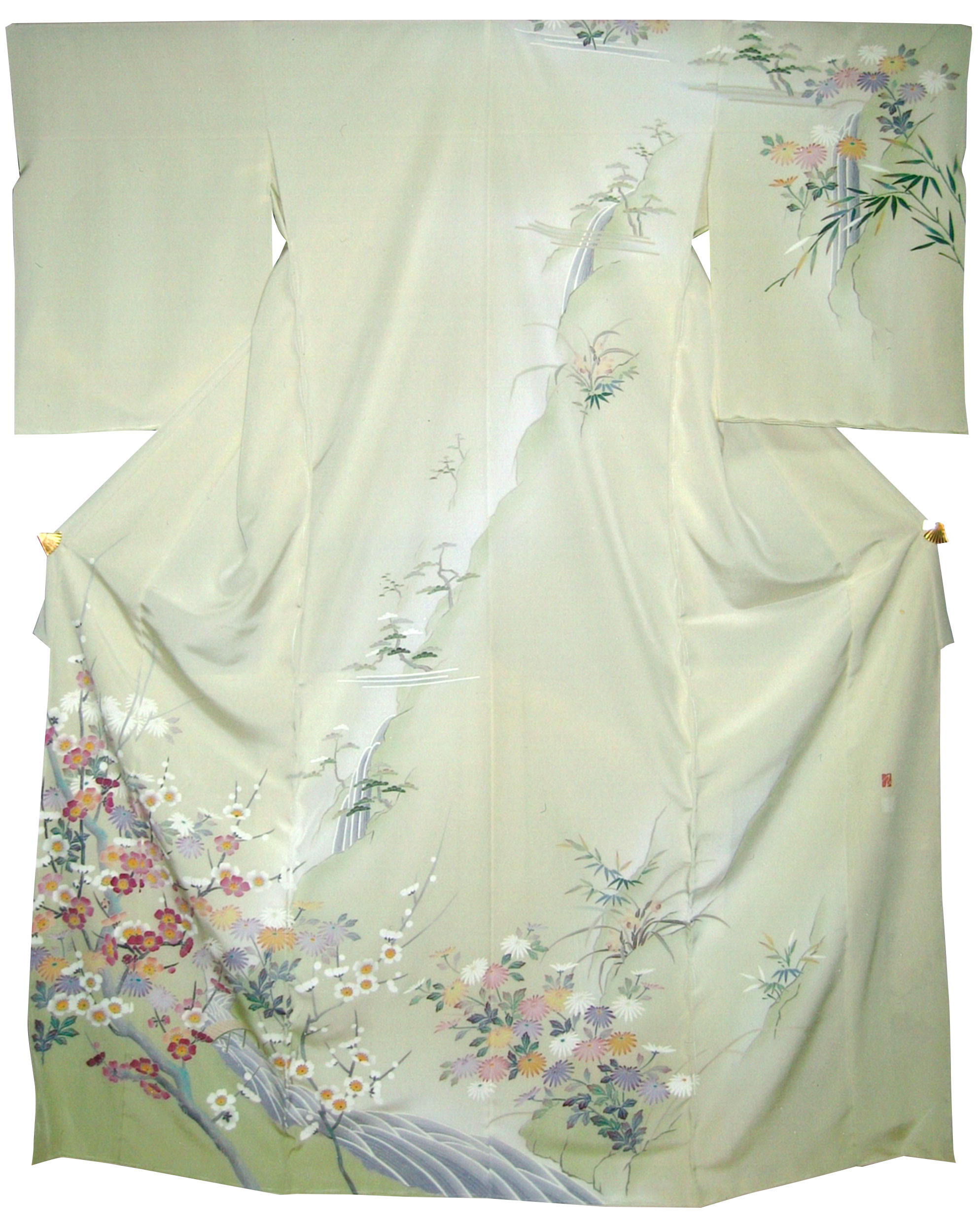
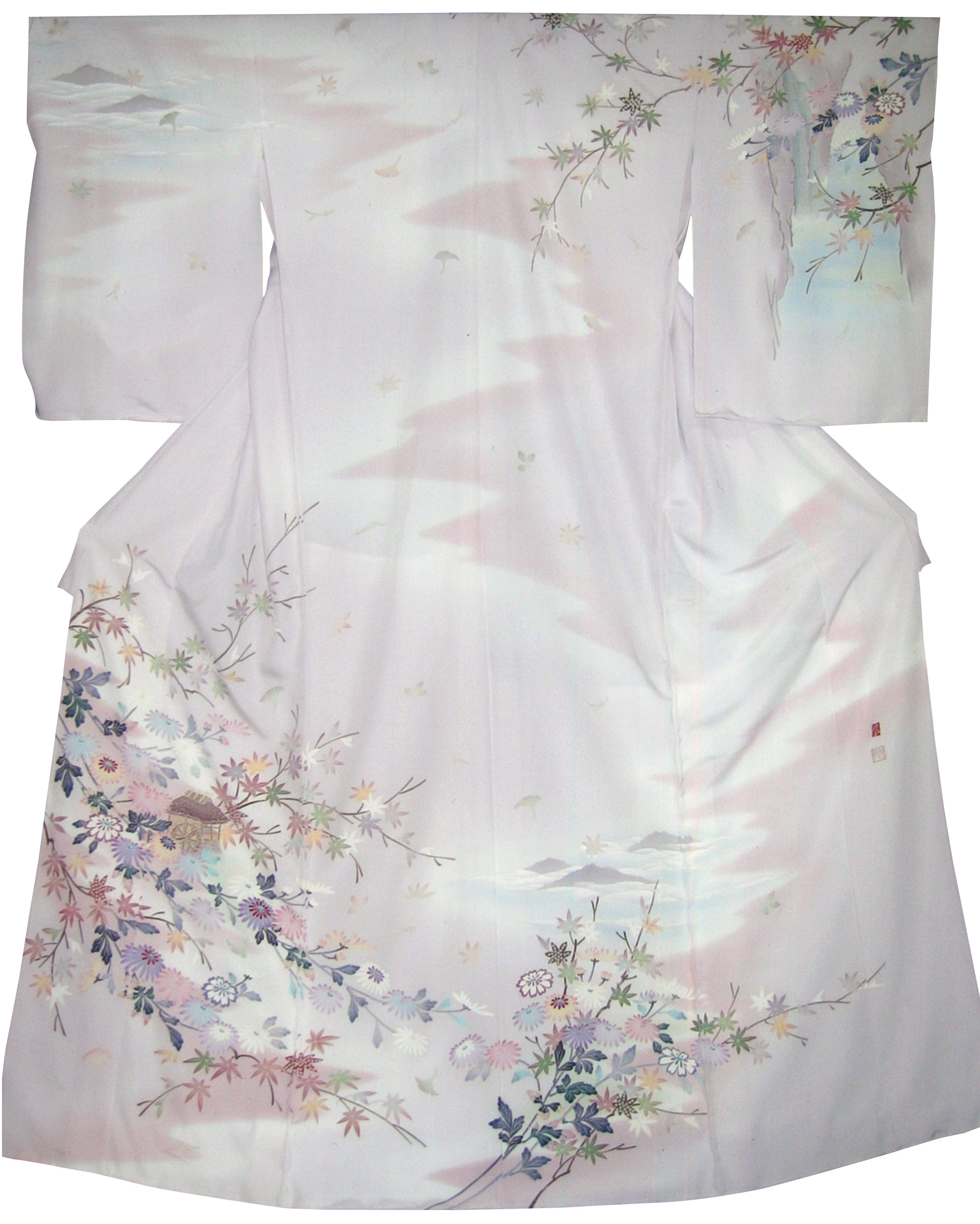
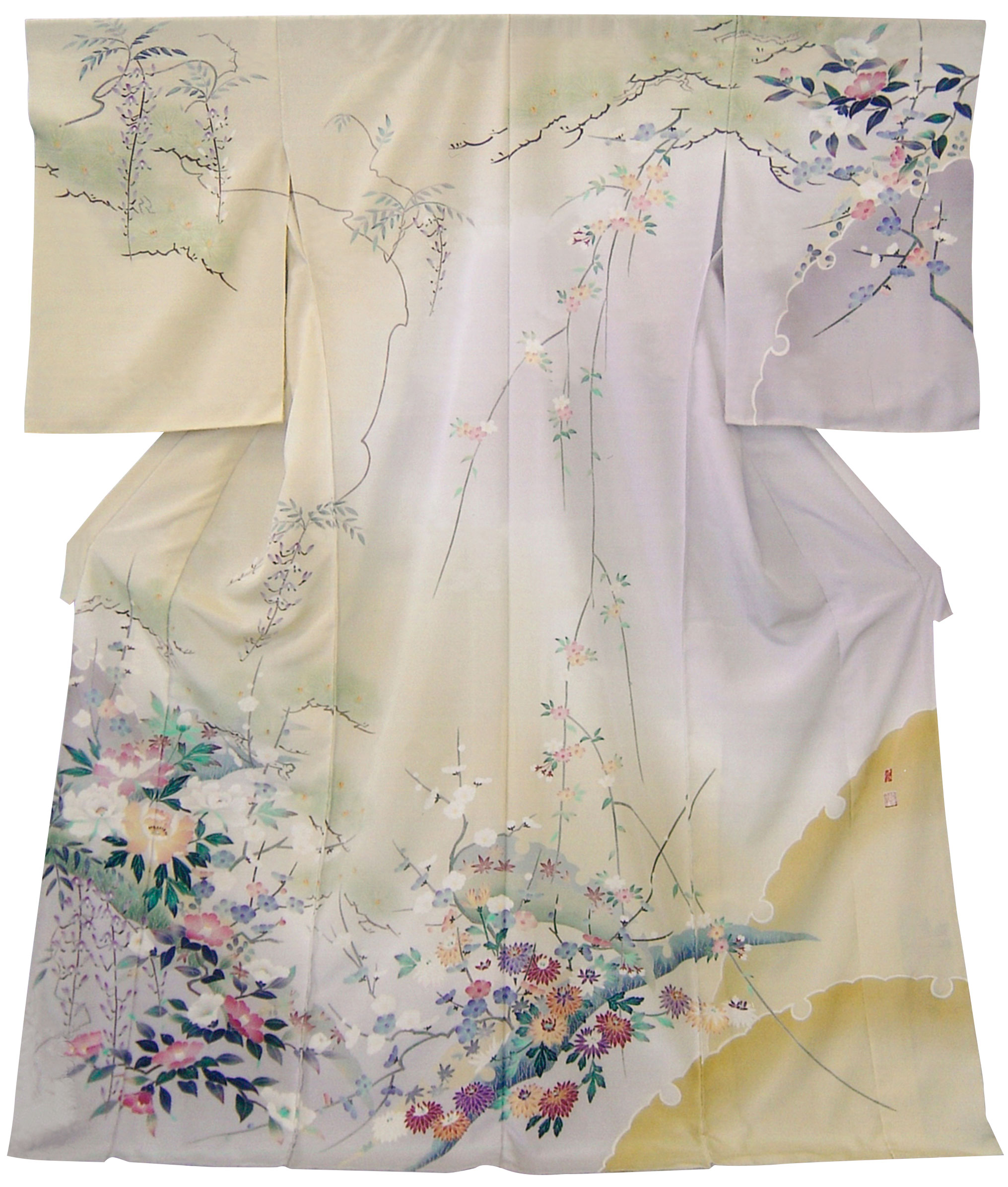
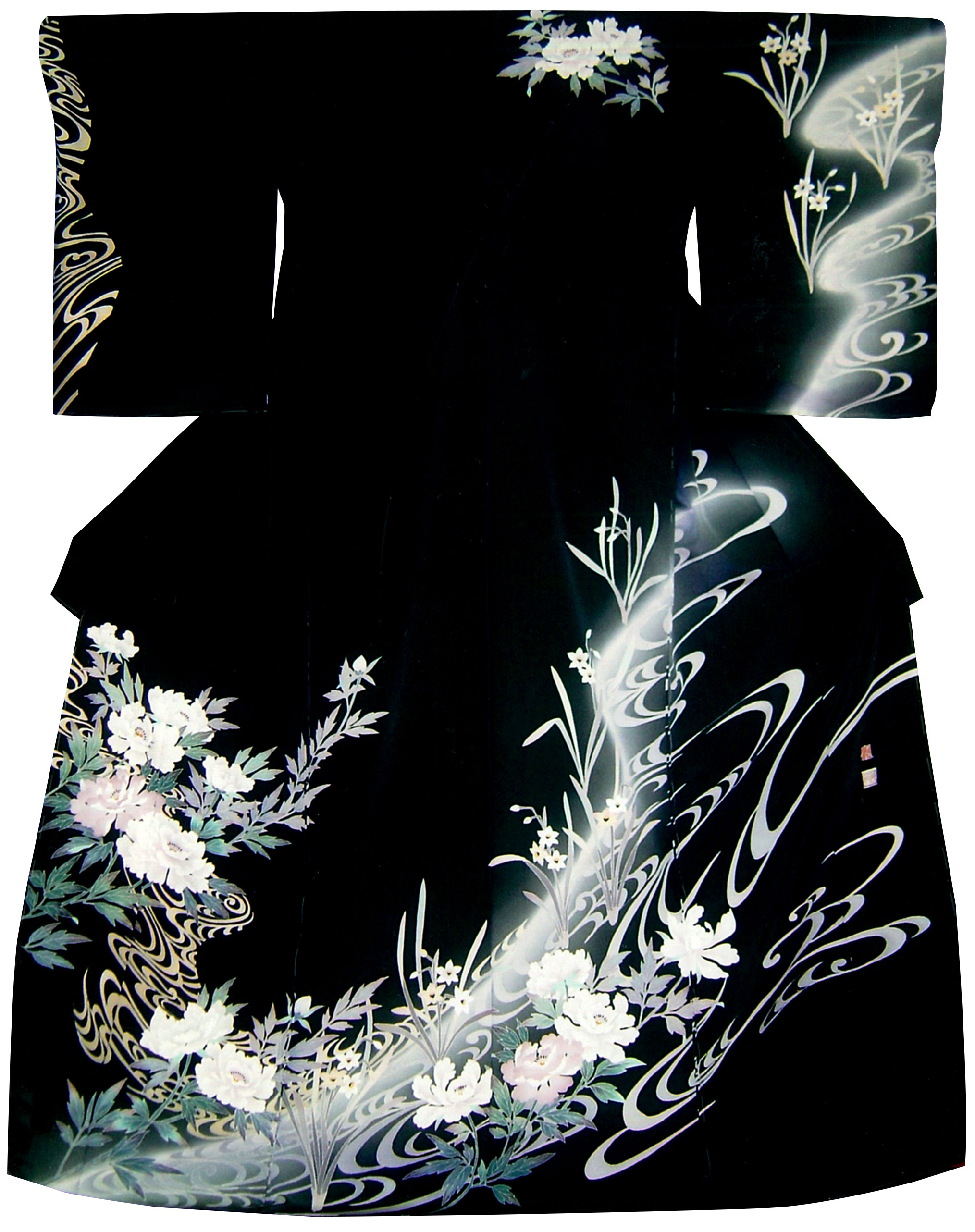
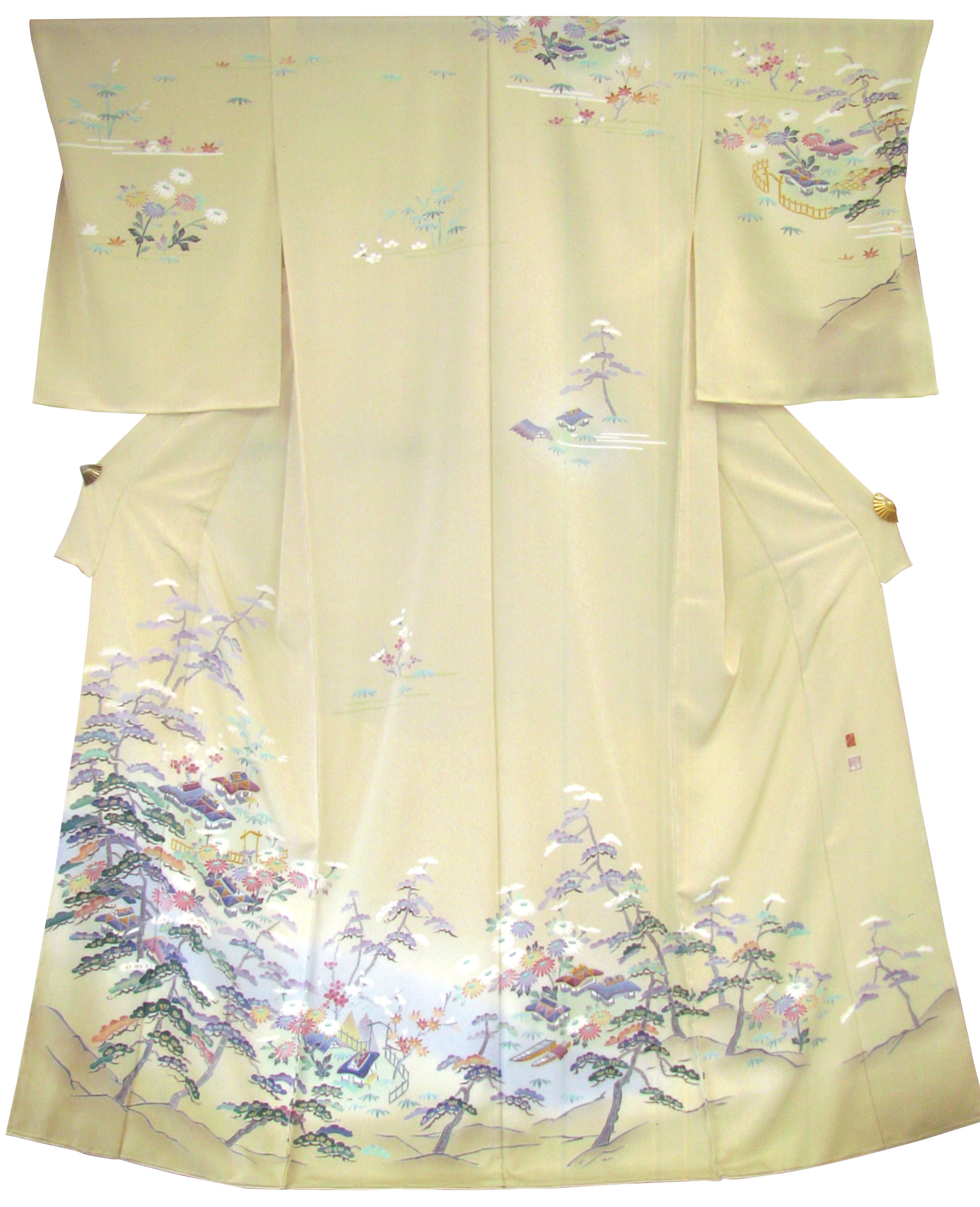
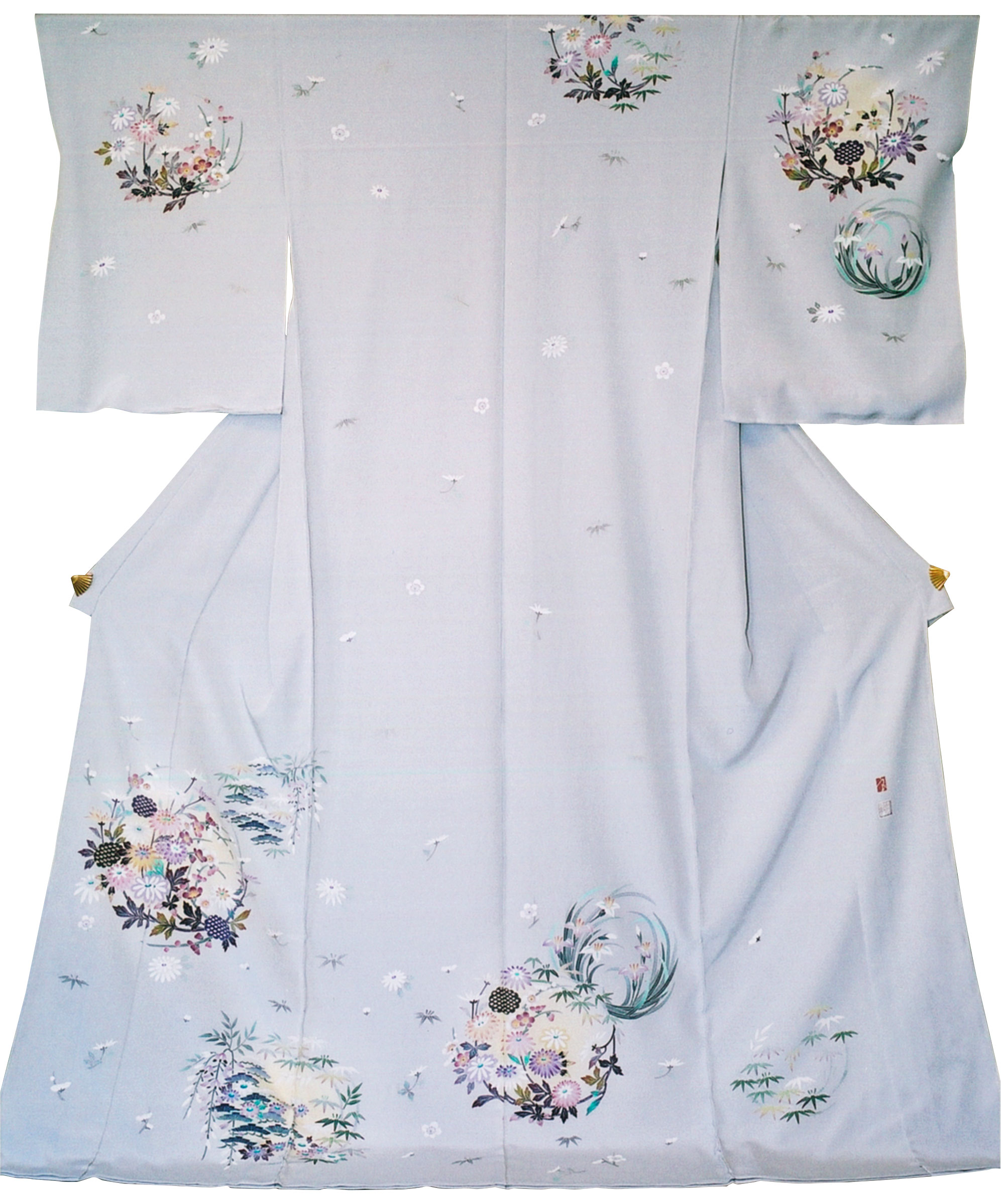
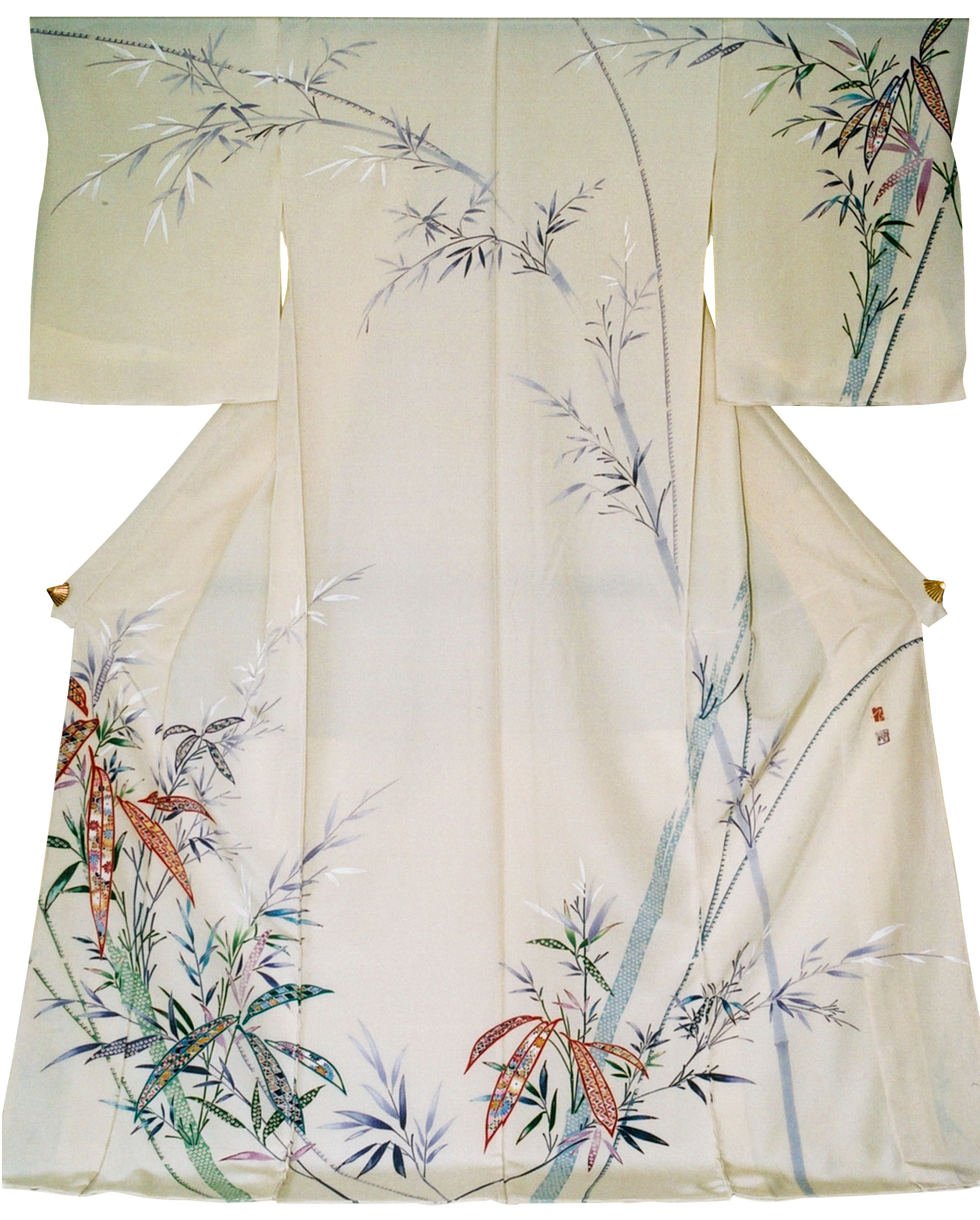
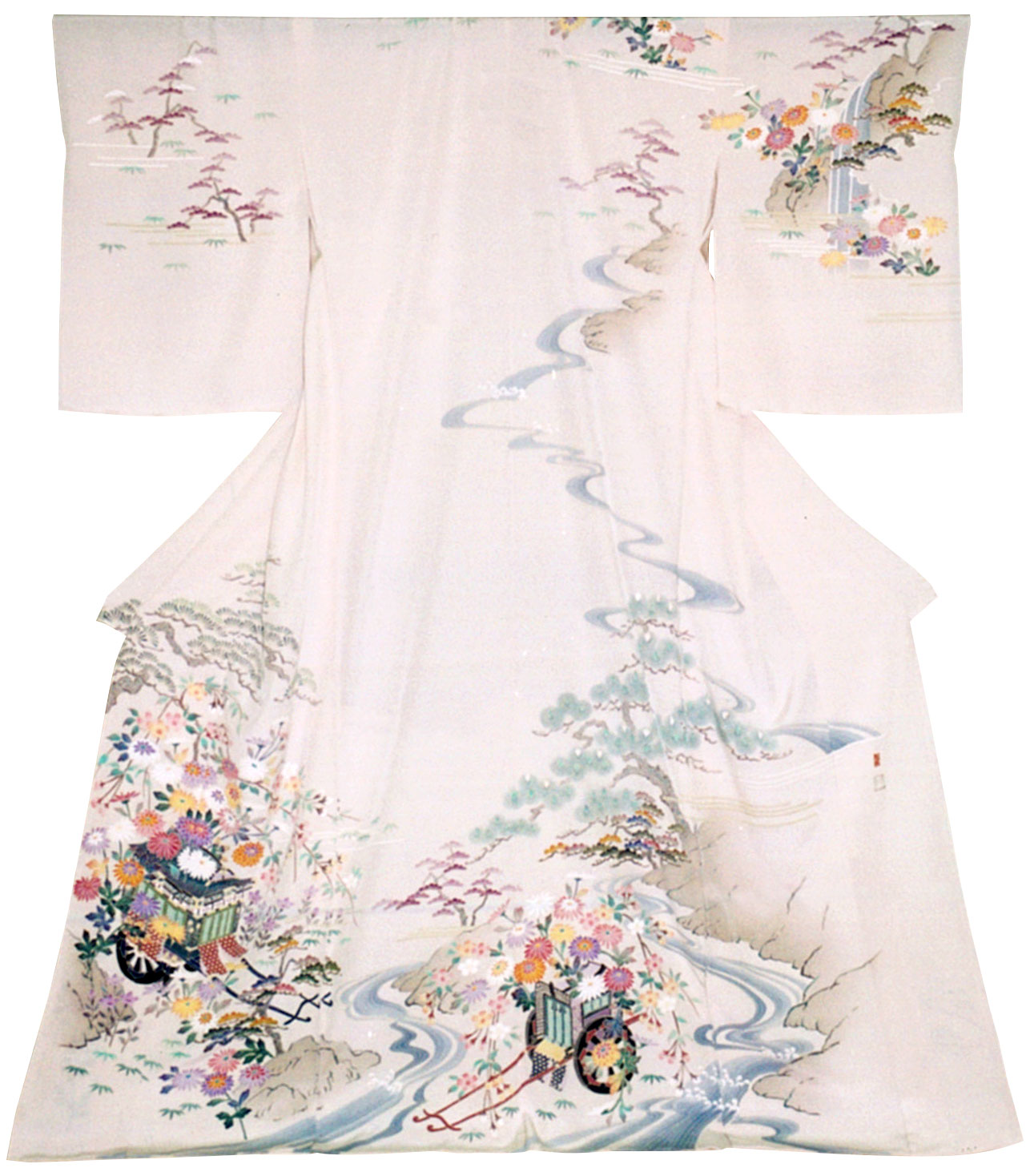
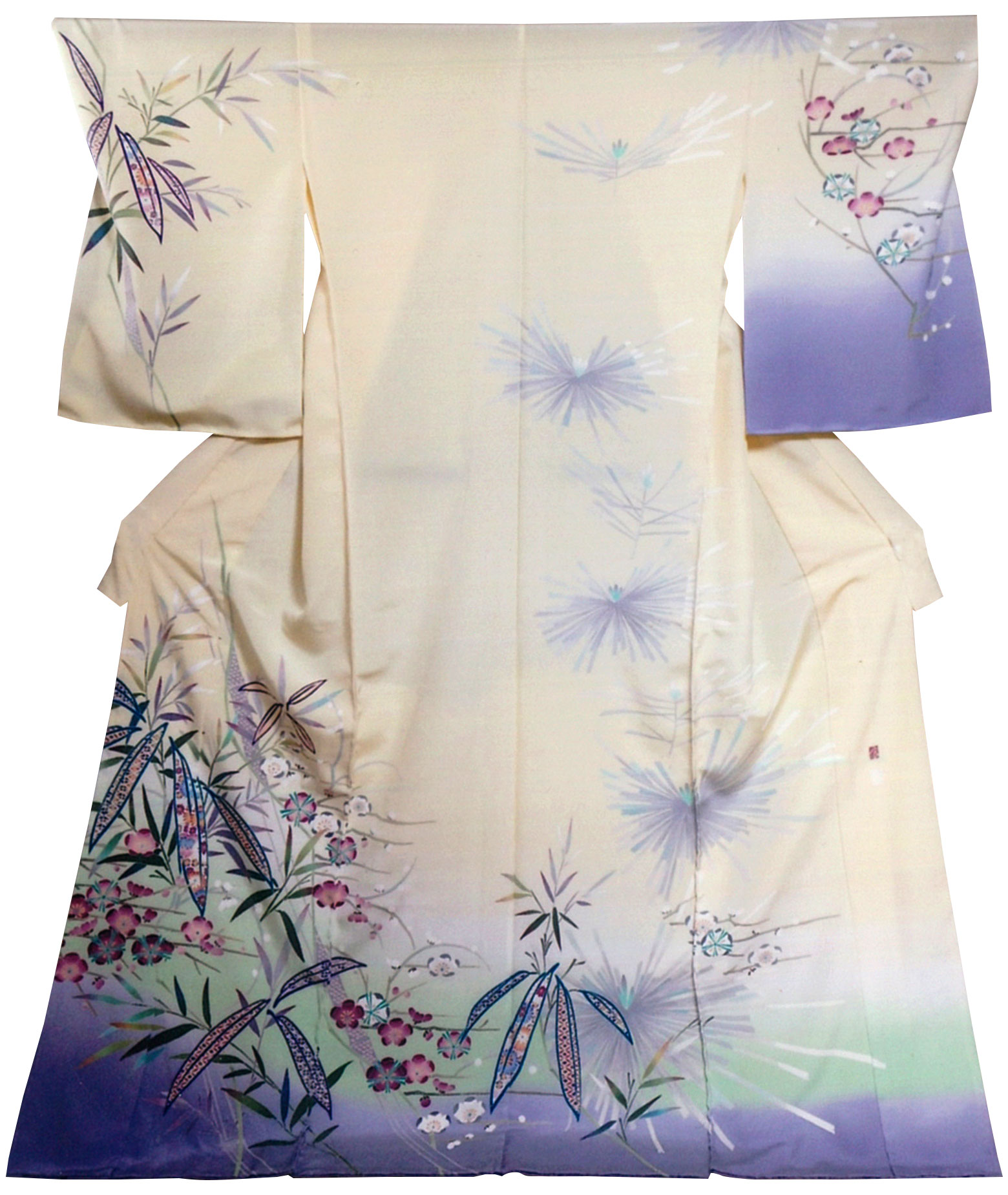
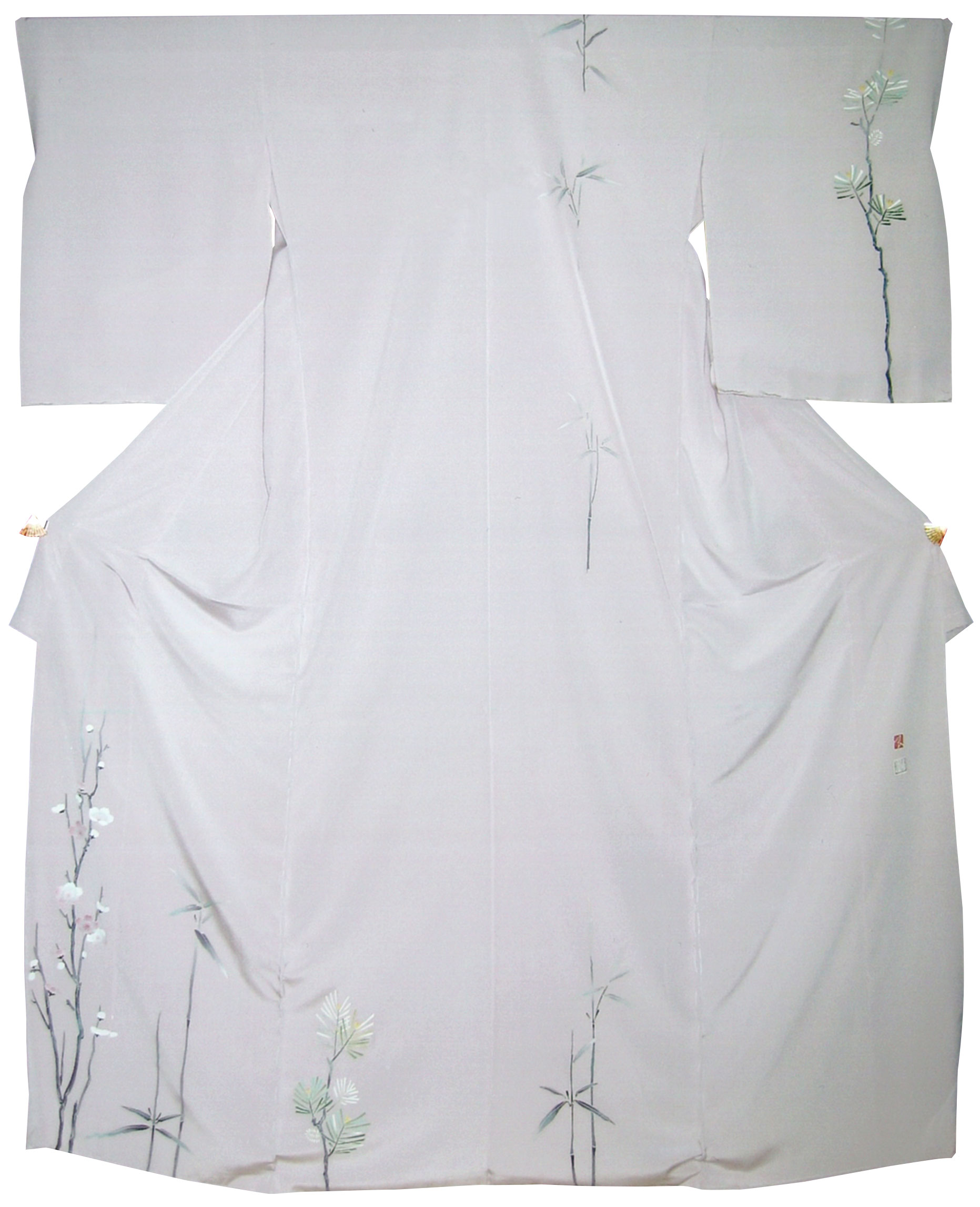
Homon-gi is a convenient kimono that can be worn for various occasions, such as formal occasions, theater, tea ceremony, and other occasions to which you are invited. It can be worn by both Misses and Mmes. It is characterized by the fact that the pattern is continuous throughout, rather than being scattered throughout with small patterns as in the "komon," which is an everyday wear.
|
SHOIN KOSAI Light and shadow on pine branches - Visiting Kimono 2021 - |
|
SUZAKU KIKU Suzaku and chrysanthemum - Visiting Kimono 2021 - |
|
RYUREI Flowing motifs - Visiting Kimono 2020 - |
|
FURAI (KUZU) Arrowroot - Visiting Kimono 2019 - |
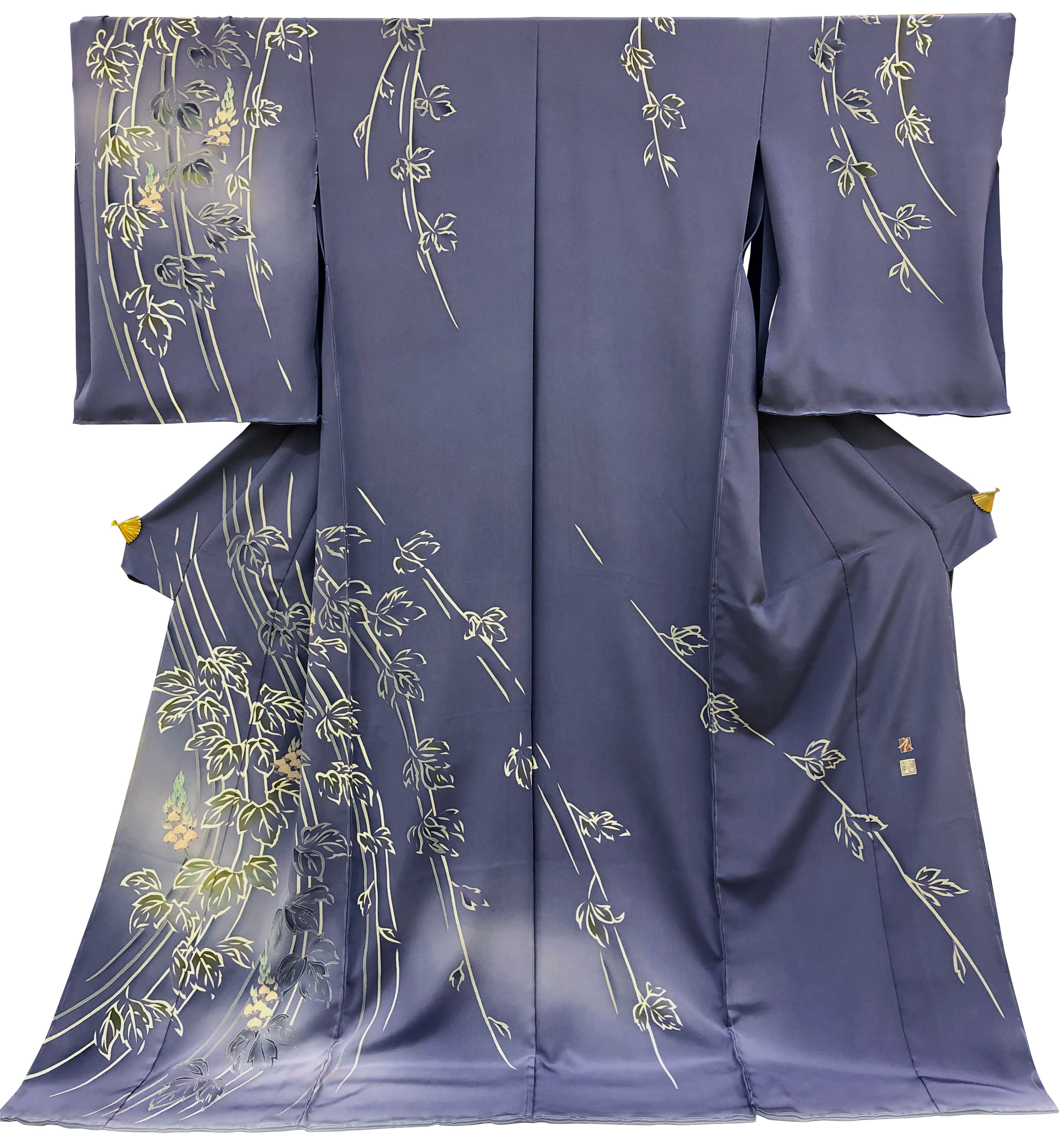
|
YUKIWA NI SHOCHIKUBAI YATSUJI Pine, bamboo, plum and tea house street with snowflakes - Visiting Kimono 2019 - |
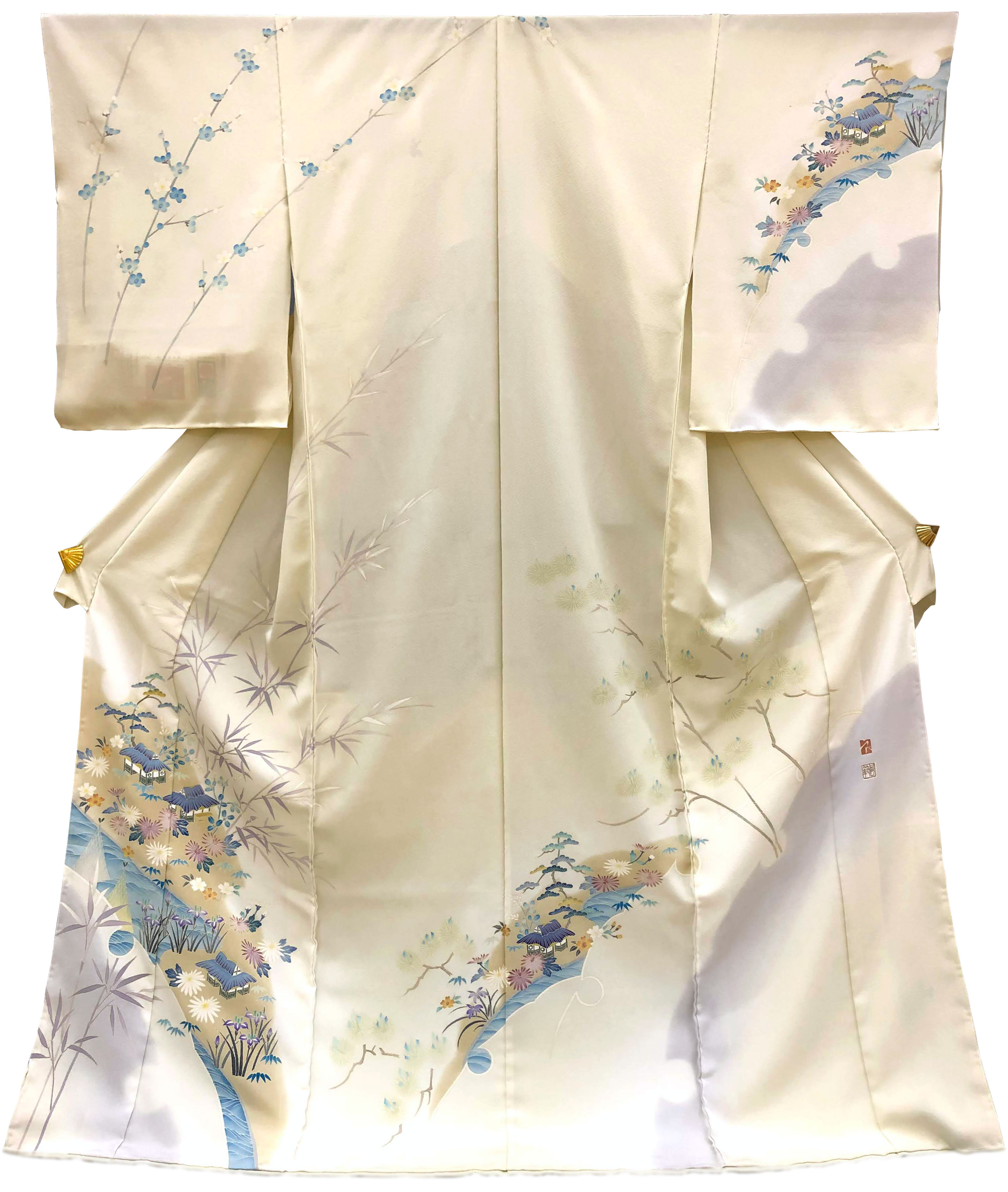
|
SANYU TORI CHATSUJI Three tea house street combinations - Visiting Kimono 2019 - |
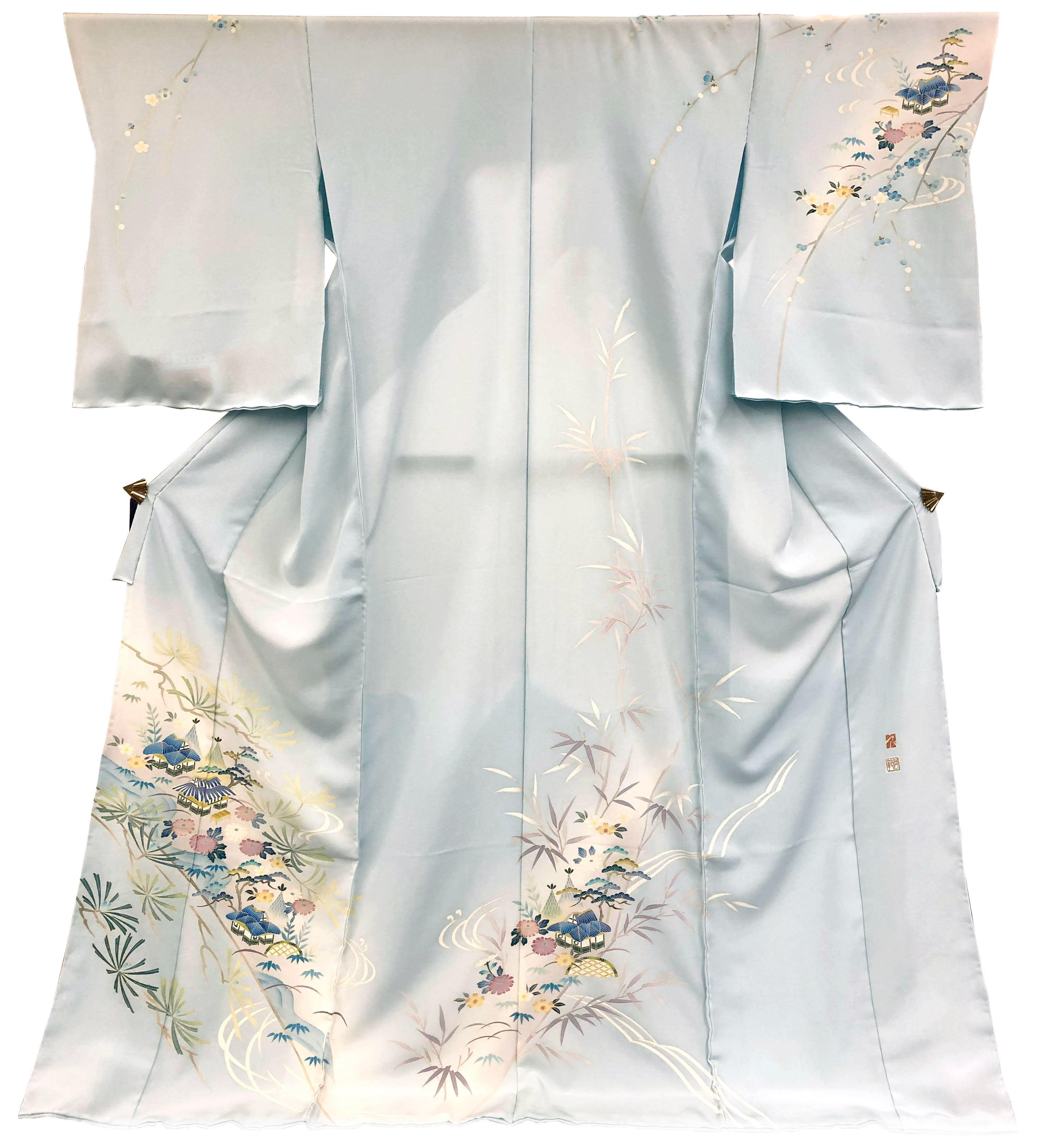
|
BOTAN Peonies - Visiting Kimono 2019 - |
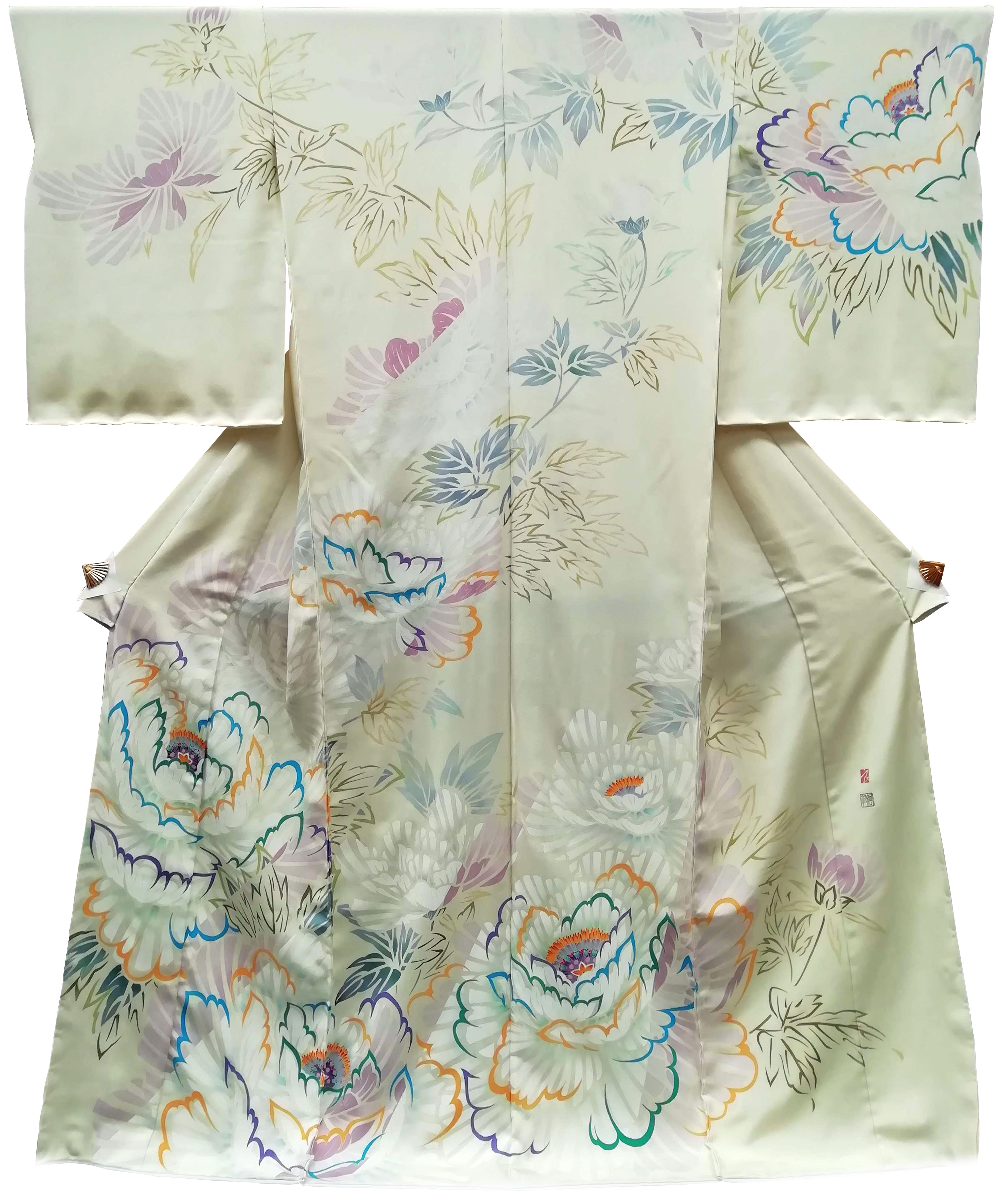
|
KIKU KIKYO NI HAKUCHOSO Chrysanthemum, Chinese bellflower and white butterfly weed - Visiting Kimono 2019 - |
|
KIKKA YOKU MONYO
Chrysanthemum flowers and wing patterns - Visiting Kimono 2019 - |
|
MIHO NO MATSUBARA
Miho no Matsubara - Visiting Kimono 2018 - |
|
YUKIWA NI SHIPPO SOKA
Cloisonne flowers and grasses on a snowflake wheel - Visiting Kimono 2018 - |
|
BOTAN
Peonies - Visiting Kimono 2018 - |
|
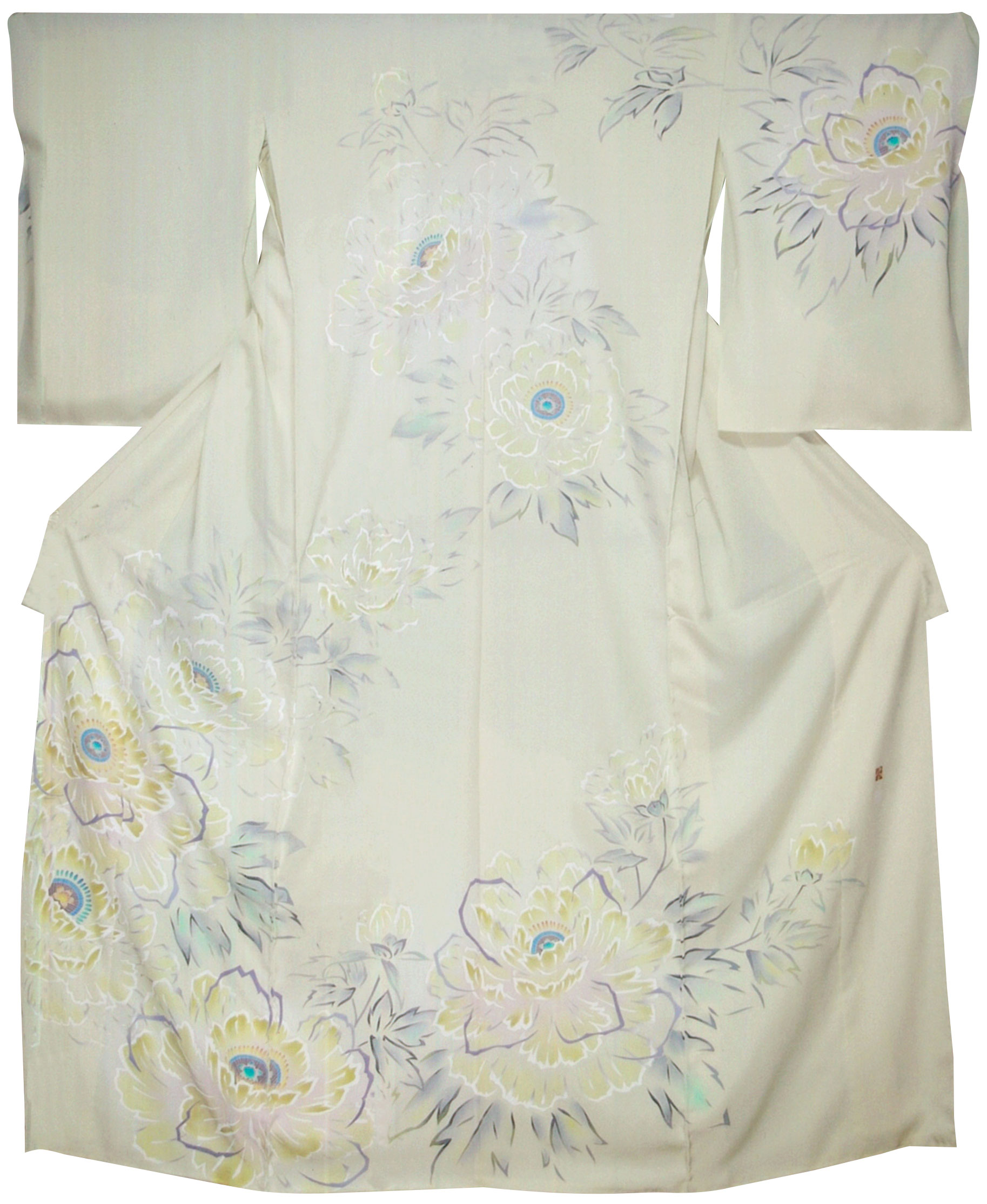
SHASEN NO SHOCHIKUBAI
Pine, bamboo, and plum in diagonal lines - Visiting Kimono 2017 - |
|
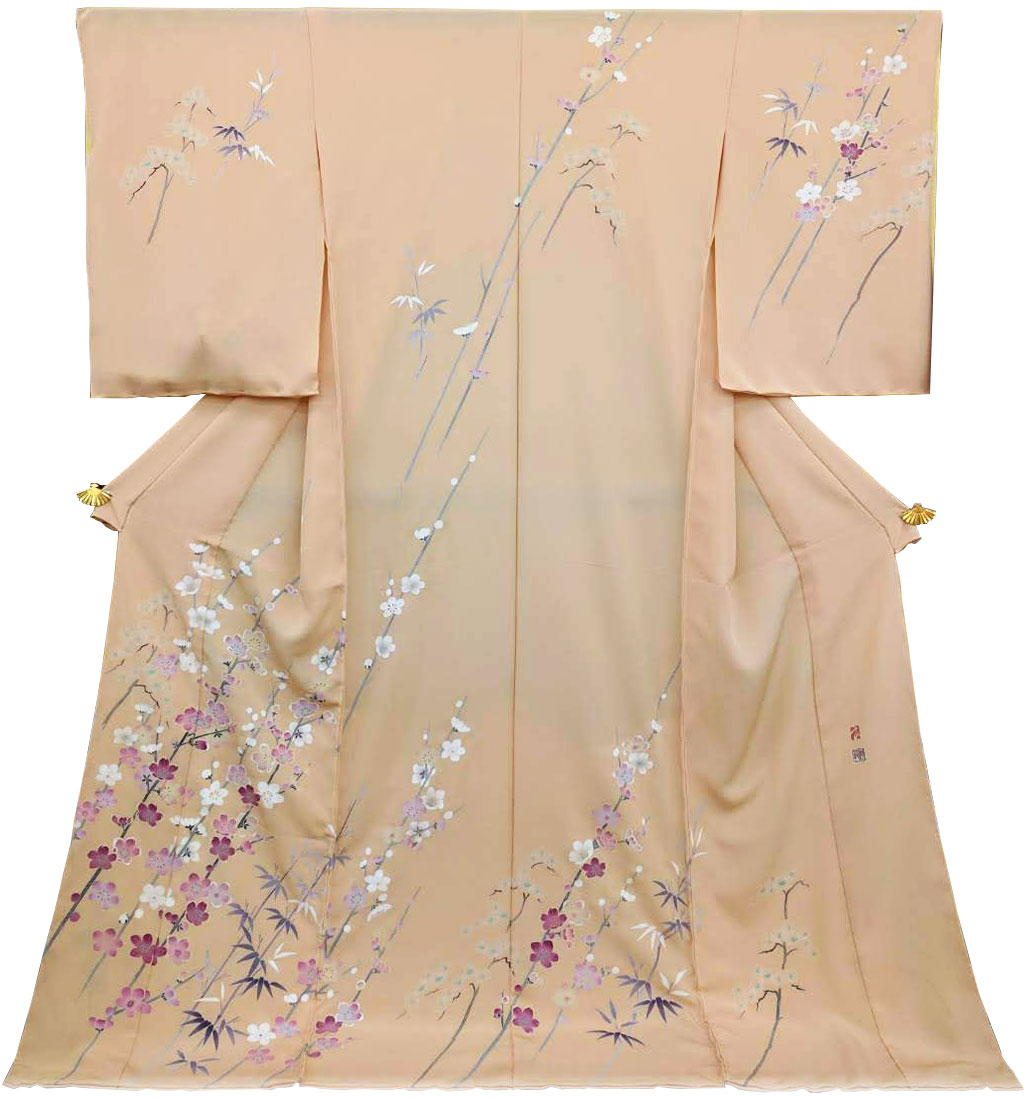
SHOCHIKUBAI
Pine, bamboo, and plum - Visiting Kimono 2017 - |
|
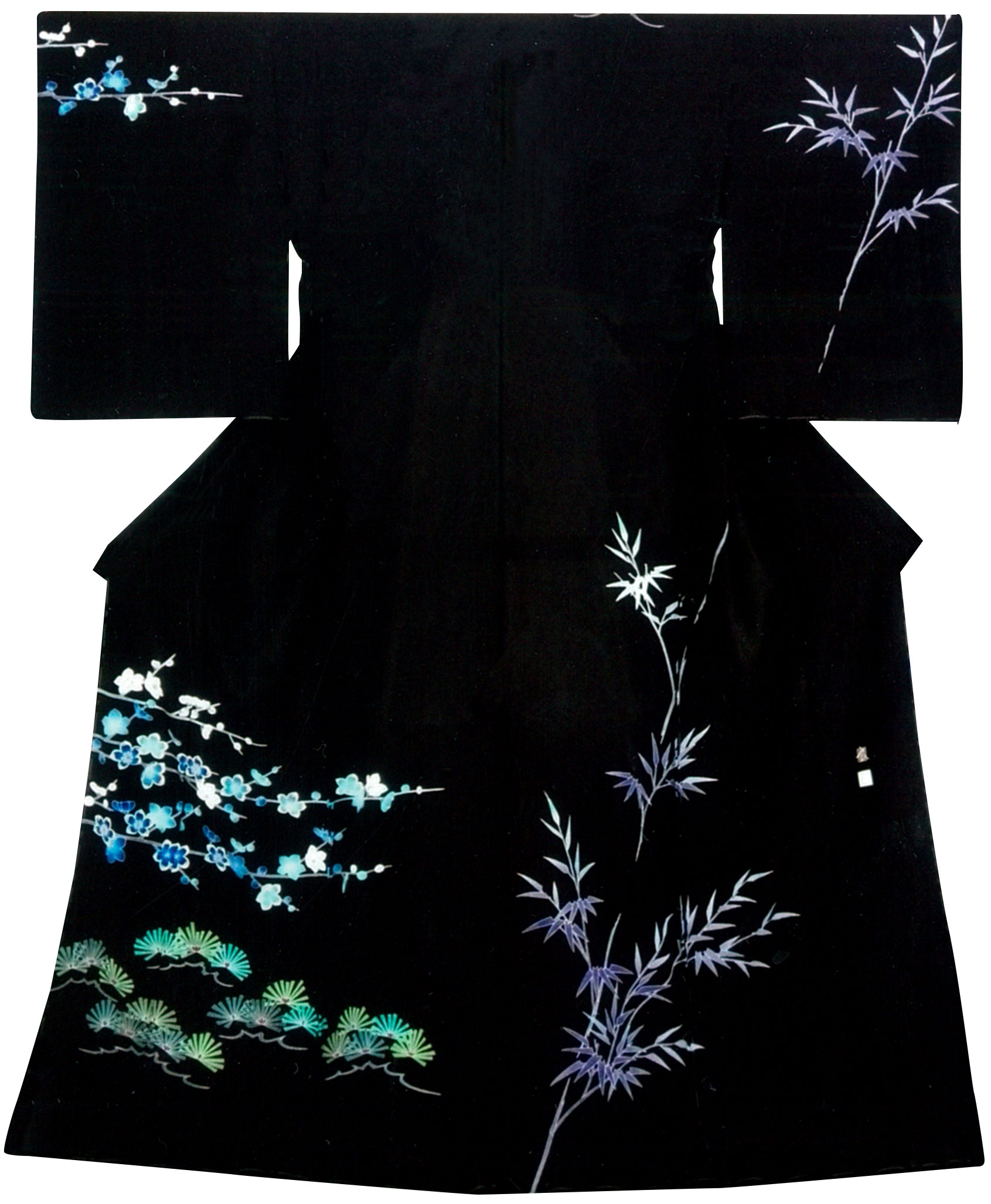
GEKKO
Moonlight - Visiting Kimono 2017 - |
|
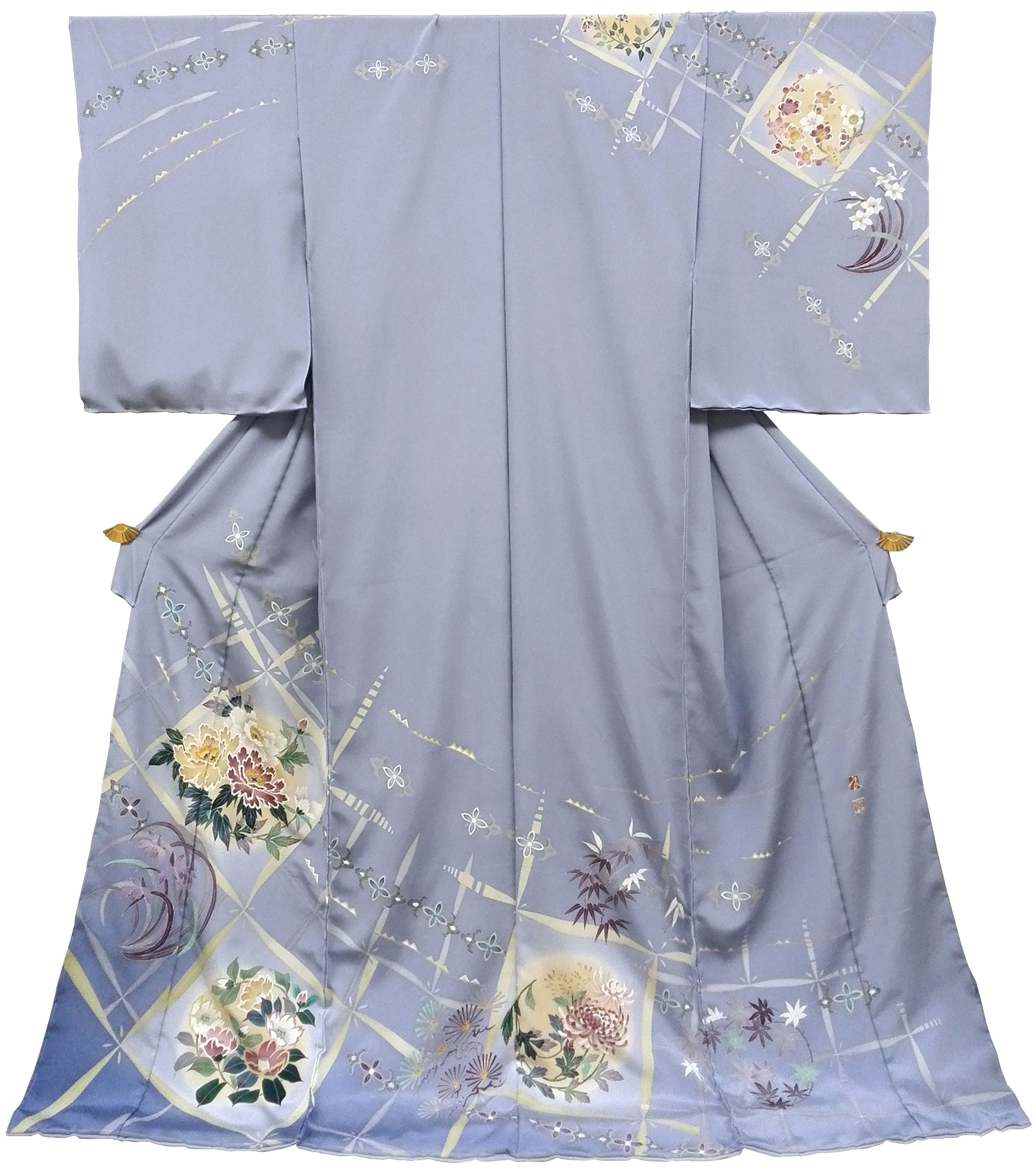
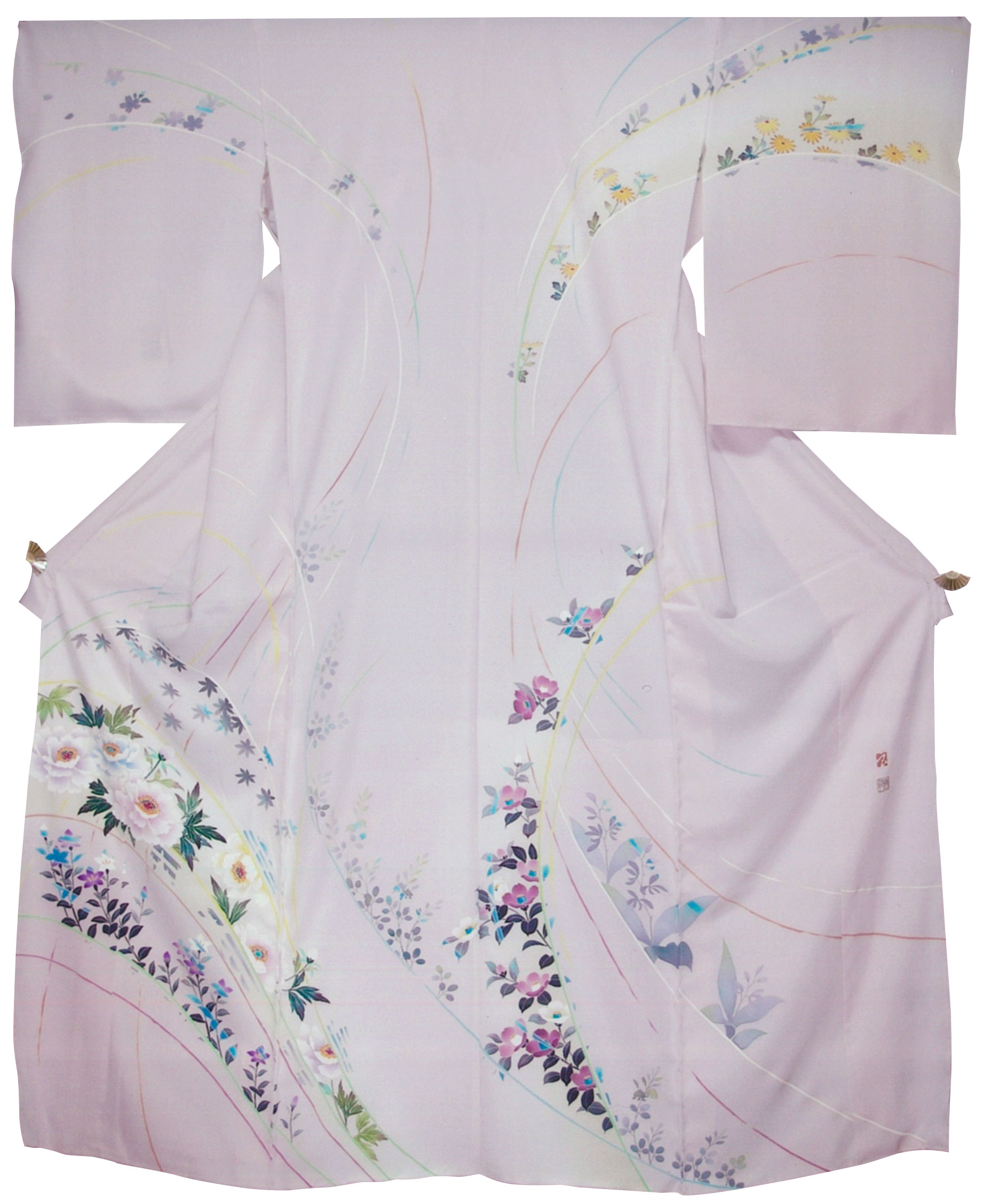
HAMON NI SOKA
Flowers and plants in ripples - Visiting Kimono 2017 - |
|
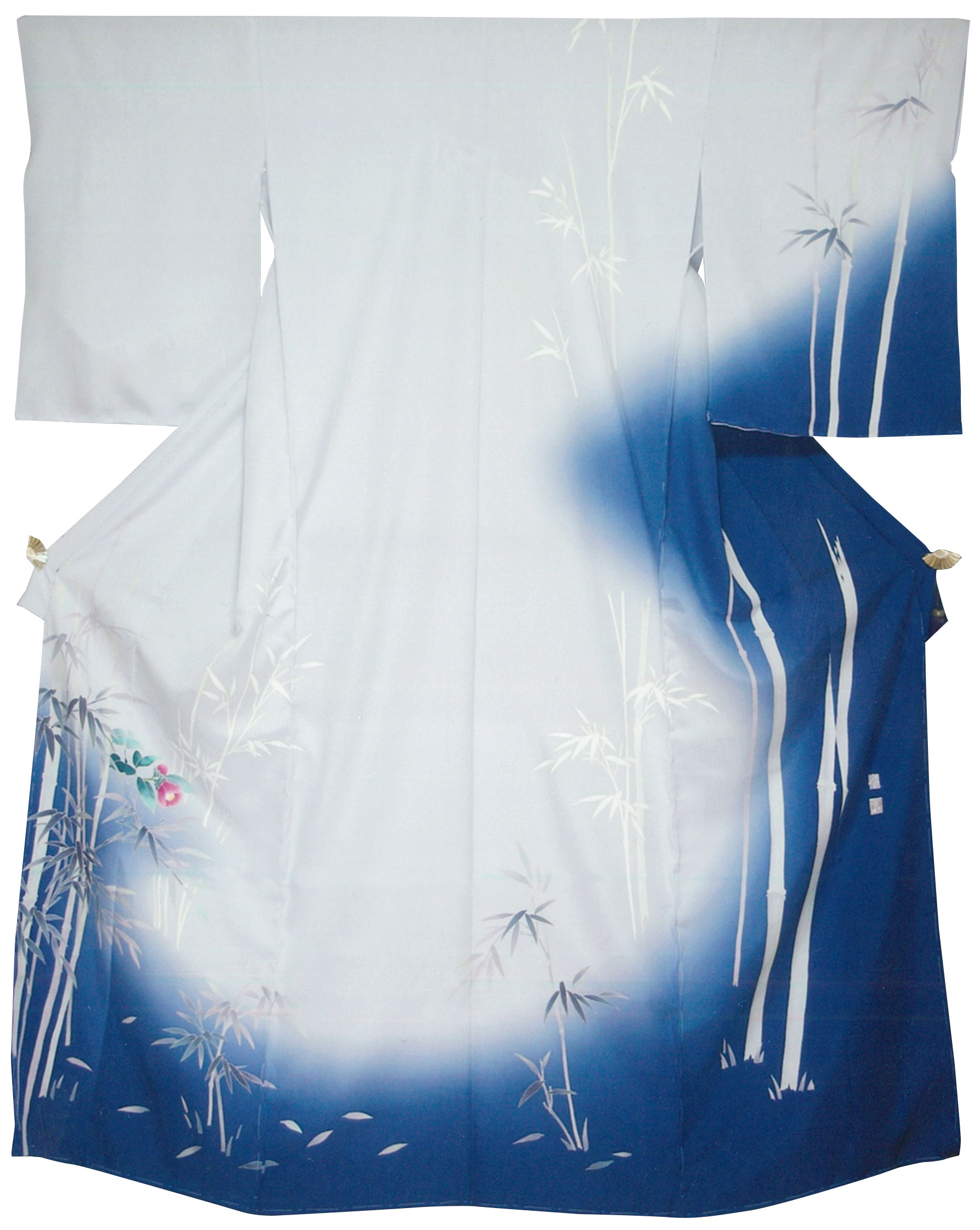
SUMIE NO TAKE
Bamboo ink painting - Visiting Kimono 2017 - |
|
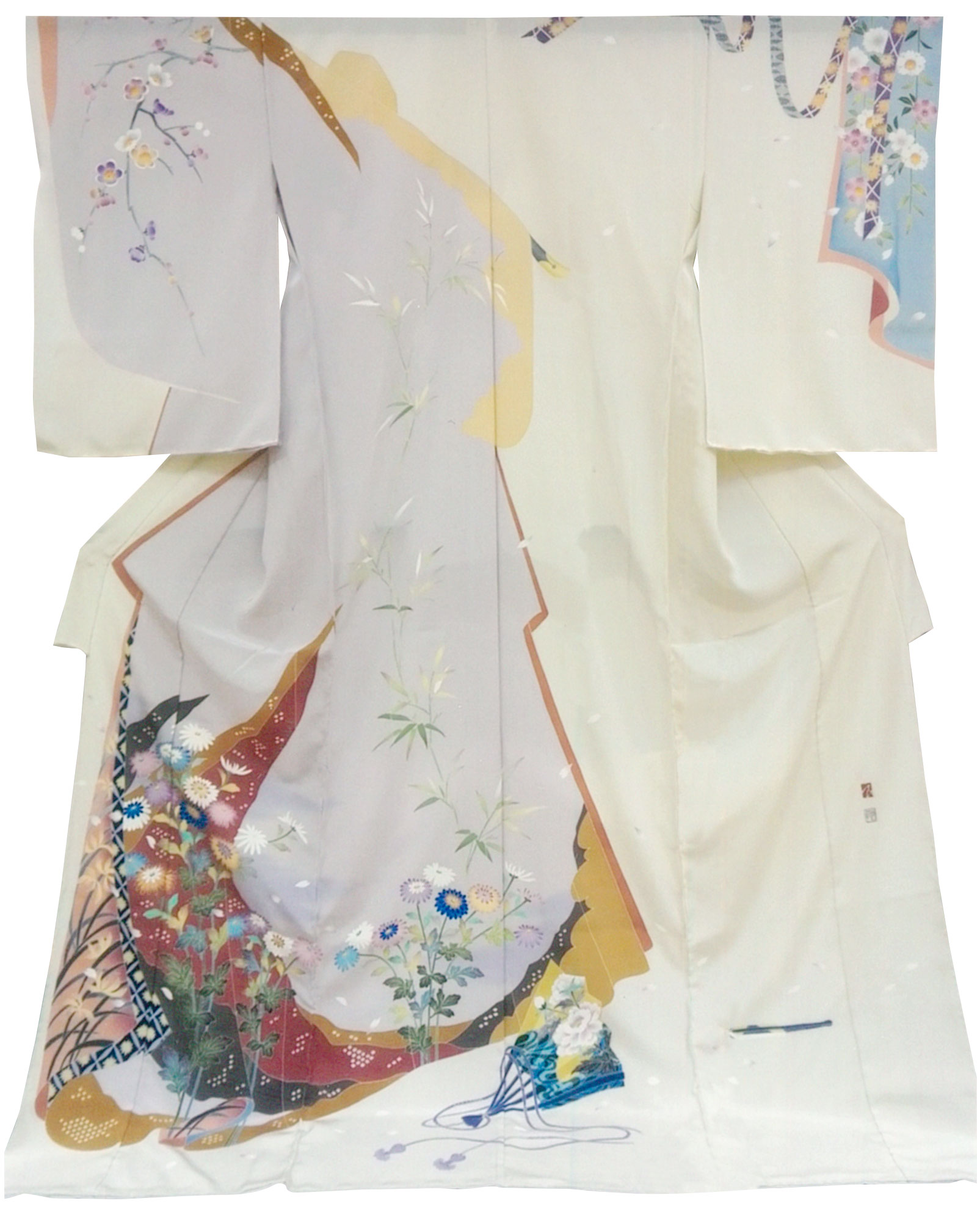
IKO NI DARE GA SODE
Kimono hanging from rack - Visiting Kimono 2017 - |
|
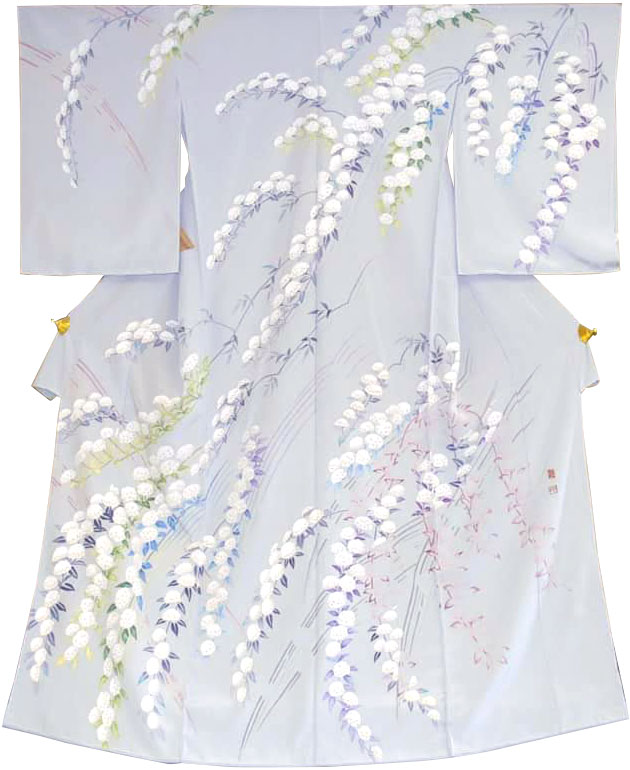
KODEMARI
Reeves spirea - Visiting Kimono 2016 - |
|
HYAKKA
Flower blossoming - Visiting Kimono 2016 - |
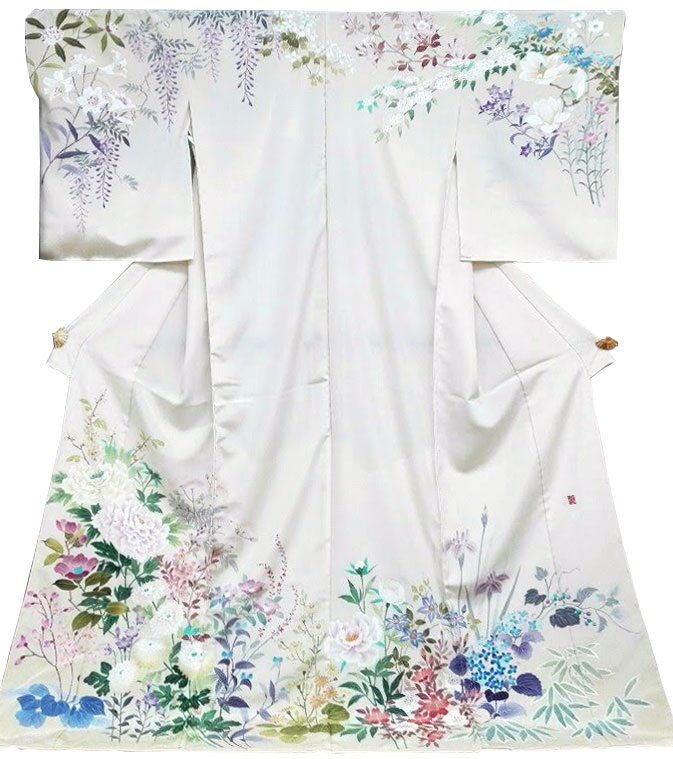
|
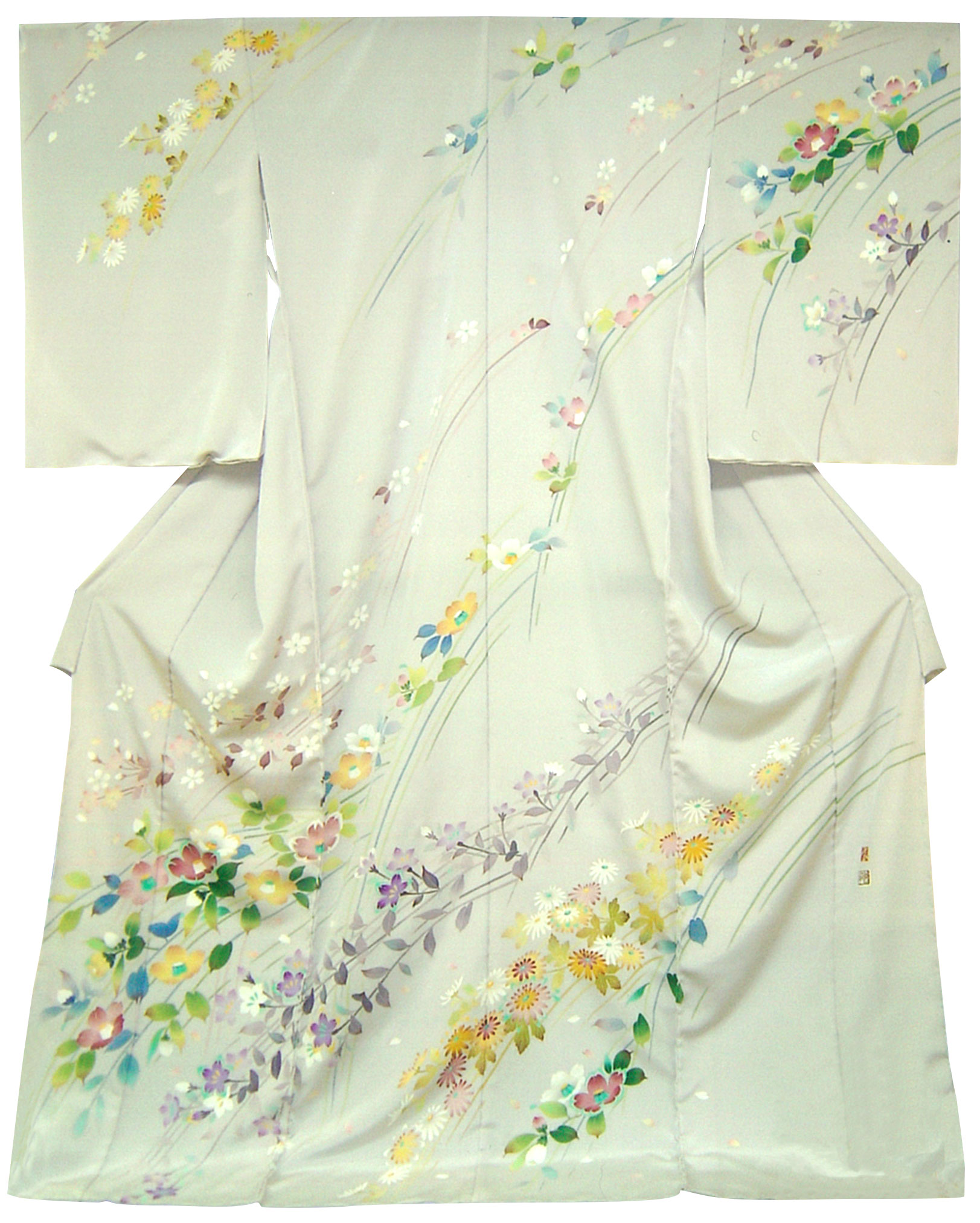
TAKITSUBAKI NI KIKUZAKURA
Waterfall camellia with chrysanthemum and cherry blossoms - Visiting Kimono 2016 - |
|
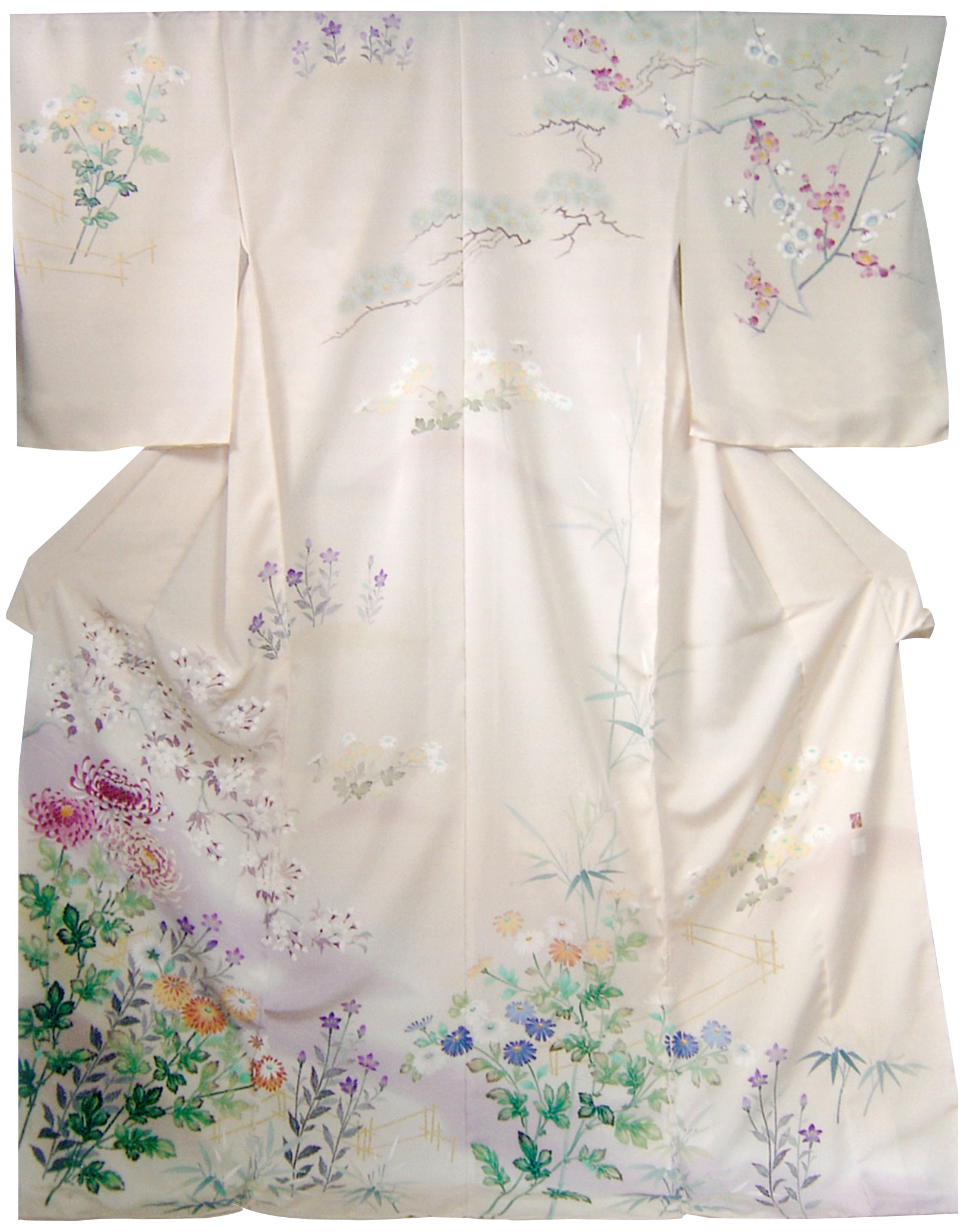
SAKU NI SOKA
Flowers and grasses on a fence - Visiting Kimono 2015 - |
|
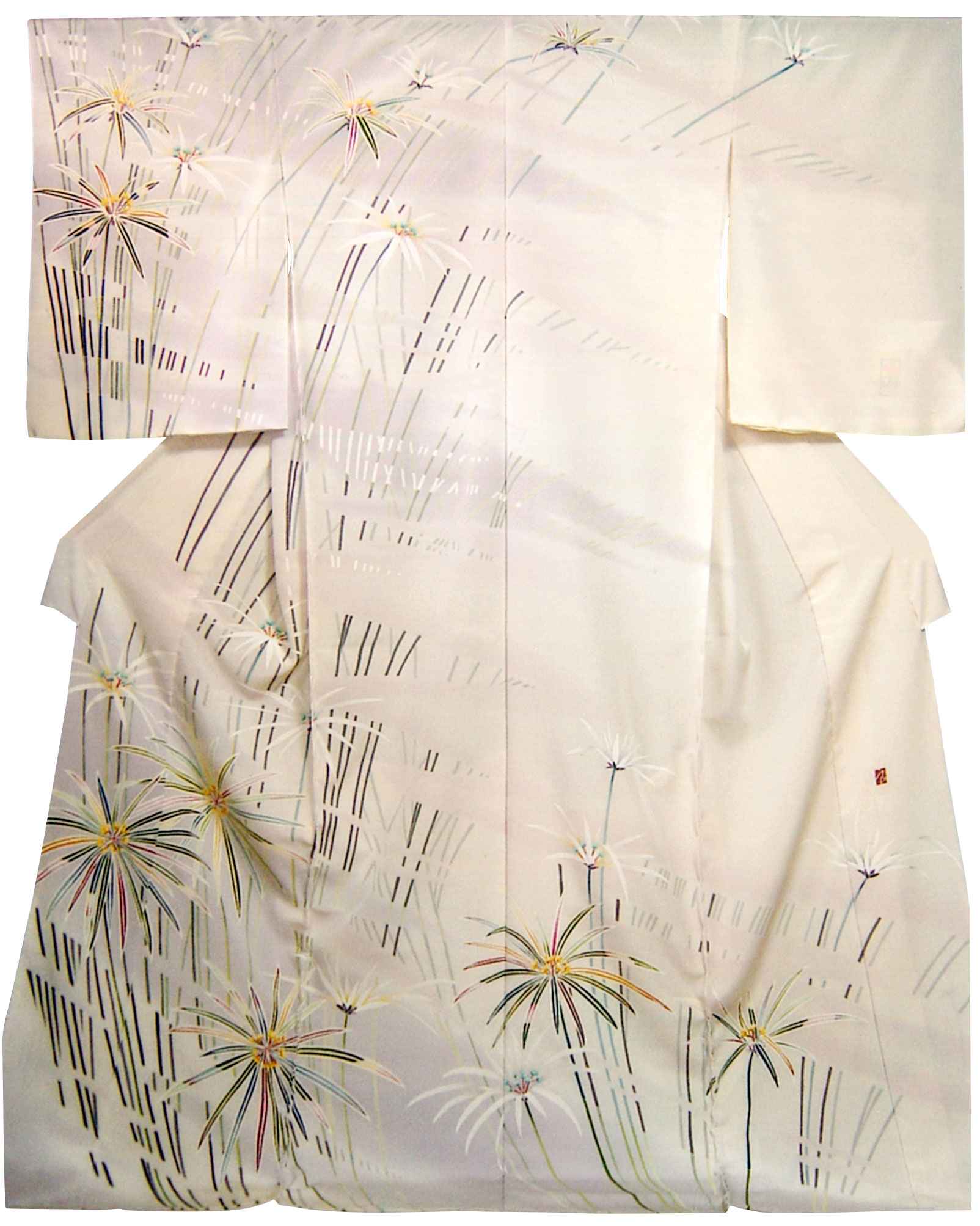
SHIPERASU
Cyperus - Visiting Kimono 2015 - |
|
TSUBAKI
Camellia - Visiting Kimono 2015 - |
|
RINKA
Round flower motifs - Visiting Kimono 2015 - |
|
TENJO E
Ceiling painting - Visiting Kimono 2014 - |
|
SHOCHIKUBAI NI KIKUFUJI
Pine, bamboo, plum, chrysanthemum and wisteria - Visiting Kimono 2014 - |
|
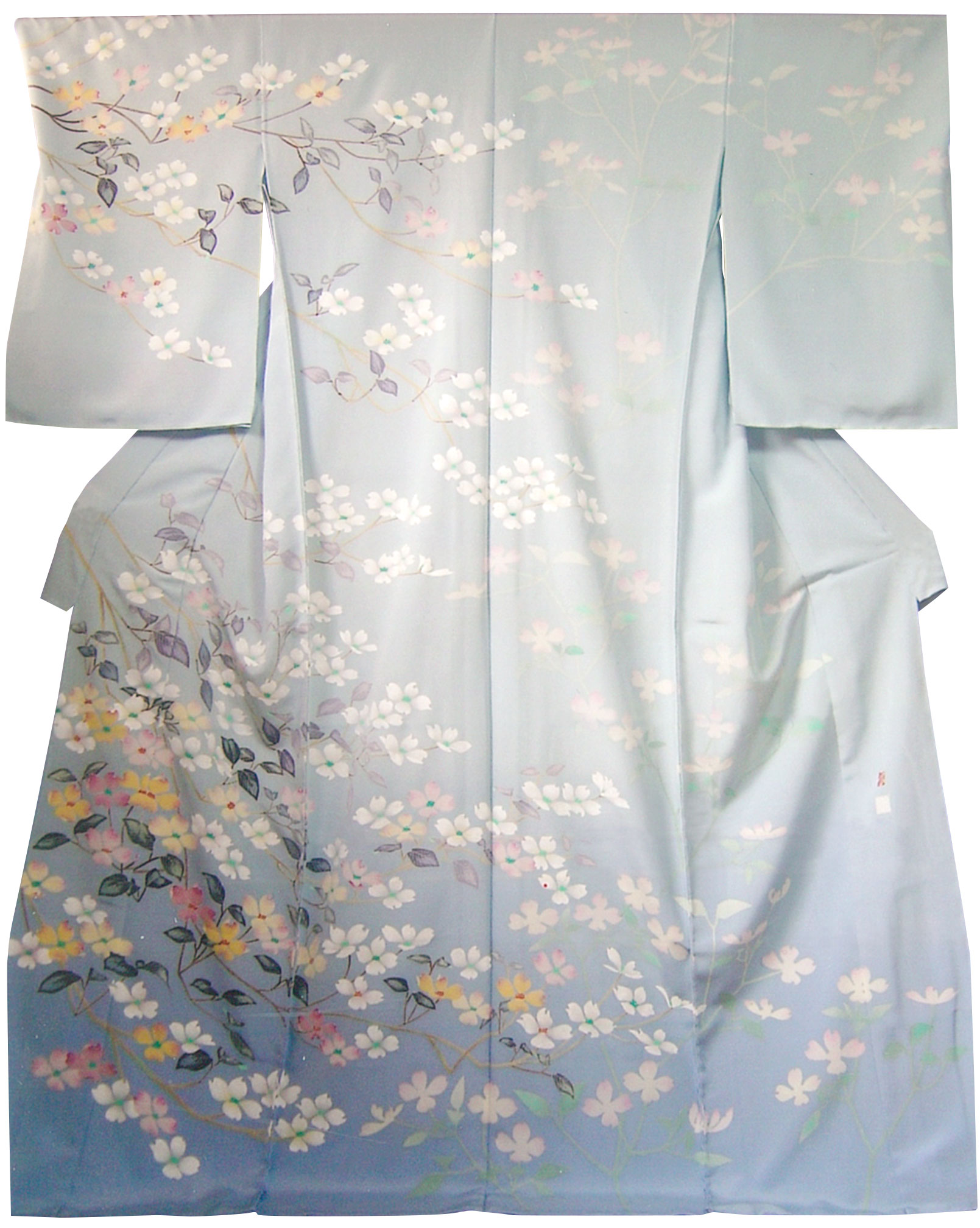
HANAMIZUKI
Dogwood - Visiting Kimono 2014 - |
|
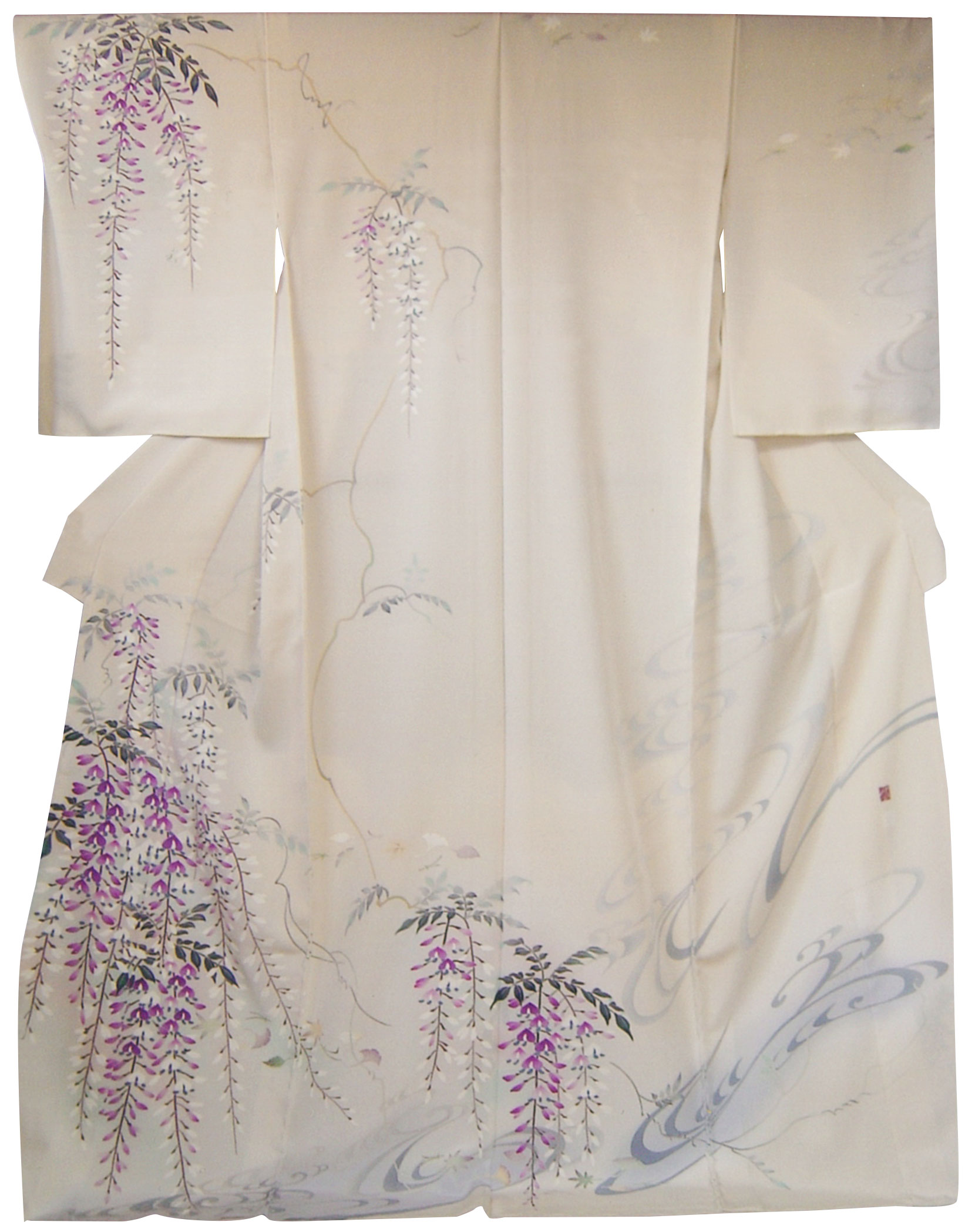
SAIMYOJI NO FUJI NI RYUSUI
Wisteria and running water at Saimyoji Temple - Visiting Kimono 2014 - |
|
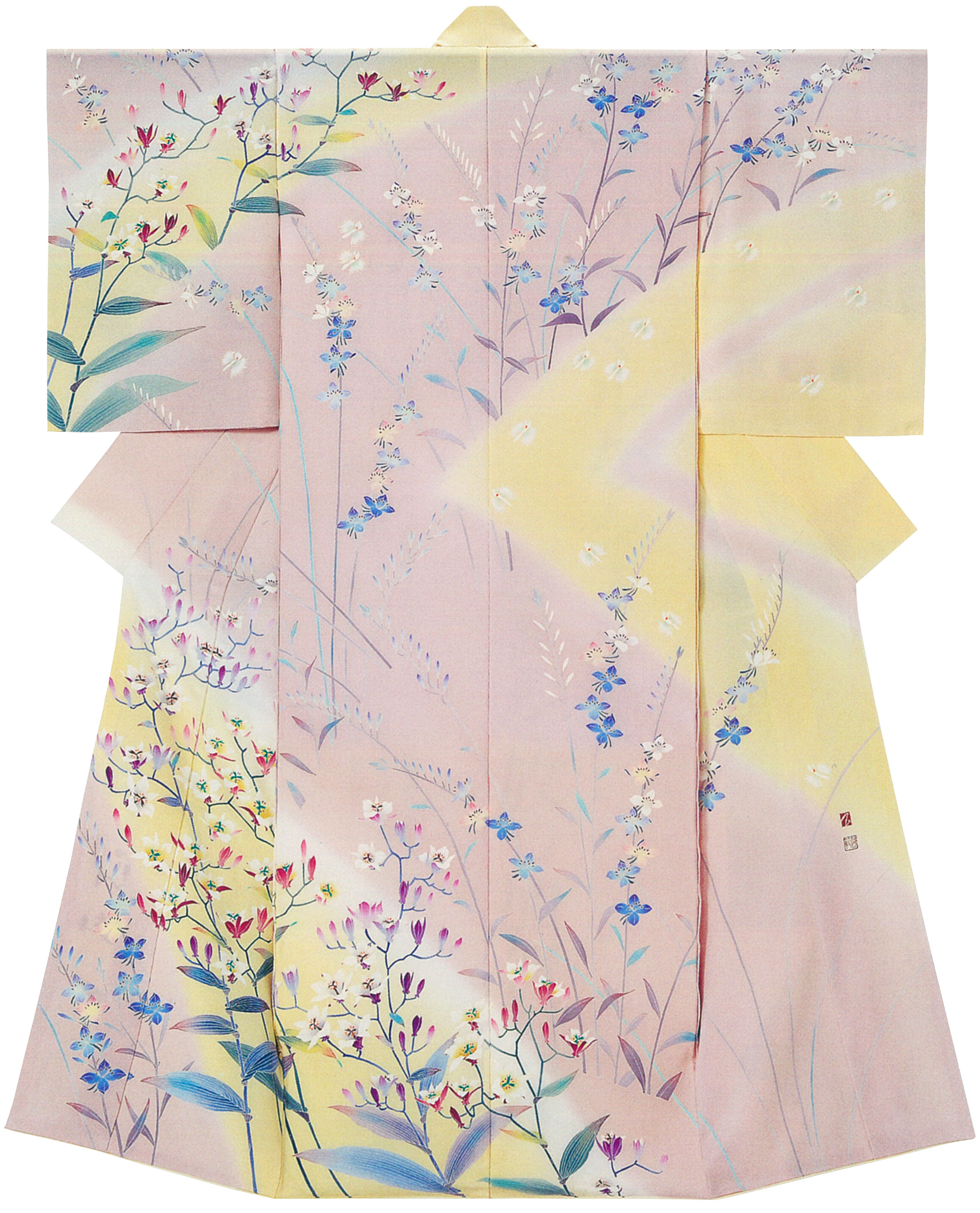
TOBIHANA
Vibrant flower motifs - Visiting Kimono 2013 - |
|
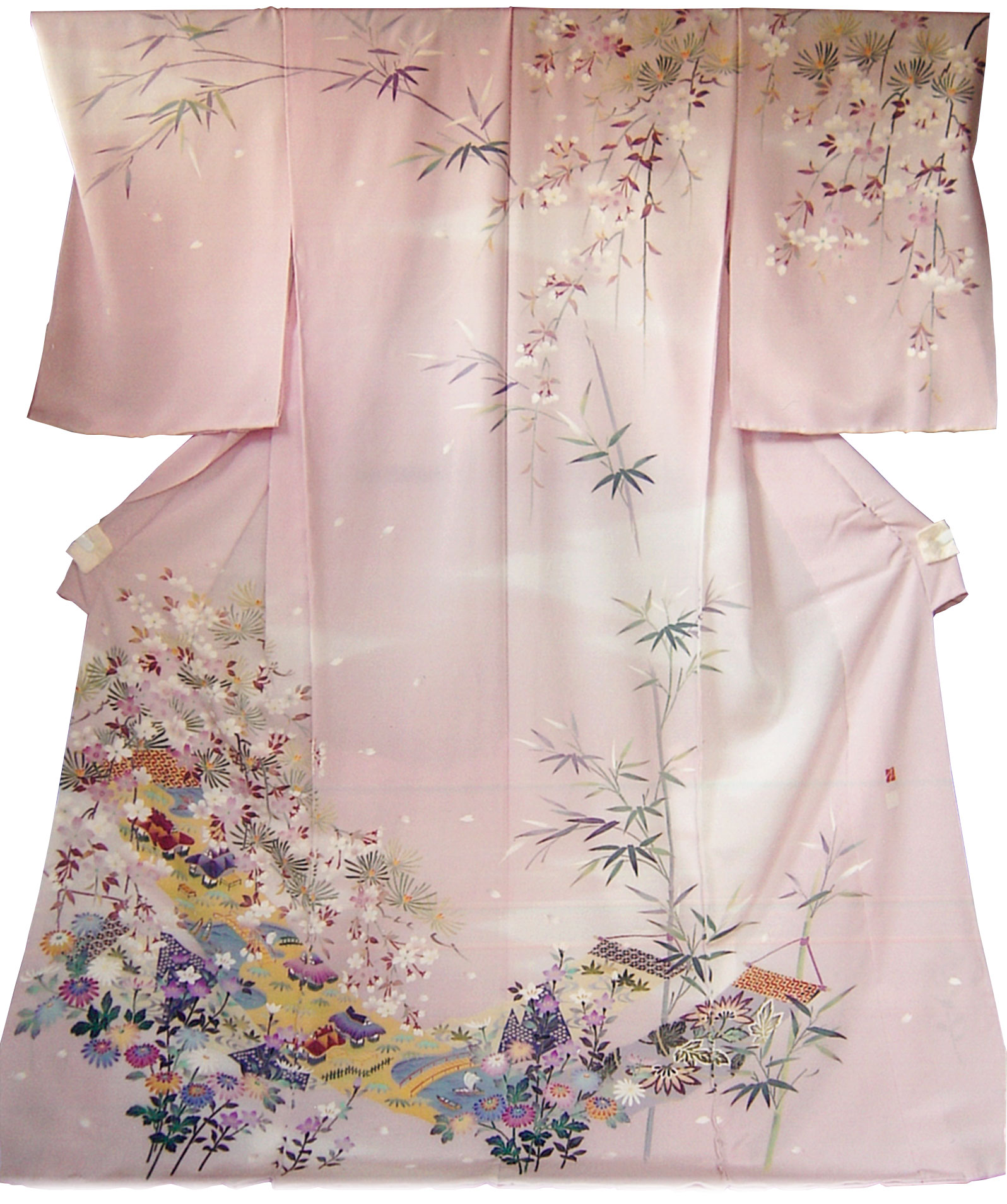
SHIDARE ZAKURA NI YUZEN ZOME
Weeping cherry blossoms and Yuzen dyeing - Visiting Kimono 2013 - |
|
GUNSEI
Cluster of blossoms - Visiting Kimono 2013 - |
|
WAGASA
Japanese umbrella - Visiting Kimono 2013 - |
|
WAKATAKE
Young bamboo - Visiting Kimono 2013 - |
|
KAYATSURI SO
Sedge weed - Visiting Kimono 2013 - |
|
SHOIN
Wind through pine trees - Visiting Kimono 2012 - |
|
MATSUFUJI NI SOKA
Pine and wisteria - Visiting Kimono 2012 - |
|
SHIDAREZAKURA NI DAREGASODE Weeping cherry blossoms and sleeves - Visiting Kimono 2012 - |
|
KOSHI NI SHOCHIKUBAI
Pine, bamboo, and plum on latticework - Visiting Kimono 2012 - |
|
SHISUI
Lush greens - Visiting Kimono 2012 - |
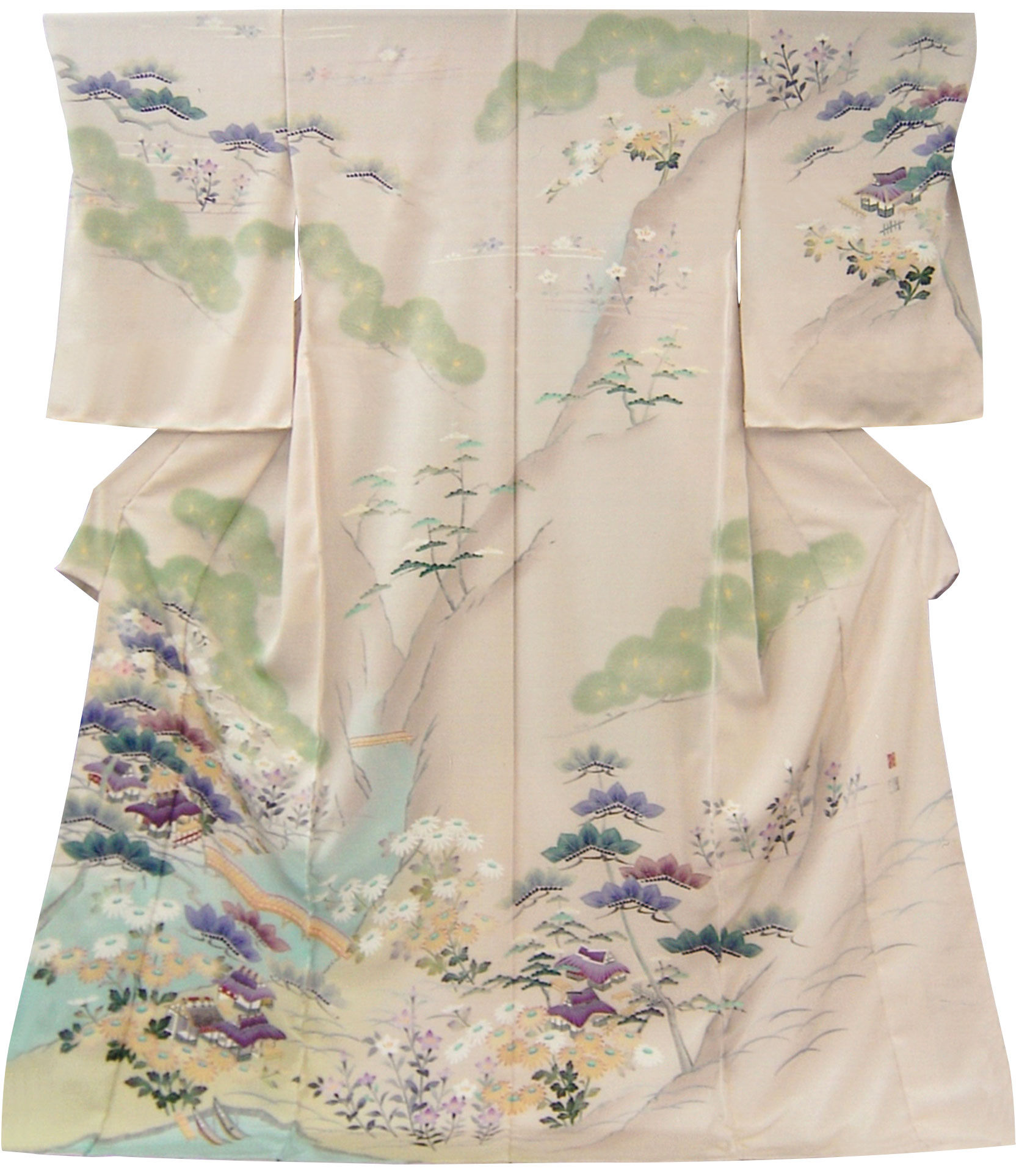
|
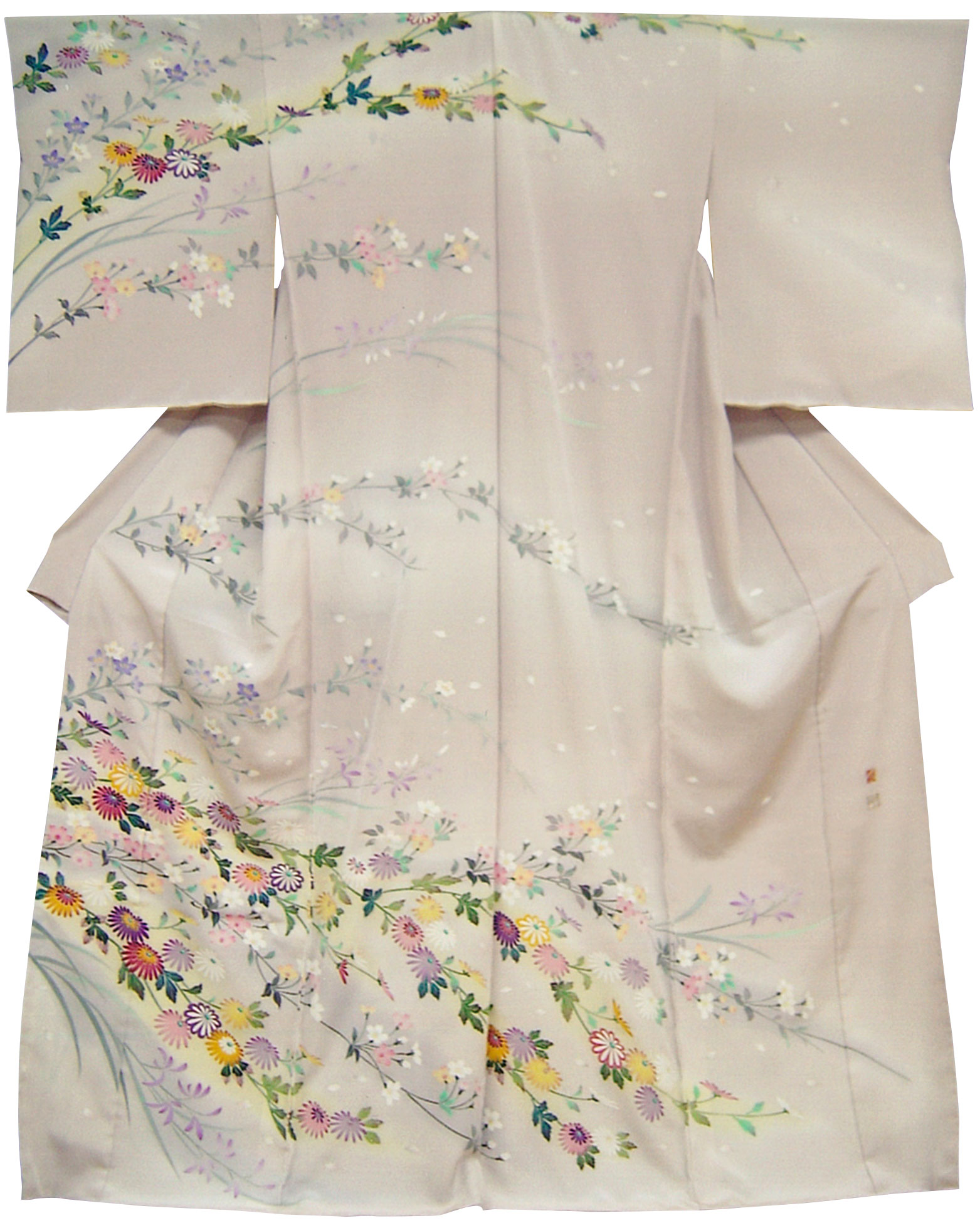
KAZE NO HANA
Flowers in wind - Visiting Kimono 2012 - |
|
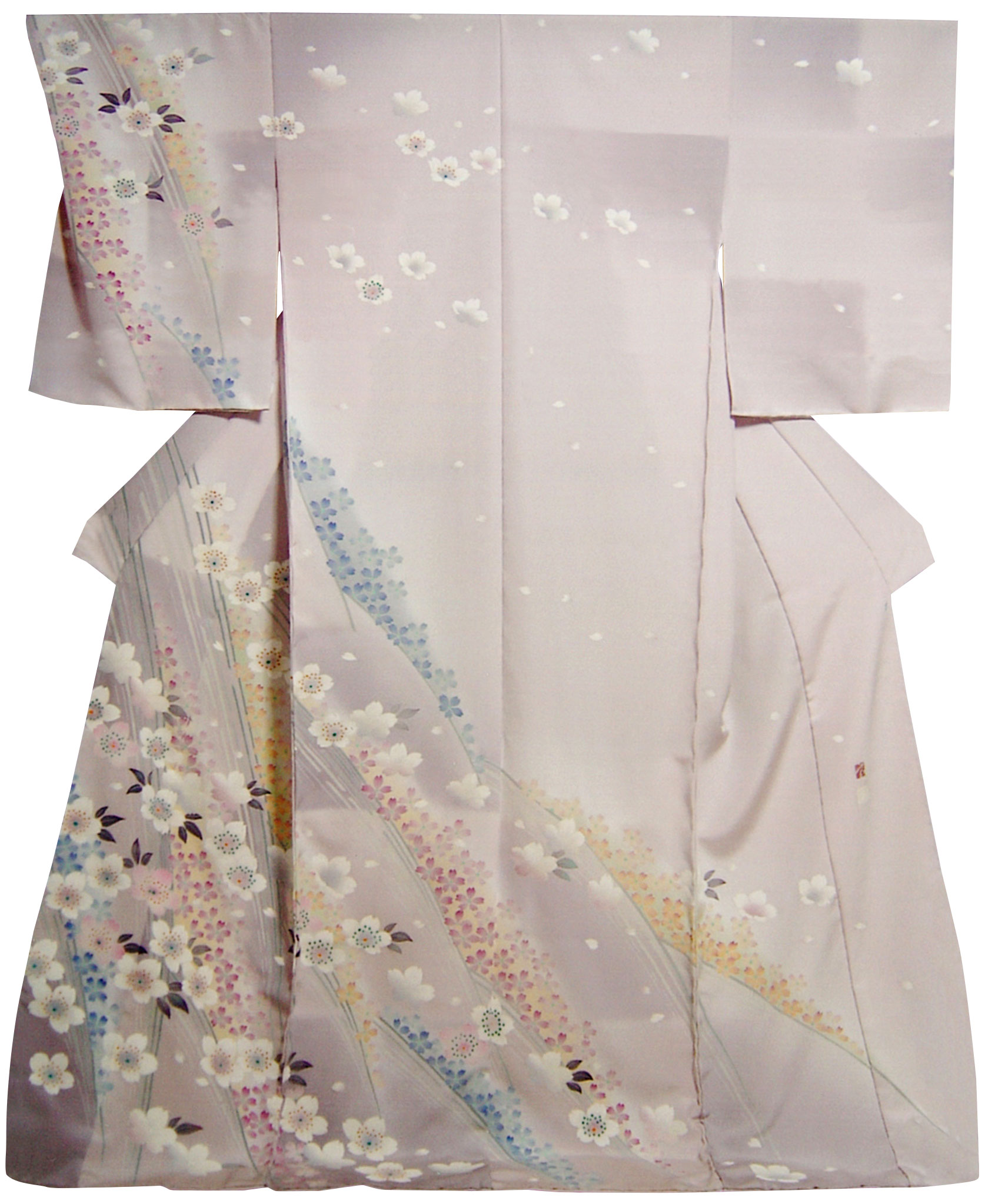
SAKURA
Cherry blossoms - Visiting Kimono 2012 - |
|
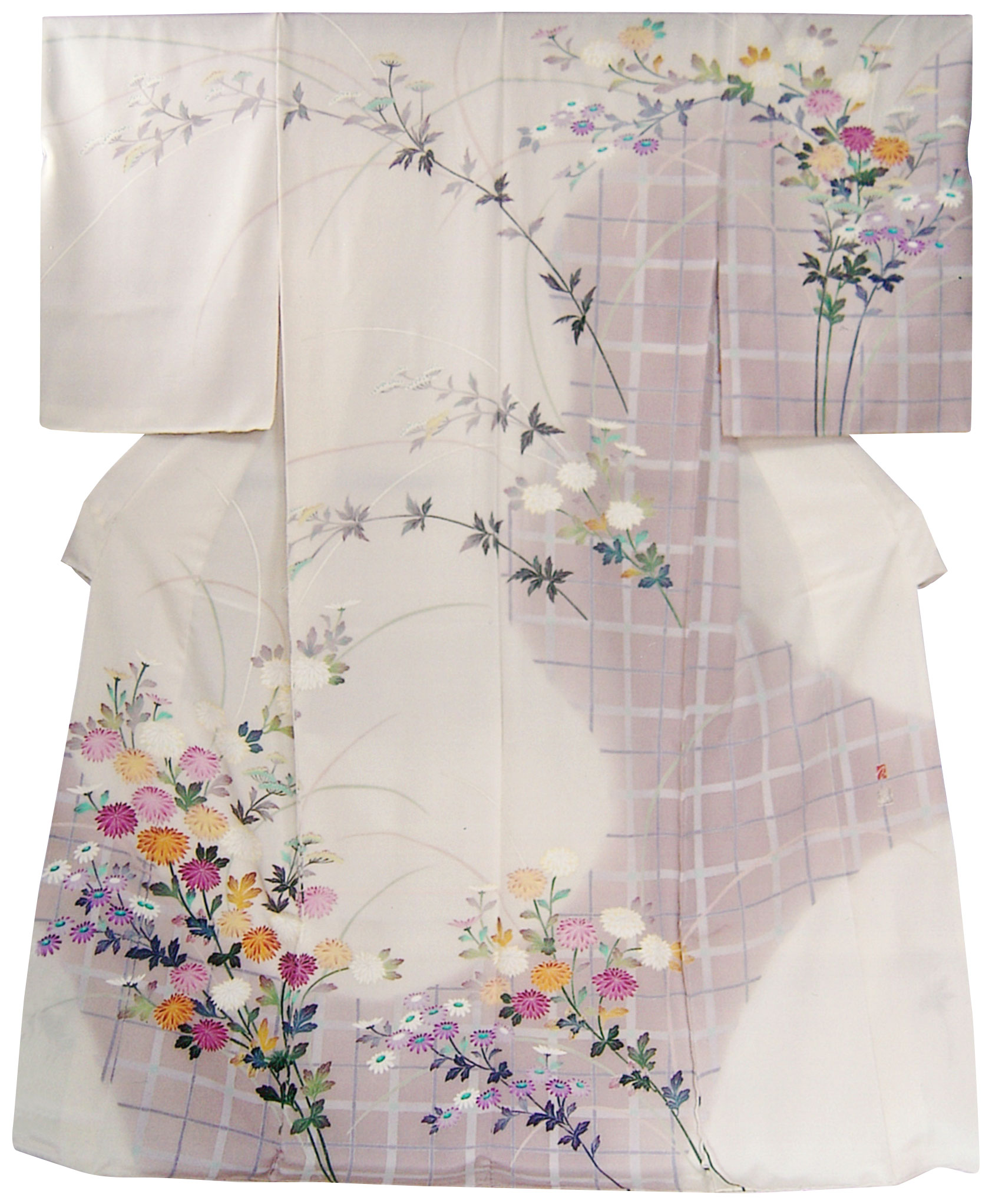
KIKU NI KOSHI
Chrysanthemum and lattice - Visiting Kimono 2012 - |
|
KAOKU NI RYUSUI BOTAN
House, stream and peonies - Visiting Kimono 2012 - |
|
KOSODE KIKU MOYO
Kosode with chrysanthemum motifs - Visiting Kimono 2011 - |
|
MATSU NI SHOKEI
Breathtaking landscape of pines - Visiting Kimono 2010 - |
|
YAMABUKI
Japanese yellow rose - Visiting Kimono 2010 - |
|
MATSU NI TOBITSURU
Pine trees and flying cranes - Visiting Kimono 2009 - |
|
SANSUI NI BAIKIKU
Plum and chrysanthemum in landscape - Visiting Kimono 2009 - |
|
HEISEI HYAKKEI TAKACHIHO KYO
Heisei landscape Takachiho Gorge - Visiting Kimono 2009 - |
|
YUKIWA KAKINE NI SOKA
Flowers, grasses, hedges and snowflakes - Visiting Kimono 2009 - |
|
RYUSUI NI BOTAN
Peonies and running water - Visiting Kimono 2009 - |
|
MATSU NI CHAYATSUJI
Pine trees and teahouse street - Visiting Kimono 2008 - |
|
KAMON SHIKUNSHI
Plum, Orchid, Bamboo, Chrysanthemum - Visiting Kimono 2008 - |
|
TAKE Bamboo - Visiting Kimono 2008 - |
|
SANSUI NI GOSHOGURUMA Landscape and court carriage - Visiting Kimono 2008 - |
|
YOROKOBI
Joy - Visiting Kimono 2008 - |
|
TENJU SHOCHIKUBAI Natural span of life, pine, bamboo and plum - Visiting Kimono 2008 - |

- Bride's Curtain -
| Chonko-yama - Hanamuko Noren (groom's goodwill) - |
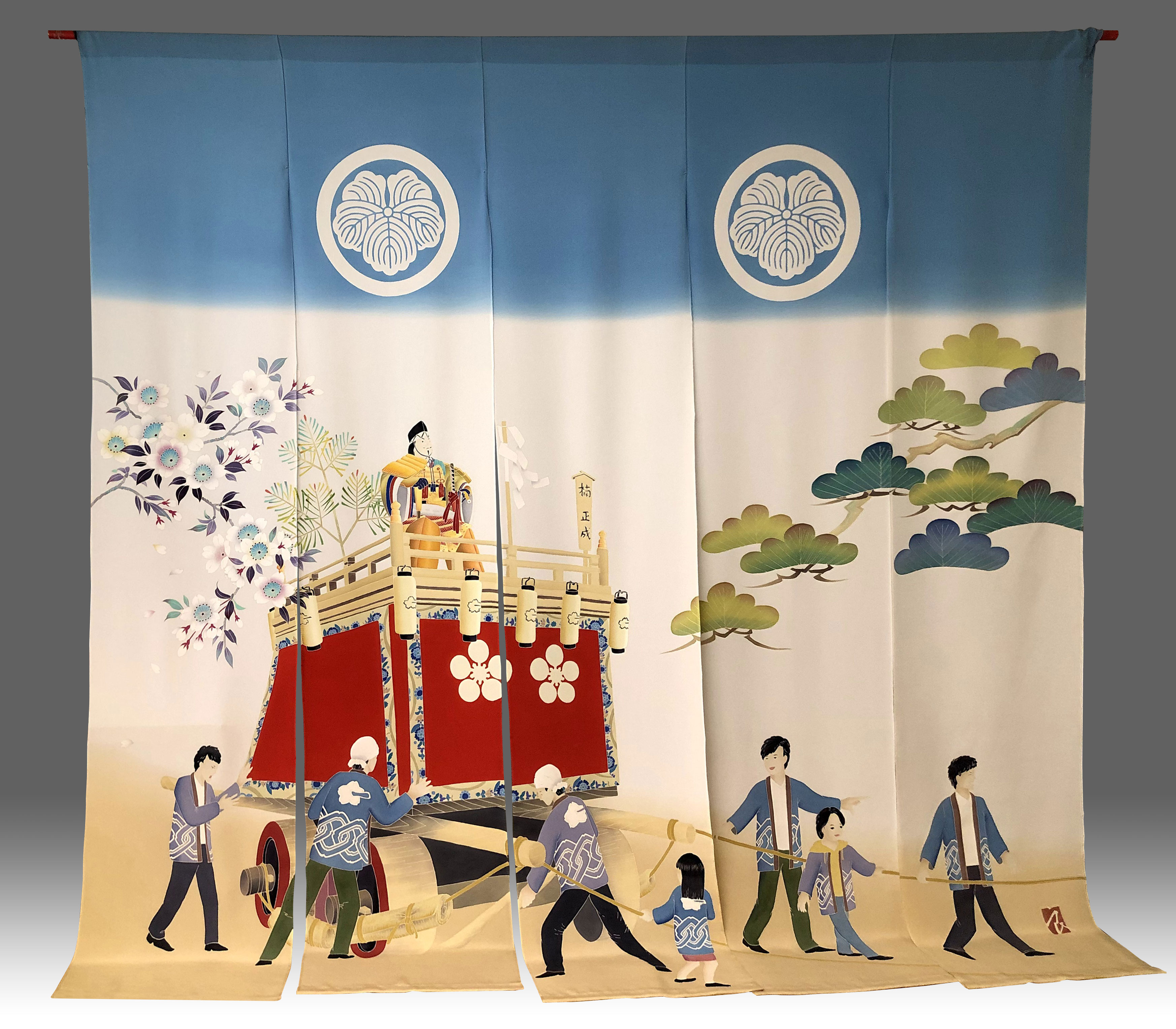
Hanayome Noren is one of the wedding customs that started in Noto, Kaga, and Echchu of the Kaga Clan from the end of the Edo period to the Meiji period, and it is one of the "bridal implements" that are hung in the Buddhist room of the bride's destination when she marries. This work is not a "bride's goodwill," but a "groom's goodwill," a goodwill that a groom brings when she takes a husband.

| HISYO - Skyhigh - 2021 - |
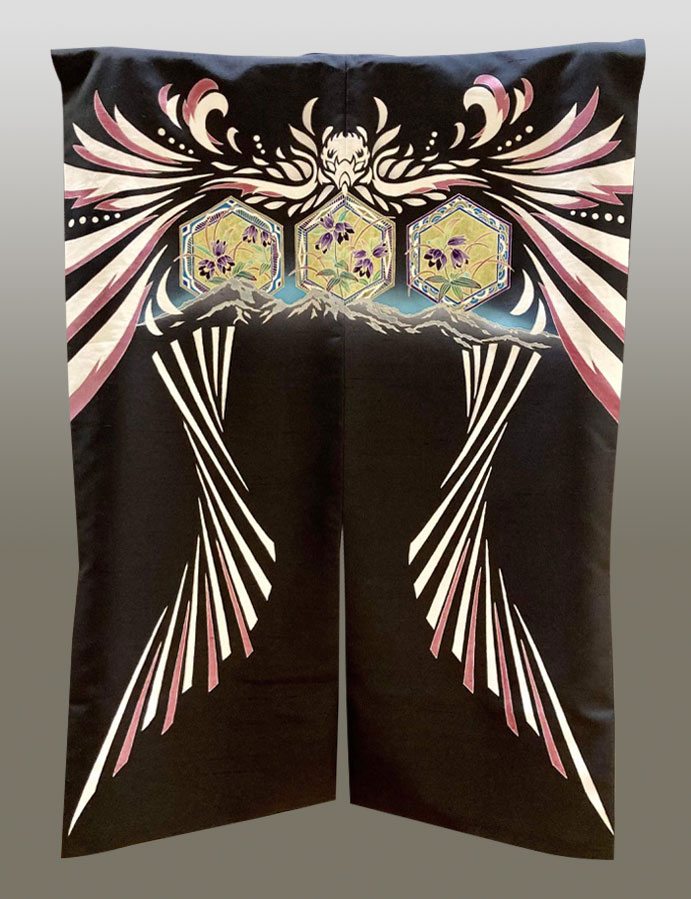
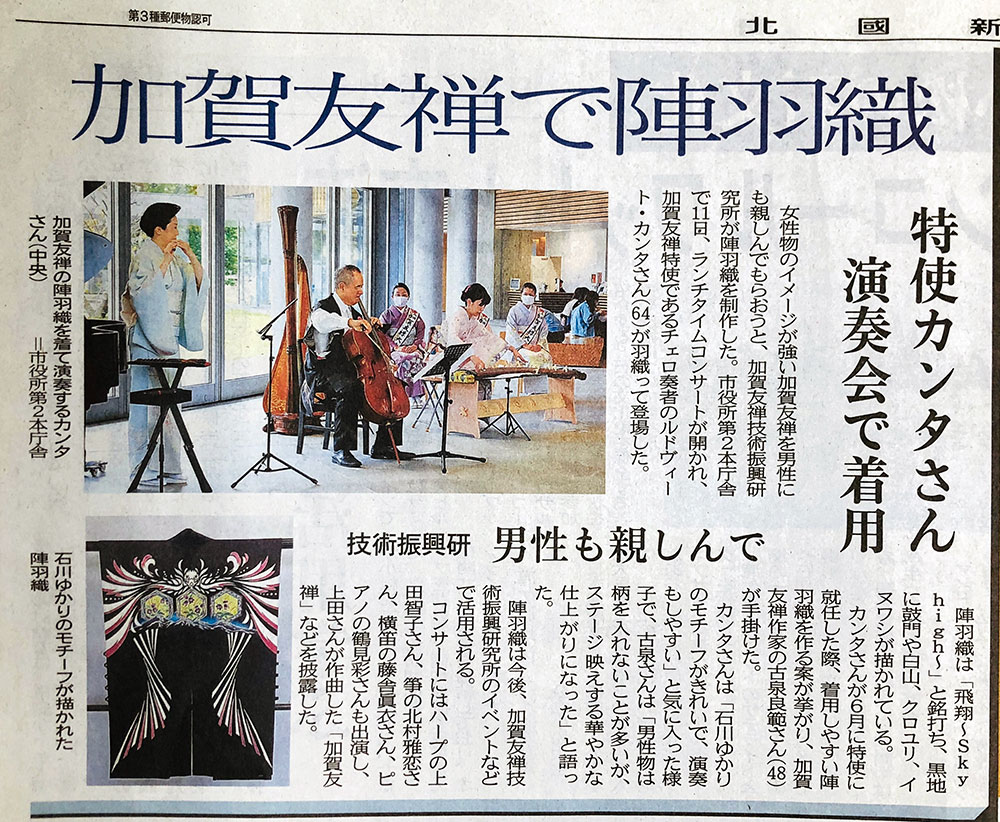
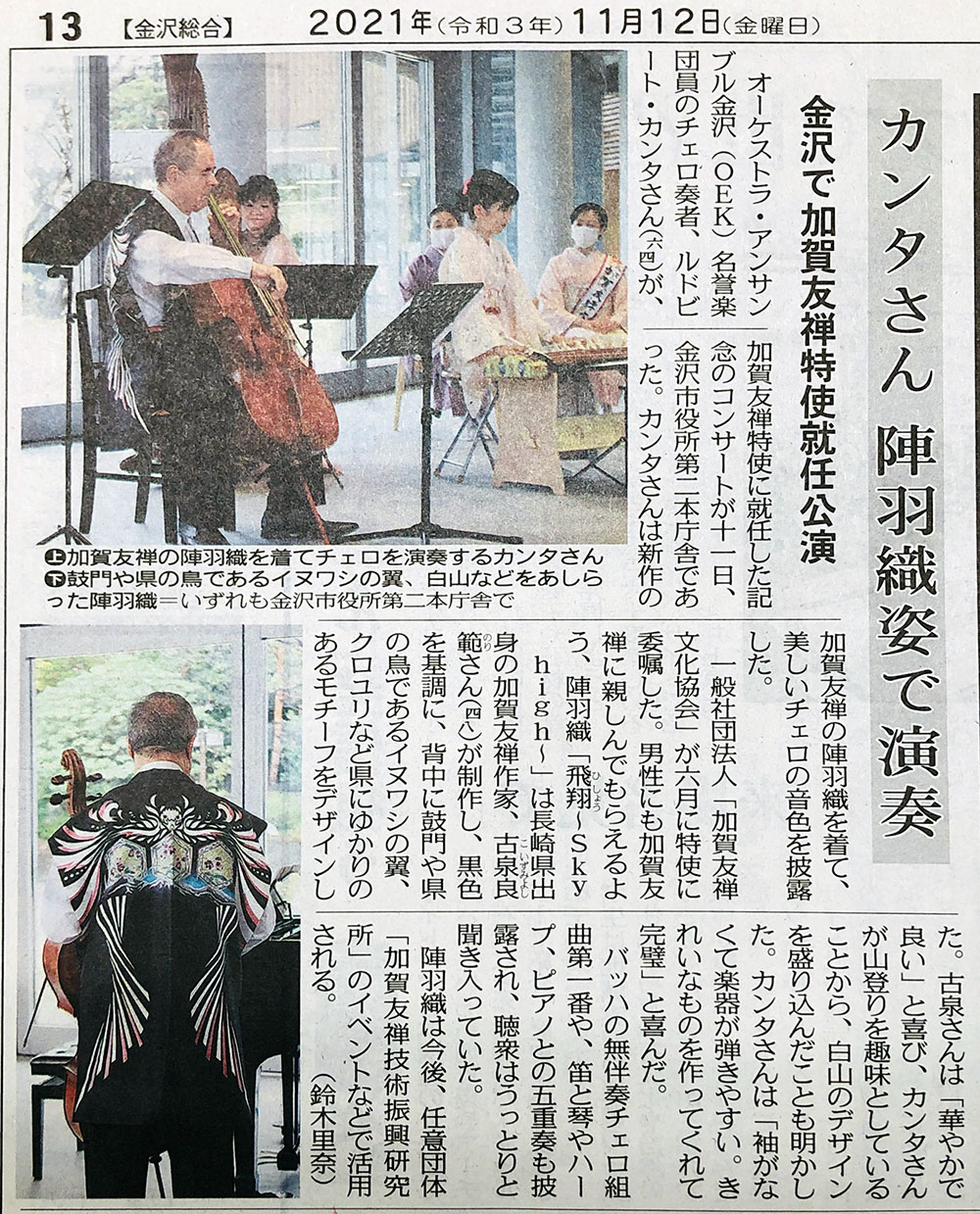
I produced a jinbaori (a traditional sleeveless short coat) for cellist Ludovit Kanta to wear at a concert commemorating his appointment as Kaga Yuzen ambassador. The design features motifs associated with the prefecture, such as a drum gate, the wings of a golden eagle, and Mt. Hakusan, and has a gorgeous finish that looks great on stage. It will be used at events of the "Kaga Yuzen Technical Promotion Institute" and other events.
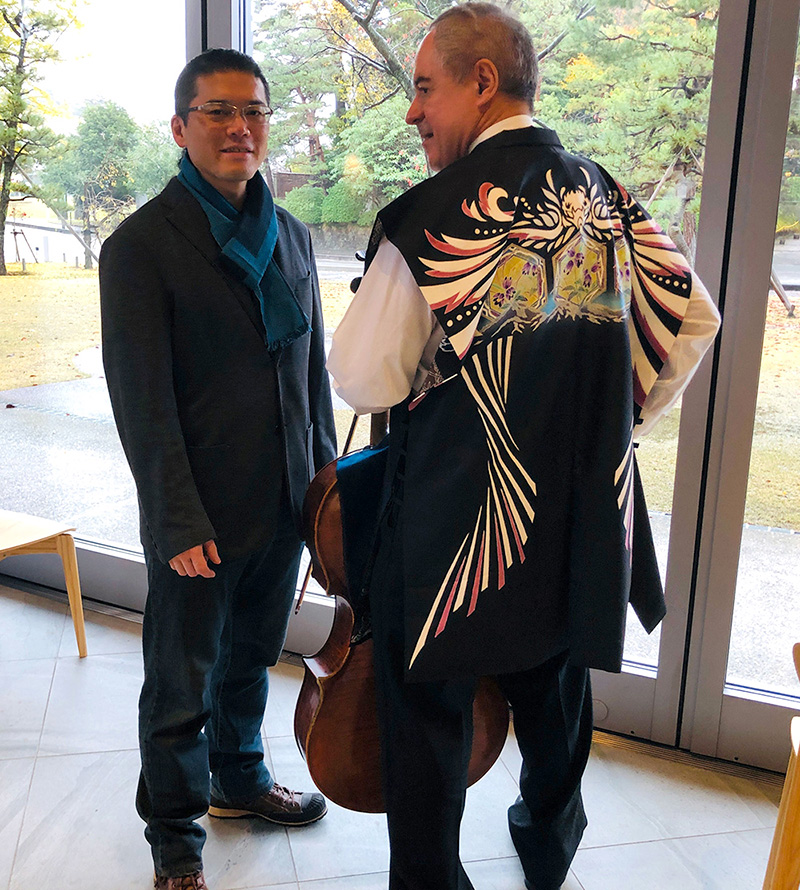 Right: Mr. Ludovit Kanta

- Interior Tea Boxes -
| YUI NO HAKO - Kaga Yuzen - |

Tea boxes are made of Japanese cedar and lined with tin (galvanized steel sheet) on the inside to protect tea and utensils from insects, moisture, and odors. This traditional Japanese tea box is covered with a beautiful fabric and decorated as an interior decoration. Kaga-no-Hako is an interior tea box sumptuously decorated with traditional Kanazawa crafts such as Kaga Yuzen, gold leaf, lacquer, and Futamata Washi. It is an art piece of modern Japonism from the ancient capital of Kanazawa.
Kanazawa Interior Tea Box Club

|
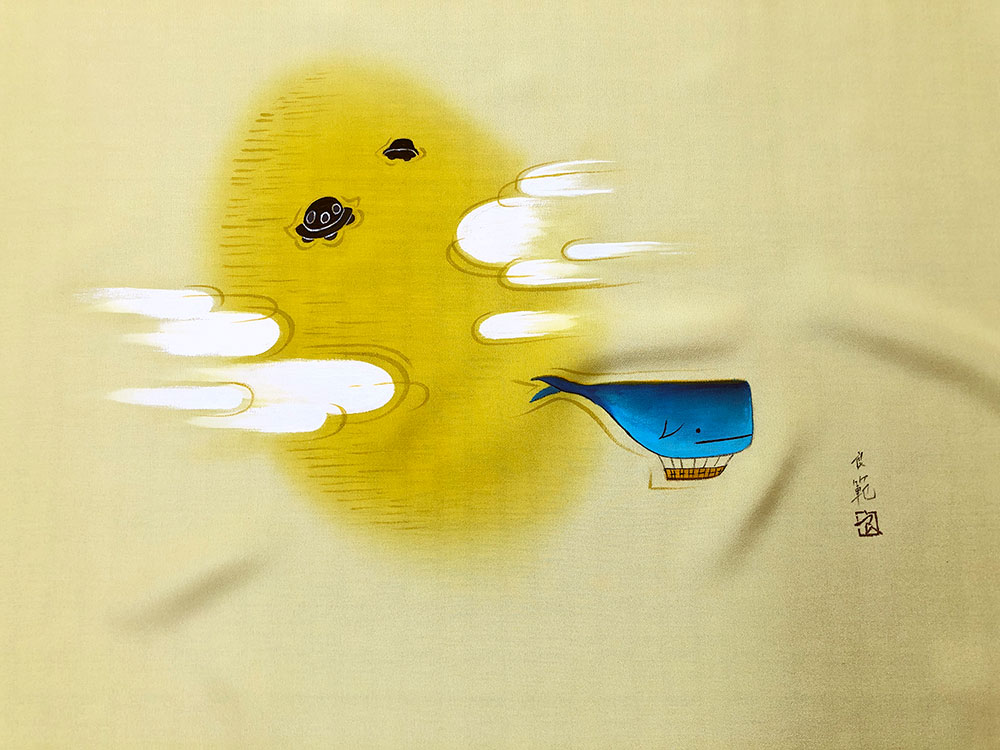
TSUKI NI KUJIRA HIKOSEN - Whale airship with moon - |

| Hora |
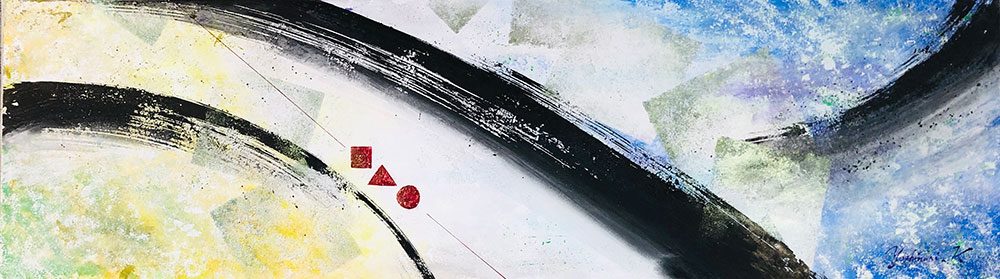

A series of two drawings, one for spring and summer and one for autumn and winter, were made from panels of different dimensions to fit the atmosphere of the house. I expressed the Japanese world by using a color composition based on the image of gold leaf in Kanazawa and by dynamically running sumi ink. The title "Hora" is the name of the goddess of seasons and order.
Materials: Japanese washi paper, acrylic, sumi ink, gesso, etc.

| Suibokuga - Japanese ink painting - |
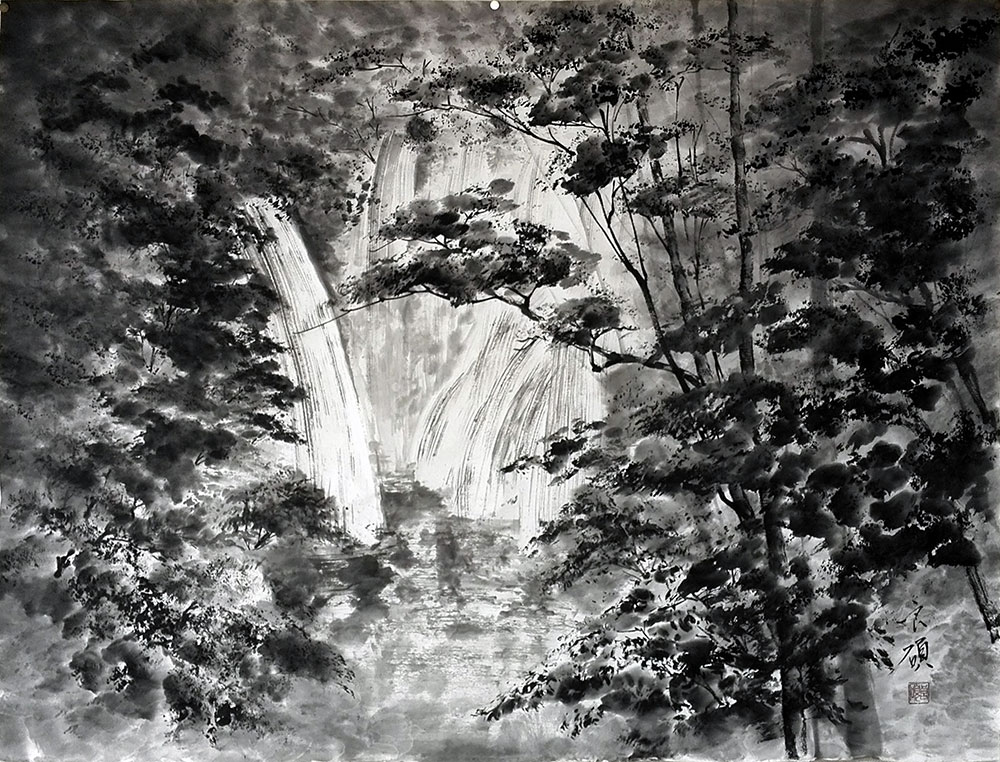

| Coming soon |

 |
KAGA-YUZEN KOIZUMI 3-65-2 Takao, Kanazawa, Ishikawa 921-8152 Japan Official Website https://www.koizumi-yuzen.com/ |
| WEBSITE DESIGN CREDIT Planning : YOSHINORI KOIZUMI & TAKAHIRO YAMAGUCHI Produce, Art Direction & Design : TAKAHIRO YAMAGUCHI Takahiro Yamaguchi Official Website : MIZYZY GRAPHICS |
